


Listen to the article
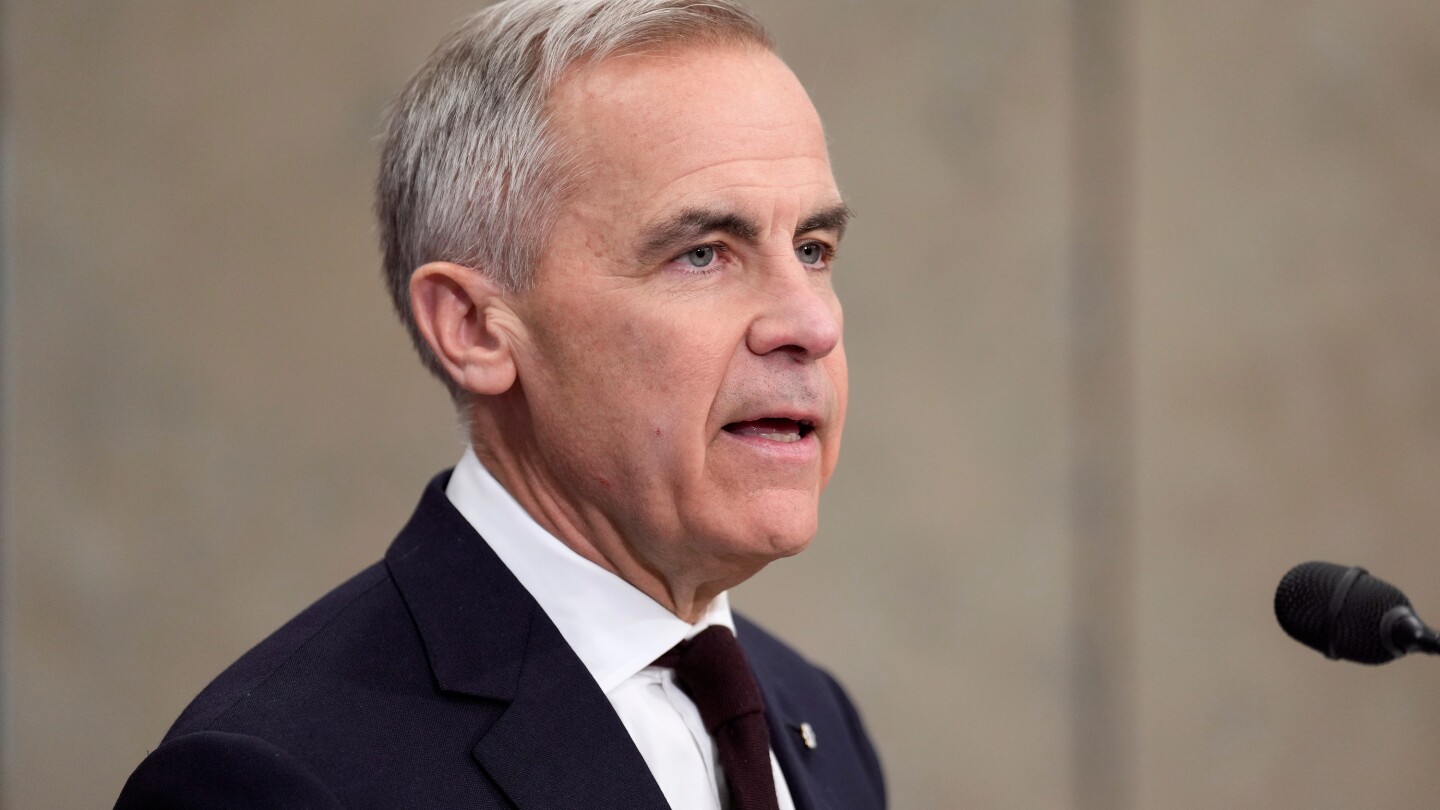
Canadian Prime Minister Mark Carney unveiled a comprehensive package of measures on Wednesday to support the country’s steel and lumber industries, which have been severely impacted by steep U.S. tariffs imposed under President Donald Trump’s administration.
The United States recently raised tariffs on Canadian steel to 50% and increased duties on softwood lumber to 45% last month, dealing a significant blow to industries that have historically relied heavily on the American market.
During his announcement, Carney acknowledged a fundamental shift in the Canada-U.S. economic relationship. “The decades-long process of an ever-closer economic relationship between Canada and the United States is now over,” he stated, highlighting the vulnerabilities created by Canada’s heavy dependence on a single trading partner.
“Last year, more than 75% of our exports went to the United States. 90% of our lumber exports, 90% of our aluminum exports, and 90% of our steel exports, all bound for a single market,” Carney explained. “We must protect our workers and industries who are most exposed to U.S. tariffs.”
The support package includes multiple components designed to shield Canadian producers from foreign competition while stimulating domestic markets. One key element is tightening the quota on steel imports from countries without free-trade agreements with Canada, reducing it from 50% to just 20% of 2024 levels.
For the struggling softwood lumber sector, the federal government will provide an additional CAD $500 million (approximately USD $356 million) in loan guarantees. This comes on top of existing measures aimed at encouraging Canadian homebuilders to use domestically produced materials.
In a move to strengthen internal Canadian supply chains, the government will subsidize freight costs for rail shipments of steel and lumber across provincial borders beginning next spring. “We will make it more affordable to transport Canadian steel and lumber across the country by cutting freight rates,” Carney said, positioning the initiative as a way to bolster domestic industries as they face restricted access to U.S. markets.
The announcement comes amid heightened tensions between the two neighboring countries. Trade discussions between Canada and the United States came to an abrupt halt last month after the Ontario provincial government aired television advertisements in U.S. markets that criticized Trump’s tariff policies. These ads notably referenced former U.S. President Ronald Reagan, a move that apparently provoked the Trump administration to disengage from talks.
Despite the current impasse, Carney indicated that diplomatic channels remain open. He mentioned a brief conversation with President Trump on Tuesday and expressed readiness to resume trade negotiations. “We are ready to re-engage on those talks when the United States wants to re-engage,” he said.
The prime minister also noted he plans to be in Washington on December 5 for the final draw of the FIFA World Cup 2026 tournament, where he anticipates an opportunity to speak with Trump more extensively.
Canada’s new protective measures represent a significant pivot in its economic strategy, focusing on building resilience against trade volatility with its largest trading partner. For industries like steel and lumber that have traditionally been integrated deeply with U.S. markets, these supports aim to provide a cushion against tariff shocks while encouraging greater economic diversification within Canada’s borders.
The situation highlights the broader challenges facing countries dealing with America’s increasingly protectionist trade policies, forcing even closest allies like Canada to develop contingency plans to protect vital domestic industries.
Fact Checker
Verify the accuracy of this article using The Disinformation Commission analysis and real-time sources.

27 Comments
The cost guidance is better than expected. If they deliver, the stock could rerate.
Good point. Watching costs and grades closely.
Good point. Watching costs and grades closely.
Interesting update on Canada’s prime minister announces supports for lumber, steel sectors hit by U.S. tariffs. Curious how the grades will trend next quarter.
Interesting update on Canada’s prime minister announces supports for lumber, steel sectors hit by U.S. tariffs. Curious how the grades will trend next quarter.
Good point. Watching costs and grades closely.
Good point. Watching costs and grades closely.
Uranium names keep pushing higher—supply still tight into 2026.
Good point. Watching costs and grades closely.
Production mix shifting toward World might help margins if metals stay firm.
Uranium names keep pushing higher—supply still tight into 2026.
The cost guidance is better than expected. If they deliver, the stock could rerate.
Good point. Watching costs and grades closely.
Good point. Watching costs and grades closely.
Nice to see insider buying—usually a good signal in this space.
Good point. Watching costs and grades closely.
Exploration results look promising, but permitting will be the key risk.
If AISC keeps dropping, this becomes investable for me.
Good point. Watching costs and grades closely.
The cost guidance is better than expected. If they deliver, the stock could rerate.
Good point. Watching costs and grades closely.
Good point. Watching costs and grades closely.
If AISC keeps dropping, this becomes investable for me.
Good point. Watching costs and grades closely.
Good point. Watching costs and grades closely.
Interesting update on Canada’s prime minister announces supports for lumber, steel sectors hit by U.S. tariffs. Curious how the grades will trend next quarter.
Good point. Watching costs and grades closely.