


Listen to the article
Bulgaria Withdraws Unpopular Budget After Mass Protests Led by Young Citizens
Bulgaria’s government has backed down from its controversial 2026 draft budget following massive demonstrations that saw tens of thousands of protesters flood the streets of Sofia and other major cities across the country.
The protests, dominated by younger Bulgarians from Generation Z, represent a growing demand for transparency and reform in a nation preparing to join the Eurozone in early 2026. Demonstrators argue that the government is concealing widespread corruption while proposing economic policies that could damage Bulgaria’s future.
“Gen Z took to the streets because they want to stay in Bulgaria, but they want a renewed, different, corruption-free Bulgaria,” Daniel Lorer, a member of Bulgaria’s parliament, told Fox News Digital. “They want reforms. The government refused to listen. The budget it proposed simply extended all its previous policies, funded through higher taxes, social security contributions and more debt.”
Prime Minister Rosen Zhelyazkov eventually yielded to public pressure, announcing the withdrawal of the most contentious elements of the budget, particularly tax and social security increases. He promised a new budget proposal would come at a later date.
“The government saw what the citizens who protested had to say,” Zhelyazkov stated at a press conference. “This is a visible protest of young people who are looking for their place in the future of Bulgaria, which we are obliged to hear, and we are obliged to do what is necessary to secure the funds that the country has.”
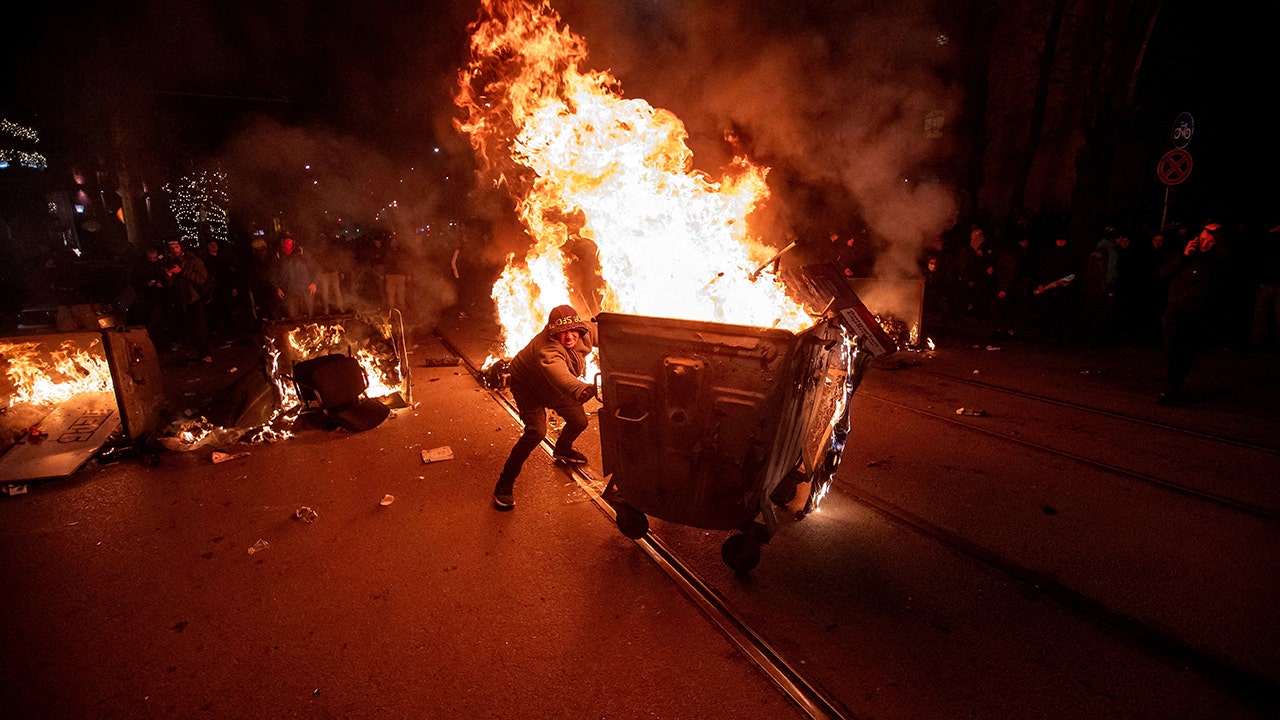
While most demonstrations remained peaceful, some incidents occurred when masked protesters attacked offices of the ruling party in Sofia, leading to clashes with police. The unrest has highlighted deep divisions within Bulgarian society about the country’s direction.
The political instability comes at a sensitive time for Bulgaria, which is set to become the newest member of the Eurozone in January 2026 alongside Romania. This milestone, while representing significant integration with European institutions, remains controversial among many Bulgarians who fear inflation and rising costs of living.
Bulgaria, which joined the European Union in 2007 and began the Eurozone accession process in 2018, remains one of the EU’s poorest member states. The country’s currency, the Lev, was formally included in the European Exchange Rate Mechanism in July 2020, setting it on the path to Euro adoption.
The situation is further complicated by geopolitical concerns. Security experts warn that the political turmoil creates opportunities for Russian interference in Bulgaria’s domestic affairs, particularly given the country’s history as a former communist bloc ally of Moscow.
“Russia is always glad to stir unrest. Anything that upsets the democratic process in any EU country is welcome, and even more so in Eastern Europe, their former sphere of influence,” Lorer noted.
Bulgarian President Rumen Radev, who holds a largely ceremonial position, has sided with the opposition, calling for the government’s resignation and early elections. This stance has raised concerns among some analysts.
“Radev, who echoes Kremlin talking points and opposes the Euro, could still sabotage the process despite it being legally irreversible. This is a volatile mix that threatens stability and could invite more unwelcome Russian meddling,” warned Ruslan Stefanov, director for the Center for the Study of Democracy in Sofia.
Experts have identified persistent social media campaigns, allegedly backed by Russia, aimed at stoking opposition and sowing doubt about Bulgaria’s Eurozone accession. These efforts appear designed to exploit existing economic anxieties among Bulgarians who remain skeptical that joining the monetary union will improve their financial prospects.
As Bulgaria navigates this period of domestic unrest while preparing for Eurozone membership, the government faces the challenge of addressing legitimate concerns about corruption and economic policy while maintaining the stability needed to continue its European integration path.
Fact Checker
Verify the accuracy of this article using The Disinformation Commission analysis and real-time sources.

17 Comments
Interesting update on Bulgaria Faces Protests Amid Looming Eurozone Membership. Curious how the grades will trend next quarter.
Good point. Watching costs and grades closely.
Interesting update on Bulgaria Faces Protests Amid Looming Eurozone Membership. Curious how the grades will trend next quarter.
Nice to see insider buying—usually a good signal in this space.
Silver leverage is strong here; beta cuts both ways though.
Good point. Watching costs and grades closely.
Uranium names keep pushing higher—supply still tight into 2026.
Nice to see insider buying—usually a good signal in this space.
Interesting update on Bulgaria Faces Protests Amid Looming Eurozone Membership. Curious how the grades will trend next quarter.
Silver leverage is strong here; beta cuts both ways though.
Good point. Watching costs and grades closely.
Uranium names keep pushing higher—supply still tight into 2026.
Good point. Watching costs and grades closely.
Good point. Watching costs and grades closely.
I like the balance sheet here—less leverage than peers.
Good point. Watching costs and grades closely.
Good point. Watching costs and grades closely.