


Listen to the article
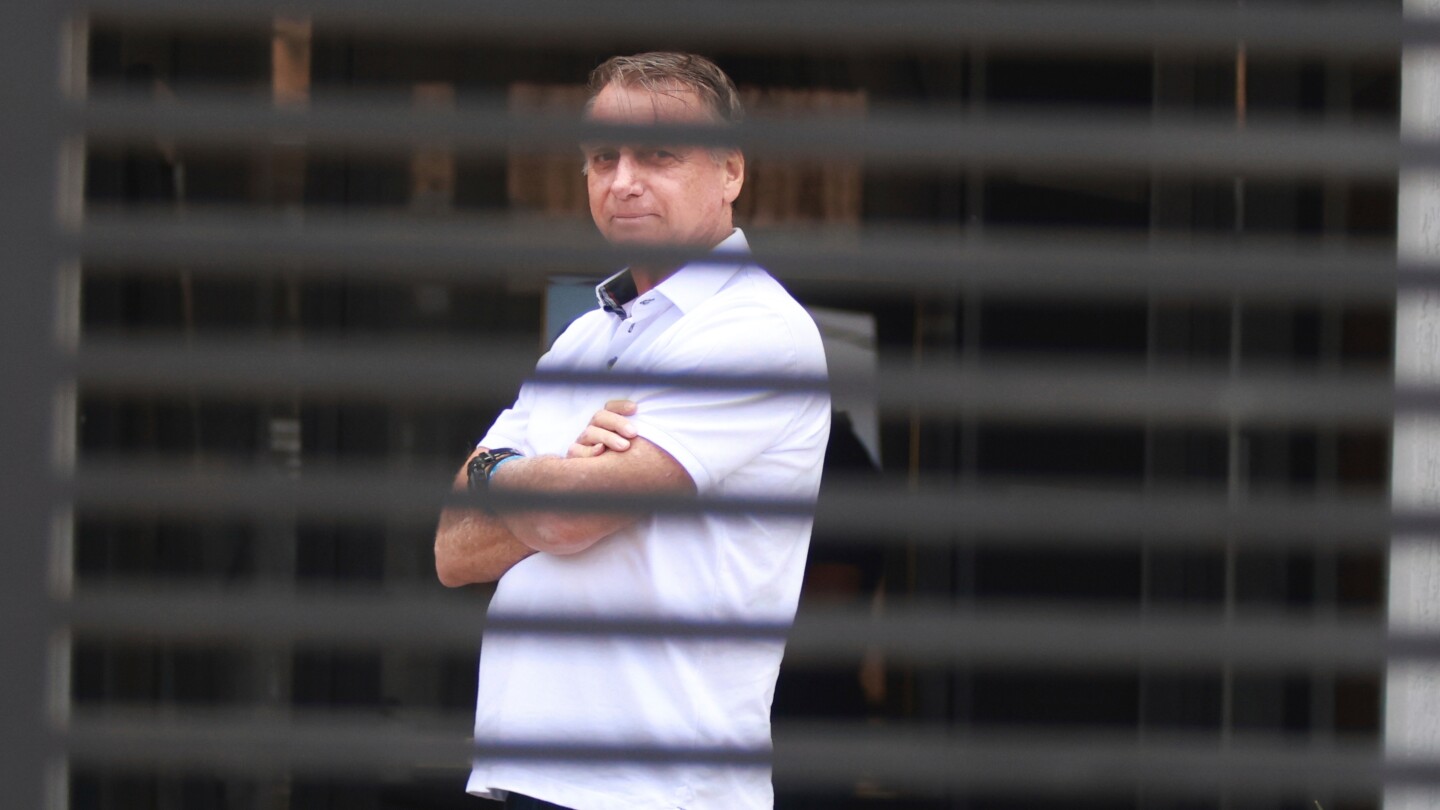
Former Brazilian President Jair Bolsonaro began serving his 27-year prison sentence Tuesday after Supreme Court Justice Alexandre de Moraes ruled he must remain in custody following his preemptive arrest on Saturday. The incarceration of the far-right leader has stunned many Brazilians who doubted he would ever face imprisonment.
Bolsonaro had been under house arrest since August but was taken into custody after attempting to remove his ankle monitor. The former president blamed “hallucinations” for the incident, a claim Justice de Moraes dismissed in his detention order.
The 70-year-old former leader is being held at the federal police headquarters in Brasilia, where he is kept separate from other inmates. His accommodations include a 12-square-meter room with a bed, private bathroom, air conditioning, television, and desk. While he has unrestricted access to his doctors and lawyers, all other visitors require Supreme Court approval.
Outside the police headquarters, a dramatic scene unfolded as both supporters and opponents of Bolsonaro gathered. A small group of supporters dressed in Brazil’s yellow and green national colors protested what they called an unjust imprisonment, with some calling for congressional intervention for amnesty.
“I am outraged. This is the best president of my life, my friend. This is a great injustice,” said Elaine Leandro, 61, who vowed to maintain a daily vigil until Bolsonaro’s release.
Meanwhile, opponents celebrated the former president’s detention. São Paulo city councilor Keit Lima brought champagne to share with other Black women who had come from a march in Brasilia. “Today we can breathe and continue fighting for our democracy,” Lima said. “Our democracy is young, but we want it to live long.”
Justice de Moraes declared that Bolsonaro’s legal team had exhausted all appeals of his conviction, though his attorneys disagree and have pledged to continue filing requests for house arrest, citing the former president’s poor health. While the justice has already ruled against these requests, the decision could be revisited if circumstances change.
Bolsonaro and several allies were convicted by Supreme Court justices for attempting to overthrow Brazil’s democratic system following his 2022 election defeat to current President Luiz Inácio Lula da Silva. The plot allegedly included plans to assassinate President Lula, Vice President Geraldo Alckmin, and Justice de Moraes, as well as inciting the January 2023 insurrection.
The former president was found guilty of charges including leading an armed criminal organization and attempting to violently abolish the democratic rule of law. Bolsonaro has consistently denied all wrongdoing.
Several of Bolsonaro’s co-conspirators have also begun serving their sentences. Former military leaders Augusto Heleno and Paulo Sérgio Nogueira, both Army generals, were sent to a military facility in Brasilia, while former Justice Minister Anderson Torres is imprisoned at the Papuda penitentiary in the capital. Admiral Almir Garnier will serve his term at Navy facilities in Brasilia, and former Defense Minister Walter Braga Netto remains in custody at a military facility in Rio de Janeiro.
Justice de Moraes also confirmed that Alexandre Ramagem, a lawmaker and former head of Brazil’s intelligence agency, has fled to the United States. The judge ordered lower house Speaker Hugo Motta to strip Ramagem of his congressional seat.
Despite his conviction and imprisonment, Bolsonaro remains an influential figure in Brazilian politics. Already barred from running for office until at least 2030 by a separate ruling from Brazil’s electoral court, his first day of imprisonment likely extends that prohibition until 2033. However, polls indicate he would still be a competitive candidate in next year’s election if permitted to run.
Bolsonaro’s case has strained U.S.-Brazil relations. The former Brazilian leader is an ally of former U.S. President Donald Trump, who has described Bolsonaro’s trial as a “witch hunt.” The Biden administration imposed sanctions on Justice de Moraes and other Brazilian officials, and temporarily raised tariffs on several Brazilian exports by 50%, though most of these have since been removed.
Bolsonaro joins a small but significant group of former Brazilian presidents who have spent time behind bars, including Michel Temer, Lula, and Fernando Collor de Mello. However, he is the first to be convicted of attempting a coup d’état, marking a significant moment in Brazil’s democratic history.
Fact Checker
Verify the accuracy of this article using The Disinformation Commission analysis and real-time sources.

9 Comments
The imprisonment of a former president is always a serious matter, regardless of one’s political leanings. I hope the legal process is conducted fairly and impartially, with due consideration for both the rule of law and the stability of Brazil’s democratic institutions.
This is a complex issue with significant implications for Brazil’s mining and energy sectors. I’ll be closely following any developments that could affect commodity production, prices, and supply chains in the region.
Curious to see how this will affect commodity markets in Brazil, particularly mining and energy. Political uncertainty can often create volatility, so I’ll be watching closely for any potential impacts on the country’s resource industries.
This is a significant development in Brazil’s political landscape with potential ramifications for the country’s mining and energy sectors. I’ll be monitoring the situation closely to see how it may impact commodity markets and investment opportunities in the region.
It’s a complex situation with valid concerns on both sides. Bolsonaro’s supporters believe this is an unjust imprisonment, while his opponents see it as necessary to uphold democracy. I’ll be closely following how this plays out and its implications for Brazil’s political stability.
This is a shocking development in Brazil’s political landscape. While Bolsonaro’s actions were concerning, a 27-year sentence seems quite severe. I’m curious to learn more about the legal reasoning behind this decision and how it will impact Brazil’s future.
This case highlights the delicate balance between rule of law and political tensions. I hope the judicial process is transparent and fair, regardless of one’s views on Bolsonaro. Brazil’s future stability depends on addressing these challenges constructively.
This is a significant political event with far-reaching consequences. As an investor in Brazilian equities, I’m concerned about the potential impact on the country’s economic stability and business environment. Transparency and rule of law will be crucial going forward.
While the details of this case are still unfolding, it’s clear that Brazil is facing a challenging political and legal situation. As an observer, I hope the country can navigate these difficulties in a way that upholds democratic principles and the rule of law.