


Listen to the article
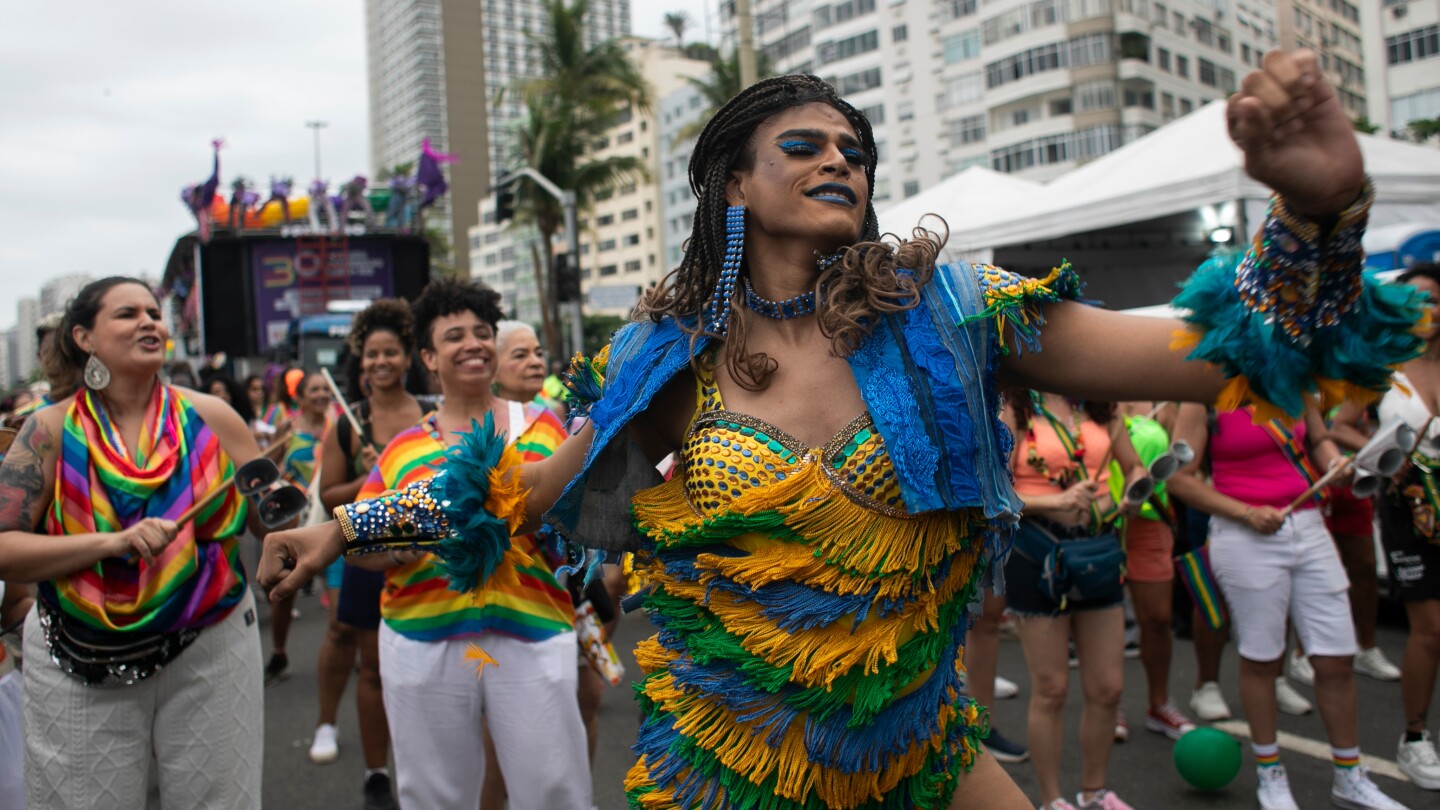
Thousands of revelers flooded Rio de Janeiro’s Copacabana boardwalk Sunday for the city’s annual Pride parade, with many celebrating the recent jailing of former President Jair Bolsonaro, a politician known for his inflammatory homophobic statements throughout his political career.
“He’s in prison!” and “Out with Bolsonaro!” shouted demonstrators from trucks to cheering crowds adorned in rainbow attire. The LGBTQ+ community, which faced persistent hostility from the far-right leader during his presidency, responded with enthusiastic applause.
“It’s very gratifying,” said Emy Mateus Santos, a 25-year-old arts professor wearing a T-shirt featuring the green and yellow of the Brazilian flag—colors that have become closely associated with Bolsonaro’s supporters. “It shows that fighting hate is worth it and that the future is possible for people like us,” she added, explaining her deliberate reclaiming of national colors from Bolsonaro’s movement.
Bolsonaro, who once described himself as a “proud homophobe” and stated he would “prefer a dead son to a gay son,” was sentenced to 27 years in prison in September for attempting a coup following his electoral defeat in 2022. Initially under house arrest, Supreme Court Justice Alexandre de Moraes ordered the 70-year-old’s preemptive jailing on Saturday, citing flight risk concerns. Bolsonaro admitted to tampering with his ankle monitor using a soldering iron but claimed his actions resulted from a nervous breakdown and hallucinations.
The timing of Bolsonaro’s jailing added symbolic significance to this year’s Pride event. Some parade participants carried “No amnesty!” stickers, protesting legislation that Bolsonaro’s allies are attempting to push through Congress that would reduce sentences for those convicted of attempting a coup.
This year’s Pride celebration marked three decades since Brazil’s first march in Rio, a milestone highlighted in the parade’s theme: “30 years making history: from the first struggles for the right to exist to building sustainable futures.” The evolution of the event reflects significant changes in Brazilian society regarding LGBTQ+ rights and visibility.
“Thirty years ago we had to make 1,000 masks out of papier-mâché for people who didn’t want to be recognized for fear of losing their jobs, of being kicked out from their families,” recalled Cláudio Nascimento, a longtime organizer. “Now we use masks to bring joy and to celebrate our existence.”
Despite progress, Brazil’s LGBTQ+ community continues to face violence and discrimination. According to the activist group Gay Group from Bahia, at least 291 LGBTQ+ Brazilians were victims of violent deaths in 2024—34 more than the previous year. These sobering statistics underscore the continuing need for Pride marches and advocacy.
“As long as these statistics are still a reality, Pride marches will still be necessary,” said Flávio Salgueiro, a 34-year-old lawyer from São Paulo who attended the Rio event. “It’s really important to show that a united community exists in a society which has a project to erase us.”
The celebration featured a massive rainbow flag carried collectively by participants. Trucks displayed messages such as “without lesbians, rights are not human” and “Rio without LGBTIphobia,” emphasizing the inclusive nature of the event while highlighting ongoing struggles for equality.
Many activists and community members point to Bolsonaro’s rhetoric as contributing to violence against LGBTQ+ people in Brazil. His inflammatory statements, they argue, legitimized discrimination and fostered a hostile environment during his presidency.
“As a politician, Bolsonaro greatly reduced public policies aimed at protecting, supporting and promoting diversity,” said Dani Balbi, the first transgender woman elected to Rio’s state assembly. “Seeing Bolsonaro imprisoned and then immediately having LGBT trucks out on the street is a celebration in the hope that politicians like him never return.”
The juxtaposition of Bolsonaro’s detention and Rio’s vibrant Pride celebration represents a moment of vindication for many in Brazil’s LGBTQ+ community who faced years of hostility from his administration. While challenges remain, the timing of these events has infused this year’s Pride with a particular sense of triumph and renewed hope for a more inclusive future.
Fact Checker
Verify the accuracy of this article using The Disinformation Commission analysis and real-time sources.

10 Comments
The reclaiming of national symbols is a fascinating aspect of this story. It speaks to the power of political identity and how marginalized groups can push back against oppressive leaders.
Absolutely. Symbols can be powerful tools for both oppression and liberation. It’s heartening to see the LGBTQ+ community in Brazil asserting their rightful place in the national narrative.
While Bolsonaro’s jailing is controversial, the LGBTQ+ community’s celebratory response reflects the depth of their struggle under his presidency. Their enthusiasm at the Pride parade is palpable.
While Bolsonaro’s jailing is controversial, it’s clear that the LGBTQ+ community in Brazil sees it as a major victory after facing his persistent hostility. Their celebrations at the Pride parade reflect the depth of that struggle.
Interesting to see how the LGBTQ+ community in Brazil is celebrating Bolsonaro’s downfall. It’s a complex political situation, but the joy at his jailing shows how his anti-LGBTQ+ rhetoric deeply impacted marginalized groups during his presidency.
Agreed, the LGBTQ+ community faced a lot of hostility under Bolsonaro’s leadership. His jailing, though controversial, seems to be a significant moment for them to reclaim their pride and national identity.
The reclaiming of the Brazilian flag colors is an interesting symbolic act. It shows how political symbols can be co-opted and then reclaimed by different groups over time.
Yes, the deliberate choice to wear the green and yellow colors is a powerful statement. It’s a reminder that national symbols don’t belong to any one faction, but to the people as a whole.
This is a complex political situation, but the joy and enthusiasm of the Pride marchers is palpable. It will be interesting to see how Brazil’s LGBTQ+ community continues to navigate the fallout from Bolsonaro’s presidency.
The deliberate choice to wear the Brazilian flag colors is a powerful statement. It shows how political symbols can be reclaimed and reinterpreted by different groups over time.