


Listen to the article
Australian Prisoner Sues for Right to Eat Vegemite, Claiming Cultural Deprivation
An Australian prisoner serving a life sentence for murder has launched a legal challenge against Victoria’s ban on inmates consuming Vegemite, claiming the prohibition violates his human rights as an Australian.
Andre McKechnie, 54, has taken his case to the Supreme Court of Victoria, arguing that denying access to the iconic Australian spread breaches his right to “enjoy his culture as an Australian” under the Charter of Human Rights and Responsibilities Act.
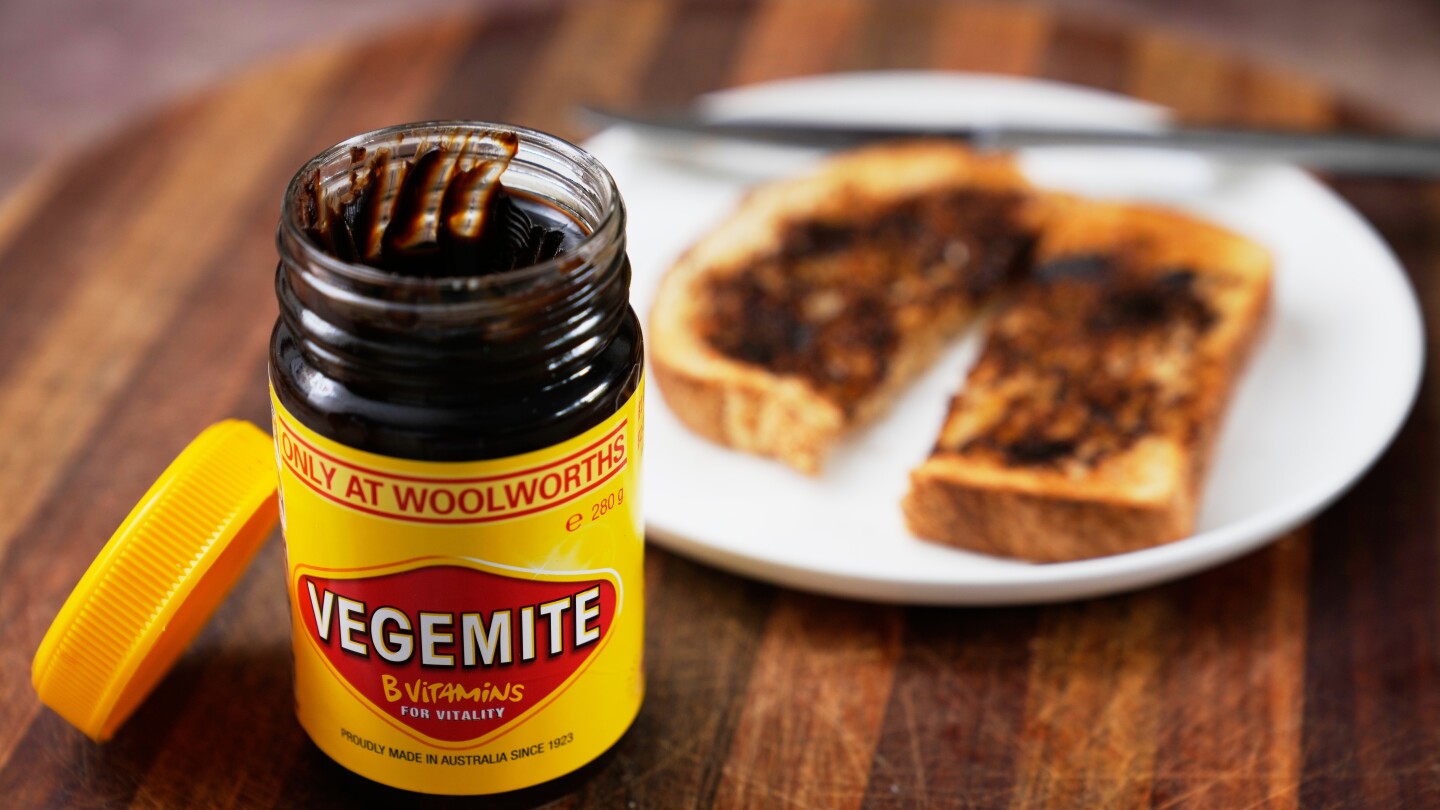
Vegemite, a dark brown, salty yeast extract, has been banned in all 12 Victorian prisons since 2006. Corrections officials cite two main concerns: the spread’s potential to interfere with drug detection dogs and its yeast content, which authorities fear could be used to produce alcohol behind bars.
The lawsuit represents an unusual intersection of cultural identity, prison regulations, and Australia’s relationship with one of its most distinctive culinary symbols. While polarizing internationally, Vegemite occupies a special place in Australian culture, with estimates suggesting more than 80 percent of Australian households keep a jar in their pantries.
McKechnie’s legal action specifically seeks court declarations that prison authorities denied him his cultural rights as an Australian and breached the Corrections Act by “failing to provide food adequate to maintain his well-being.” The case is scheduled for trial next year.
Corrections Victoria has maintained its stance on the ban, pointing to instances where inmates previously smeared illicit drug packages with Vegemite to mask their scent from detection dogs. The yeast concern persists despite Mondelez International, Vegemite’s former U.S. owner, having rejected claims that the product could be fermented. According to the company, the manufacturing process kills the yeast, making alcohol production impossible.
The cultural significance of Vegemite extends far beyond prison walls. Manufactured in Australia since 1923 as an alternative to Britain’s Marmite, the spread gained international recognition when mentioned in Men at Work’s 1980s hit “Down Under.” The product has been marketed for generations as a nutritious source of vitamin B for growing children.
While beloved by most Australians from childhood, Vegemite typically confounds foreign palates. Former U.S. President Barack Obama once bluntly described it as “horrible.” Australian travelers often lament its scarcity abroad, and the spread has occasionally triggered international incidents. Earlier this year, the Australian government intervened in what media dubbed “Vegemite-gate” when Canadian officials temporarily prevented a Toronto café from selling the product due to packaging and vitamin fortification regulations.
The prison ban isn’t universal across Australia. While Queensland, South Australia, Tasmania, and the Australian Capital Territory also prohibit the spread in correctional facilities, Australia’s most populous state, New South Wales, allows inmates access to Vegemite.
The lawsuit has drawn criticism from victims’ rights advocates who view it as frivolous and insensitive. John Herron, whose daughter Courtney was murdered in a Melbourne park in 2019, expressed frustration with the legal action.
“As victims, we don’t have any rights. We have limited, if any, support. It’s always about the perpetrator, and this just reinforces that,” Herron said. “It’s not a case of Vegemite or Nutella or whatever it may be. It’s an extra perk that is rubbing our faces in the tragedy that we’ve suffered.”
McKechnie, currently held in maximum-security Port Phillip Prison, was convicted of murdering wealthy Gold Coast property developer Otto Kuhne in Queensland in 1994. He was transferred from Queensland to Victorian custody a decade after his conviction.
The Department of Justice and Community Safety and Corrections Victoria have declined to comment on the ongoing legal matter, consistent with government policy regarding active court proceedings. McKechnie’s legal representatives have not responded to requests for comment.
Fact Checker
Verify the accuracy of this article using The Disinformation Commission analysis and real-time sources.

11 Comments
While Vegemite is deeply rooted in Australian culture, I can understand the prison’s hesitation to allow it given potential security risks. This case highlights the challenge of balancing prisoner rights with operational needs. It will be interesting to see the court’s reasoning and whether a compromise solution can be found.
As an Australian, I can appreciate the prisoner’s desire to have access to this cultural touchstone. Vegemite is deeply ingrained in our national identity. However, the prison’s concerns around security and potential misuse also seem valid. It will be an interesting case to follow.
Absolutely. There’s no easy answer here. Prisoner rights versus practical concerns of prison management. I’m curious to see if the court can find a middle ground solution that addresses both perspectives.
An interesting intersection of human rights, prison regulations, and national identity. While Vegemite is iconic in Australia, the prison’s security concerns also seem valid. I’ll be interested to see how the courts navigate balancing those competing interests in this case.
This is an interesting case that touches on the intersection of cultural identity, prisoner rights, and prison regulations. While Vegemite is a beloved Australian icon, I can understand the concerns around potential security risks in a prison setting. It will be intriguing to see how the courts navigate balancing those factors.
I agree, it’s a complex issue with valid arguments on both sides. Prisoners should have reasonable access to cultural foods, but prisons also need to maintain order and safety. Curious to see the court’s reasoning and if any compromises are possible.
While Vegemite is a beloved Australian food, I understand the prison’s hesitation to allow it due to potential security risks. Hopefully the courts can find a way to balance the prisoner’s cultural needs with the prison’s operational requirements. This is a nuanced case worth watching.
This is a unique case that highlights the challenges of preserving cultural identity within a prison system. I’m curious to see the legal arguments on both sides and whether the court can find a reasonable compromise. Prisons need to maintain order, but inmates should also have access to culturally significant foods.
This is an unusual case that touches on some complex issues. On one hand, denying a prisoner access to a culturally significant food like Vegemite could be seen as a violation of their rights. But the prison’s security concerns also seem reasonable. It will be intriguing to see how the courts navigate this tricky situation.
As an Australian, I understand the prisoner’s desire to have access to Vegemite, which is so deeply rooted in our culture. However, the prison’s worries about potential issues like drug detection and alcohol production also seem legitimate. This will be a tricky case for the courts to resolve.
Agreed, it’s a delicate balance. Hopefully the courts can find a solution that preserves the prisoner’s cultural rights while also addressing the prison’s valid security concerns. An interesting case to follow.