


Listen to the article
Australian authorities have ruled that a man who set fire to a Melbourne synagogue in July was motivated by untreated schizophrenia rather than antisemitism, contrary to initial government assertions about the attack’s nature.
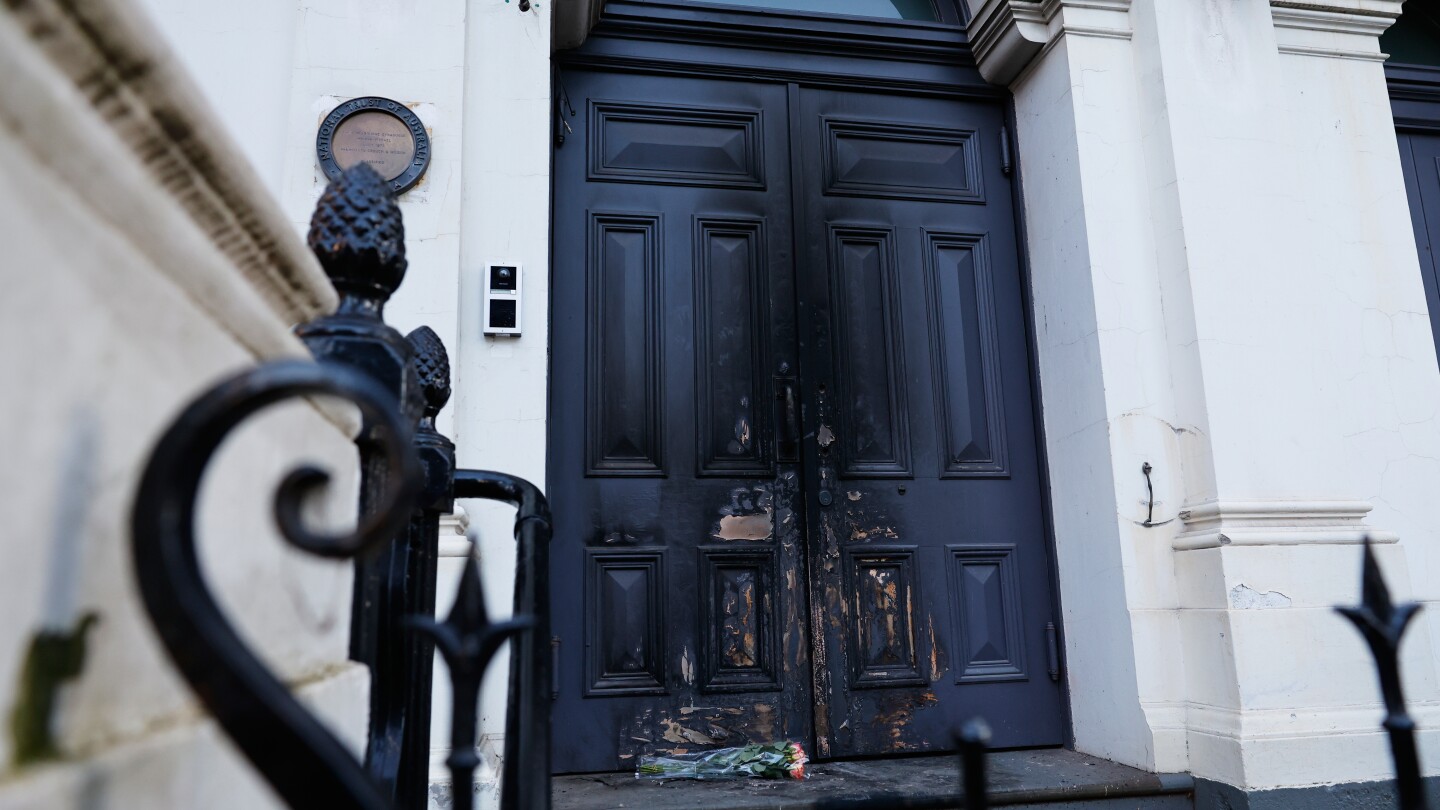
Angelo Loras, 35, was sentenced Monday after pleading guilty to arson and recklessly placing people at risk of death. The incident occurred on July 4 when Loras doused the front door of East Melbourne Synagogue with flammable liquid and set it ablaze while approximately 20 worshippers were inside sharing a Shabbat meal. Despite the potential for tragedy, no injuries were reported.
Magistrate Malcolm Thomas determined that Loras, who had failed to take his schizophrenia medication, was “in the grip of a terrifying delusion” when he committed the act. This finding contrasts with initial statements from Prime Minister Anthony Albanese, who condemned the attack as “cowardly, an act of violence and antisemitism” that “has no place in Australian society.”
The court sentenced Loras to four months’ imprisonment, less than the 138 days he had already spent in custody, making him eligible for immediate release. His sentence includes requirements to continue medical treatment for his mental illness for 20 months and perform community service.
The synagogue suffered damage estimated at 54,000 Australian dollars (approximately $35,000), but Thomas advised the congregation not to pursue restitution given Loras’s extended period of homelessness. Before his descent into mental illness and homelessness, Loras had worked as a forklift driver in Sydney with no prior criminal record.
This incident occurred against a backdrop of heightened religious tensions in Australia. Since the outbreak of the Israel-Hamas conflict in October 2023, the country has witnessed a significant rise in both antisemitic and Islamophobic incidents. The East Melbourne Synagogue attack was one of three suspected antisemitic incidents across Melbourne during the same weekend in early July.
On July 5, about 20 masked protesters harassed diners at an Israeli-owned restaurant, breaking a window, flipping tables, and throwing chairs while chanting “Death to the IDF” (Israel Defense Forces). Police also investigated the vandalism of a Melbourne business and an arson attack on three vehicles associated with that business on July 6, noting “antisemitic inferences” at the scene.
Australian authorities have taken a strong stance against religiously motivated attacks. In a separate case, the Australian government blamed Iran’s paramilitary Revolutionary Guards for orchestrating arson attacks on Melbourne’s Adass Israel Synagogue in December 2023 and a Sydney kosher food business two months earlier. Australian intelligence agencies characterized these as antisemitic crimes designed to undermine social cohesion, allegations Iran has denied.
The distinction drawn in Loras’s case between mental illness and ideological motivation highlights the complex factors that can lead to violent incidents, which may be misinterpreted in the immediate aftermath. The case also underscores the challenges in addressing both mental health crises and community tensions in a diverse society.
Mental health advocates have long pointed to cases like this as evidence of the importance of consistent treatment and support for those suffering from serious conditions like schizophrenia, which can lead to severely impaired judgment when left untreated.
Meanwhile, Jewish community leaders continue to express concern about the overall rise in antisemitic incidents in Australia, regardless of the motivations behind individual cases.
Fact Checker
Verify the accuracy of this article using The Disinformation Commission analysis and real-time sources.

10 Comments
Sad to hear this tragic incident was driven by mental illness, not hatred. Glad no one was hurt, but the offender clearly needs ongoing treatment and support to prevent such dangerous episodes in the future.
You’re right, mental illness can lead people to do terrible things they wouldn’t otherwise do. Compassion and better access to mental healthcare are key to preventing such incidents.
It’s good the court recognized the role of mental illness in this case, rather than jumping to conclusions about antisemitism. Proper treatment and rehabilitation should be the priority going forward.
Absolutely. Addressing the root cause of the offender’s actions, rather than just punishing, is the most constructive approach here.
While the attack on the synagogue was still a very serious incident, I’m relieved the court recognized it was driven by mental illness, not hate. Ongoing treatment and support for the offender is crucial.
This is a complex situation, but I’m glad the judge was able to look past initial assumptions and understand the true motivations behind the synagogue arson. Mental health support is so important.
While the motivation was not antisemitism, any attack on a place of worship is deeply concerning. I hope the synagogue community can heal from this traumatic event and feel safe in their place of faith.
Agreed. Even if not driven by hatred, an attack on a house of worship is a violation of the sanctity of that space. Ongoing security and community support will be important.
Glad to hear the judge took the time to properly assess the motivations and circumstances behind this incident. Mental health issues deserve understanding and compassion, not knee-jerk accusations.
It’s reassuring to see the legal system take a nuanced approach and not jump to conclusions about antisemitism. Addressing the offender’s mental health issues is the right call here.