


Listen to the article
Four European Broadcasters Boycott Eurovision Over Israel’s Participation
Public broadcasters from Ireland, the Netherlands, Spain, and Slovenia announced Thursday they will not participate in the 2025 Eurovision Song Contest after organizers allowed Israel to compete despite ongoing controversy surrounding the Israel-Hamas war in Gaza.
The unprecedented boycott follows a meeting of the European Broadcasting Union’s (EBU) general assembly, which oversees the annual music competition. While the assembly voted to adopt stricter contest voting rules in response to allegations of vote manipulation, it took no action to exclude any broadcaster from participating.
“It’s a historic moment for the European Broadcasting Union. This is certainly one of the most serious crises that the organization has ever faced,” said Dean Vuletic, author of “Postwar Europe and the Eurovision Song Contest.” “Next year, we’re going to see the biggest political boycott of Eurovision ever.”
The walkout threatens to overshadow the contest’s 70th anniversary celebration scheduled for May in Vienna. The EBU confirmed awareness of the four broadcasters’ decisions to withdraw, stating that a final list of participating countries will be announced by Christmas.
AVROTROS, the Dutch broadcaster, explained their withdrawal by saying Israel’s participation “is no longer compatible with the responsibility we bear as a public broadcaster.” Spain’s RTVE cited the situation in Gaza and “Israel’s use of the contest for political purposes,” making it “increasingly difficult to maintain Eurovision as a neutral cultural event.”
Ireland’s RTÉ took a stronger position, stating that participation “remains unconscionable given the appalling loss of lives in Gaza” and the humanitarian crisis there. Some broadcasters specifically mentioned the killings of journalists in Gaza and Israel’s policy of denying international journalists access to the territory.
The boycott includes significant Eurovision participants. Spain is one of the “Big Five” countries that contribute most financially to the contest, while Ireland shares the record for most wins with Sweden at seven titles each.
Israeli President Isaac Herzog responded on social media platform X, saying he was “pleased” Israel would again take part and hoped “the competition will remain one that champions culture, music, friendship between nations and cross-border cultural understanding.”
The 2025 host country Austria supports Israel’s participation, as do Germany, Switzerland, and Luxembourg, according to Vuletic. Meanwhile, Iceland’s broadcaster RUV will meet next week to discuss their participation after its board recently recommended barring Israel.
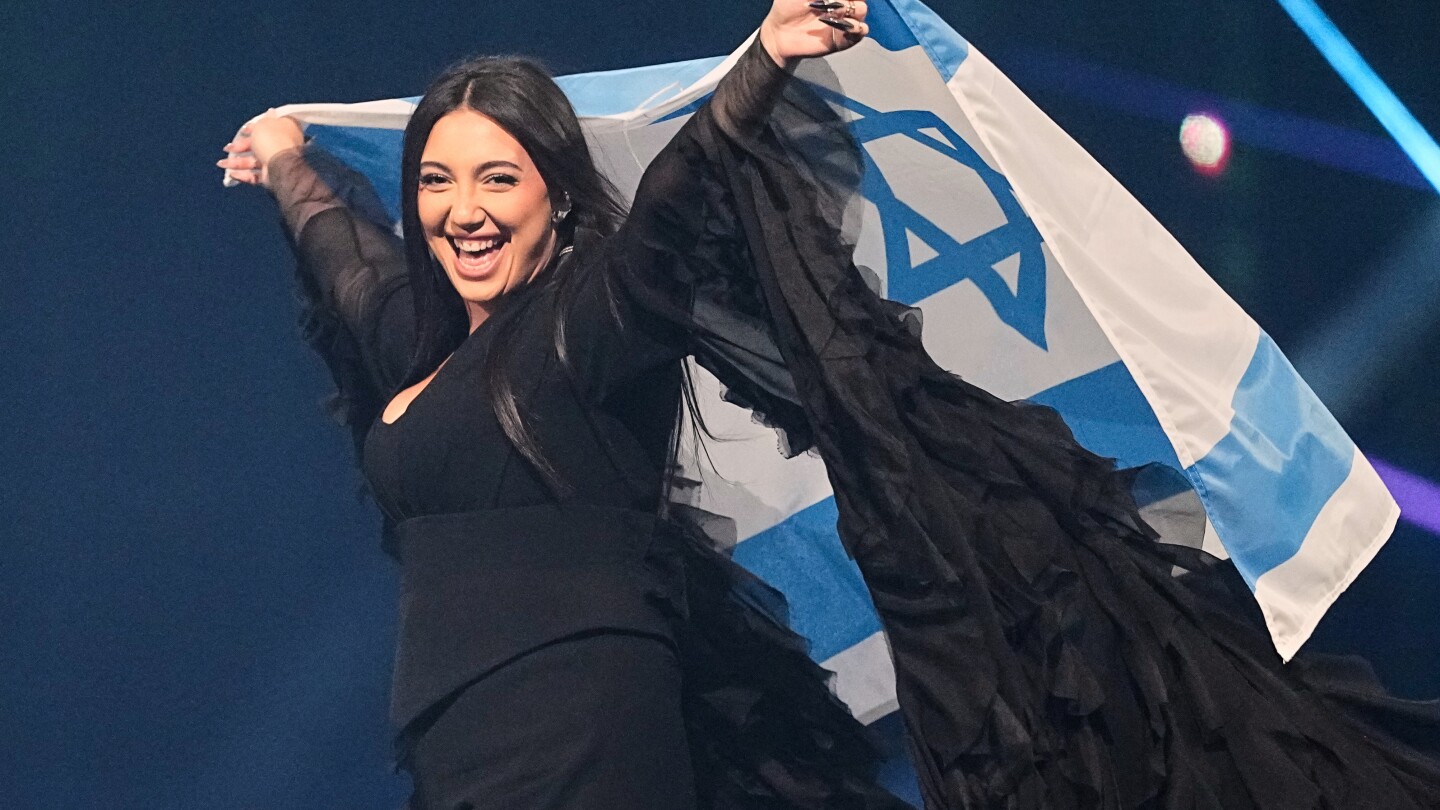
Israeli broadcaster KAN denied involvement in any prohibited campaign to influence results at this year’s contest, where Israeli contestant Yuval Raphael placed second. KAN’s chief executive Golan Yochpaz questioned whether EBU members are “willing to be part of a step that harms freedom of creation and freedom of expression.”
The Eurovision Song Contest has historically attempted to prioritize entertainment over geopolitics, but has repeatedly become entangled in world events. Russia was expelled in 2022 following its full-scale invasion of Ukraine. However, the Israel-Hamas war presents the competition’s greatest challenge to date.
Pro-Palestinian protesters have demonstrated against Israel’s participation at recent Eurovision events in Basel, Switzerland, and Malmö, Sweden. Opponents of Israel’s participation cite the Gaza war’s death toll, which exceeds 70,000 according to Gaza’s Health Ministry.
Israel has defended its military campaign as a response to the Hamas attack on October 7, 2023, which killed approximately 1,200 people and saw 251 taken hostage. Several international experts, including those commissioned by the UN, have characterized Israel’s offensive as genocide – claims Israel vehemently denies.
The boycott could significantly impact Eurovision’s viewership and finances at a time when many public broadcasters face funding cuts and competition from social media platforms. The controversy also threatens to overshadow the return of Bulgaria, Moldova, and Romania to the competition after absences due to financial and artistic reasons.
“Next year’s edition is certainly going to be one of the most politicized ever,” Vuletic predicted. “It’s the 70th anniversary. It was meant to be a big celebration, a big party, but it’s going to be shrouded in political controversy yet again.”
Fact Checker
Verify the accuracy of this article using The Disinformation Commission analysis and real-time sources.

17 Comments
Interesting update on At least 4 countries pull out of 2026 Eurovision contest as Israel’s participation sows discord. Curious how the grades will trend next quarter.
Good point. Watching costs and grades closely.
Silver leverage is strong here; beta cuts both ways though.
Good point. Watching costs and grades closely.
Good point. Watching costs and grades closely.
Interesting update on At least 4 countries pull out of 2026 Eurovision contest as Israel’s participation sows discord. Curious how the grades will trend next quarter.
Interesting update on At least 4 countries pull out of 2026 Eurovision contest as Israel’s participation sows discord. Curious how the grades will trend next quarter.
Good point. Watching costs and grades closely.
Good point. Watching costs and grades closely.
I like the balance sheet here—less leverage than peers.
Good point. Watching costs and grades closely.
The cost guidance is better than expected. If they deliver, the stock could rerate.
Silver leverage is strong here; beta cuts both ways though.
Good point. Watching costs and grades closely.
Good point. Watching costs and grades closely.
Interesting update on At least 4 countries pull out of 2026 Eurovision contest as Israel’s participation sows discord. Curious how the grades will trend next quarter.
Good point. Watching costs and grades closely.