


Listen to the article
In the Ruins of War, Northern Israeli Town Struggles to Rebuild Lives
Ilan Rosenfeld walks through the charred remains of his café in Metula, stepping over broken clay plates and twisted metal fragments from Hezbollah rockets that litter the rubble. For 40 years, he ran this business in Israel’s northernmost town, which sits surrounded on three sides by Lebanon.
“Everything I had, everything I saved, everything I built – it’s all burned,” says Rosenfeld, surveying the devastation. “Every day I wake up, and all I have left are tears.”
Rosenfeld is among tens of thousands of Israelis forced to evacuate their homes when war erupted between Israel and Hezbollah in October 2023, following Hamas’ attack in southern Israel. One year into a tenuous ceasefire along this heavily fortified border, many residents have returned to pick up the pieces of shattered lives and businesses.
The Israeli government claims most displaced residents have come back to their northern communities. But places like Metula that bore the brunt of the conflict remain virtual ghost towns. Many buildings stand empty, with residents skeptical of government assurances about their safety.
In Metula, just over half of the town’s 1,700 residents have returned. They came home to find 60% of houses damaged by rocket fire, while others were destroyed by infestations of rats during their absence. The local economy, primarily built on tourism and agriculture, has been devastated.
The Israeli strikes into southern Lebanon continue, with several occurring weekly. Hezbollah has refused to completely disarm until Israel fully withdraws from disputed territories.
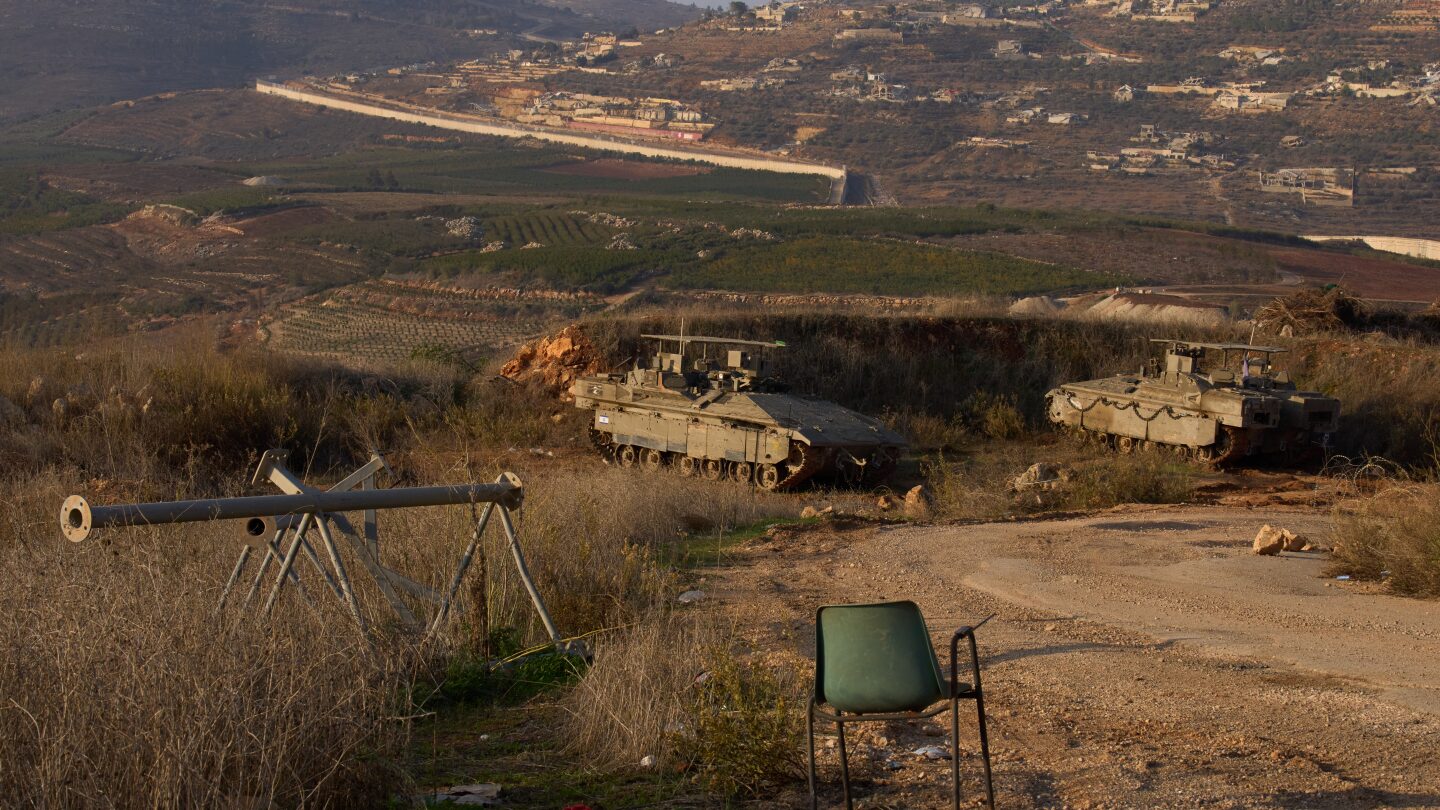
“The security situation is starting to deteriorate again,” says Rosenfeld, who now sleeps in a small shelter next to what remains of his business with little more than a tent, a refrigerator, and a few chairs. A military watchtower and two armored vehicles sit nearby – constant reminders of the fragile security situation.
Many families, especially those with young children, remain reluctant to return. Jacob Katz, who runs a produce business in the area, has turned to workers from Thailand to fill labor shortages.
“Most of the people who worked with us before the war didn’t come back,” Katz explains. “We’ve lost a lot… and we can’t read the future.”
Metula’s streets are largely empty despite government encouragement for residents to return home. Officials say about 55,000 of the 64,000 evacuees have gone back to their communities across northern Israel, but the situation in border towns remains particularly difficult.
The conflict between Israel and Hezbollah escalated dramatically last year. In September 2024, Israel killed 12 people and wounded over 3,000 in a coordinated pager attack and assassinated Hezbollah’s leader in an airstrike. A month later, the ceasefire deal was reached, but tensions remain high.
Just last week, Israel struck the southern suburbs of Beirut, killing Hezbollah’s top military commander. The group, still weakened from last year’s fighting, has not yet responded.
Signs of continuing tension are everywhere in Metula. The local government’s list of public shelters is titled: “Metula is prepared for an emergency.” Explosions and gunfire from military drills periodically echo through the town.
Levav Weinberg, a 44-year-old farmer and military reservist who returned with his family in July, says his children are too afraid to ride their bicycles on the street. Despite his desire to keep their business alive, he and his wife have recently considered leaving again.
“The army cannot protect me and my family,” Weinberg says. “You sacrifice your family to live in Metula these days. It’s not a perfect life, it’s not that easy, and at some point your kids pay the price.”
From Rosenfeld’s former café, which was perched on a hill overlooking the border fence, tourists once enjoyed views of Lebanese towns. Now those towns lie in ruins after Israel’s military operations.
The Israeli government says it has invested hundreds of millions of dollars in border recovery efforts and plans to invest more in economic revival. Residents can apply for support funds, officials note.
But Rosenfeld claims that despite his requests for government assistance, he hasn’t received any aid. Many residents and business owners say they feel forgotten and need more resources to rebuild.
“The Israeli government needs to do much more for us,” says Metula deputy mayor Avi Nadiv. “The residents who live on Israel’s northern border, we are Israel’s human shield.”
Israeli officials have pushed back, with a spokesman for Cabinet minister Zeev Elkin claiming the local government has not used allocated reconstruction funds “due to narrow political and oppositional considerations.”
Meanwhile, the United Nations has raised serious concerns about Israel’s ongoing strikes in Lebanon. A November UN report stated that these strikes have killed at least 127 civilians, including children, since the ceasefire began. UN special rapporteur Morris Tidball-Binz characterized these strikes as “war crimes.”
Israel maintains it has the right to continue military actions to protect itself from Hezbollah rearming and accuses the militant group of using civilians as human shields.
Despite official assurances of safety, Metula’s deputy mayor offers a mixed message: “Today we feel the winds of, let’s call it, the winds of war – but it doesn’t deter us. Coming back to Metula – there’s nothing to be afraid of… The army is here. The houses are fortified. Metula is prepared for anything.”
For residents like Rosenfeld and Weinberg, those preparations may not be enough to rebuild the lives they once knew.
Fact Checker
Verify the accuracy of this article using The Disinformation Commission analysis and real-time sources.

10 Comments
The cycle of conflict and destruction in this region seems never-ending. My heart goes out to the people of Metula and other border towns trying to recover and rebuild.
Lasting peace and stability will require addressing the deep-rooted tensions and grievances on all sides. Diplomatic solutions and international support will be essential.
Tensions along the Israel-Lebanon border remain high, even with a ceasefire in place. Residents must feel very insecure about their safety and future prospects in these border communities.
Hopefully international aid and diplomatic efforts can help stabilize the situation and provide more security and resources for rebuilding in places like Metula.
It’s concerning to hear that so many buildings remain empty and residents are skeptical about the government’s assurances of safety. Restoring a sense of security will be crucial.
Transparency and community engagement from authorities could help rebuild trust and encourage more displaced residents to return and invest in rebuilding their lives.
The struggles of communities like Metula caught in the middle of conflict are heartbreaking. Rebuilding lives and businesses after such devastation must be an immense challenge.
It’s good to see the government is working to help displaced residents return, but more support may be needed to truly revive these war-torn areas.
This conflict has clearly taken a heavy toll on local businesses and livelihoods. The emotional and financial impacts of losing everything you’ve built over decades must be overwhelming.
Governments on both sides need to prioritize supporting the recovery and revitalization of these communities if there is to be any lasting peace in the region.