


Listen to the article
Sahel Conflict Forces Herders to Abandon Traditional Life for Urban Struggles in Ivory Coast
Nouhoun Sidibè’s life changed forever in 2020 when armed men attacked his home in northern Burkina Faso, stealing all his livestock. In moments, the 49-year-old father of four lost not just his livelihood but his identity as a pastoralist—a way of life shared by generations of his family.
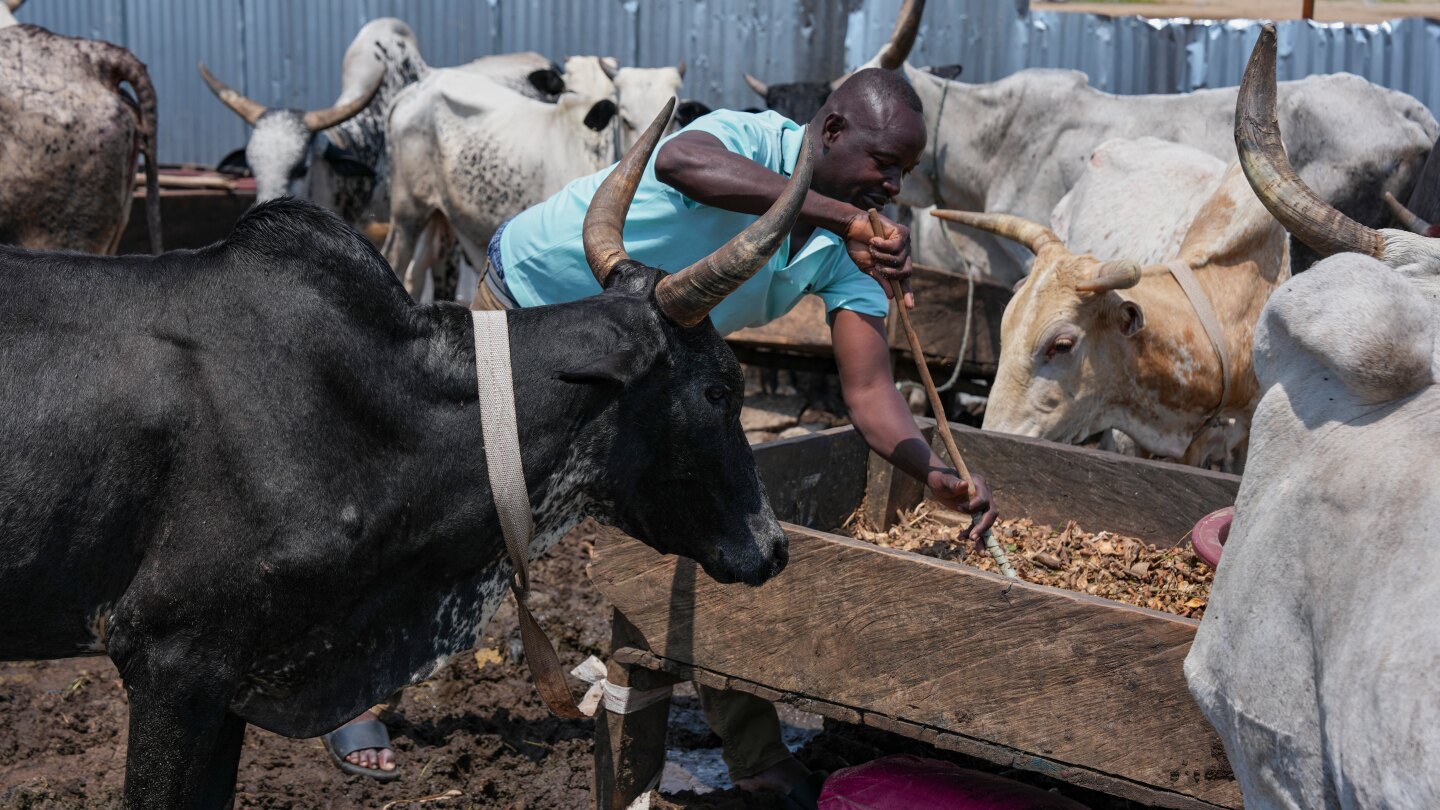
“I feel very, very lost. I was a chief, and now I have come here and I am working for someone else,” Sidibè told The Associated Press from a stockyard on the outskirts of Abidjan, Ivory Coast’s capital, where he now lives in cramped quarters with no bathroom or kitchen.
For three years after the attack, Sidibè wandered from town to town in Burkina Faso seeking work as the nation faced increasing violence from armed groups, many linked to al-Qaida. Finding no opportunities, he finally crossed into neighboring Ivory Coast in 2023, joining thousands of other displaced herders seeking safety from the spreading conflict in the Sahel region.
Today, he survives by helping cattle sellers vaccinate their herds—a far cry from his former status and independence. “You can’t keep livestock here, but since I didn’t have any anymore, there was nothing stopping me from coming,” he explained.
The situation has grown so concerning that earlier this month, Ivory Coast announced it was strengthening security along its northern borders after noting “several unusual flows of refugees from Mali.”
Conflict Transforms West Africa
The Sahel conflict, which began with unrest in northern Mali in 2012, has since spread across landlocked Burkina Faso and Niger, fundamentally reshaping population movements throughout West Africa.
Between January and March of this year alone, more than 72,000 people fled violence in Burkina Faso and Mali to seek refuge in Ivory Coast, according to UNICEF data. This represents a significant increase from the 54,000 displaced persons recorded by the International Organization for Migration between April 2021 and March 2024.
Experts say armed groups target herders and seize livestock for multiple purposes—financing operations, establishing territorial control, and intimidating communities. The violence disproportionately affects nomadic herders, many of whom belong to the Fulani ethnic group, who have faced accusations of sympathizing with extremist organizations despite being frequent victims of the same armed groups.
“There is no Fulani without his cattle, that is his identity,” explained Amadou Sonde, secretary general of the Federation of Burkinabè Fulani Associations in Ivory Coast.
Cultural Loss and Urban Challenges
For displaced herders, the transition to urban life represents not just economic hardship but a profound cultural loss. Most have little formal education, making the adaptation to city jobs particularly challenging.
“With the insecurity surrounding livestock and tensions between farmers and herders, there has been a trend among Fulani herd owners to switch to land acquisition, real estate or shops,” said Yao Kouamé, a research professor in sociology at Ivory Coast’s University of Bouakè.
Tanané Ibrahim, who fled his village in Burkina Faso after armed militants seized his sheep and cattle three years ago, has no intention of returning home. “What is the point? The entire population has left for the city. The village is deserted,” the 42-year-old said. “The militants did not even leave the chickens.”
Now living alongside other displaced herders in a wasteland outside Abidjan, Ibrahim speaks wistfully of his former life. “It was total freedom. You’re with your animals, you can rest,” he recalled. “In the city, everything is crazy expensive. You have to work hard to get paid, and when you pay for what you need to live, you have nothing left, so you have to go back to work.”
Long-Term Crisis with No End in Sight
Ivory Coast, with its relatively stable economy and status as a regional hub, has long attracted migrants from neighboring countries. However, the influx has accelerated dramatically in recent years after military juntas seized power in Mali, Burkina Faso, and Niger.
Oluwole Ojewale, a Senegal-based conflict expert at the Institute of Security Studies, offers little hope for a quick resolution. “The military juntas in the central Sahel states are becoming increasingly overwhelmed by assaults from multiple armed groups. The crisis is far from over,” he warned.
Sonde, who helps newly arrived migrants find work, says his responsibilities have grown exponentially as thousands seek assistance. The jobs available—drivers, shop assistants, factory workers—bear little resemblance to the pastoral lifestyle these herders once knew.
For men like Sidibè and Ibrahim, the future remains uncertain as they struggle to rebuild lives stripped of both livelihood and cultural identity in the unfamiliar urban landscape of Abidjan—casualties of a conflict that continues to transform the human geography of West Africa with no end in sight.
Fact Checker
Verify the accuracy of this article using The Disinformation Commission analysis and real-time sources.

21 Comments
Nice to see insider buying—usually a good signal in this space.
Good point. Watching costs and grades closely.
I like the balance sheet here—less leverage than peers.
Nice to see insider buying—usually a good signal in this space.
Good point. Watching costs and grades closely.
Exploration results look promising, but permitting will be the key risk.
Good point. Watching costs and grades closely.
Good point. Watching costs and grades closely.
If AISC keeps dropping, this becomes investable for me.
Uranium names keep pushing higher—supply still tight into 2026.
Interesting update on As conflict grips Sahel, herders are pivoting to an unusual city life. Curious how the grades will trend next quarter.
Good point. Watching costs and grades closely.
Interesting update on As conflict grips Sahel, herders are pivoting to an unusual city life. Curious how the grades will trend next quarter.
Good point. Watching costs and grades closely.
If AISC keeps dropping, this becomes investable for me.
Good point. Watching costs and grades closely.
Nice to see insider buying—usually a good signal in this space.
Good point. Watching costs and grades closely.
Good point. Watching costs and grades closely.
Uranium names keep pushing higher—supply still tight into 2026.
Good point. Watching costs and grades closely.