


Listen to the article
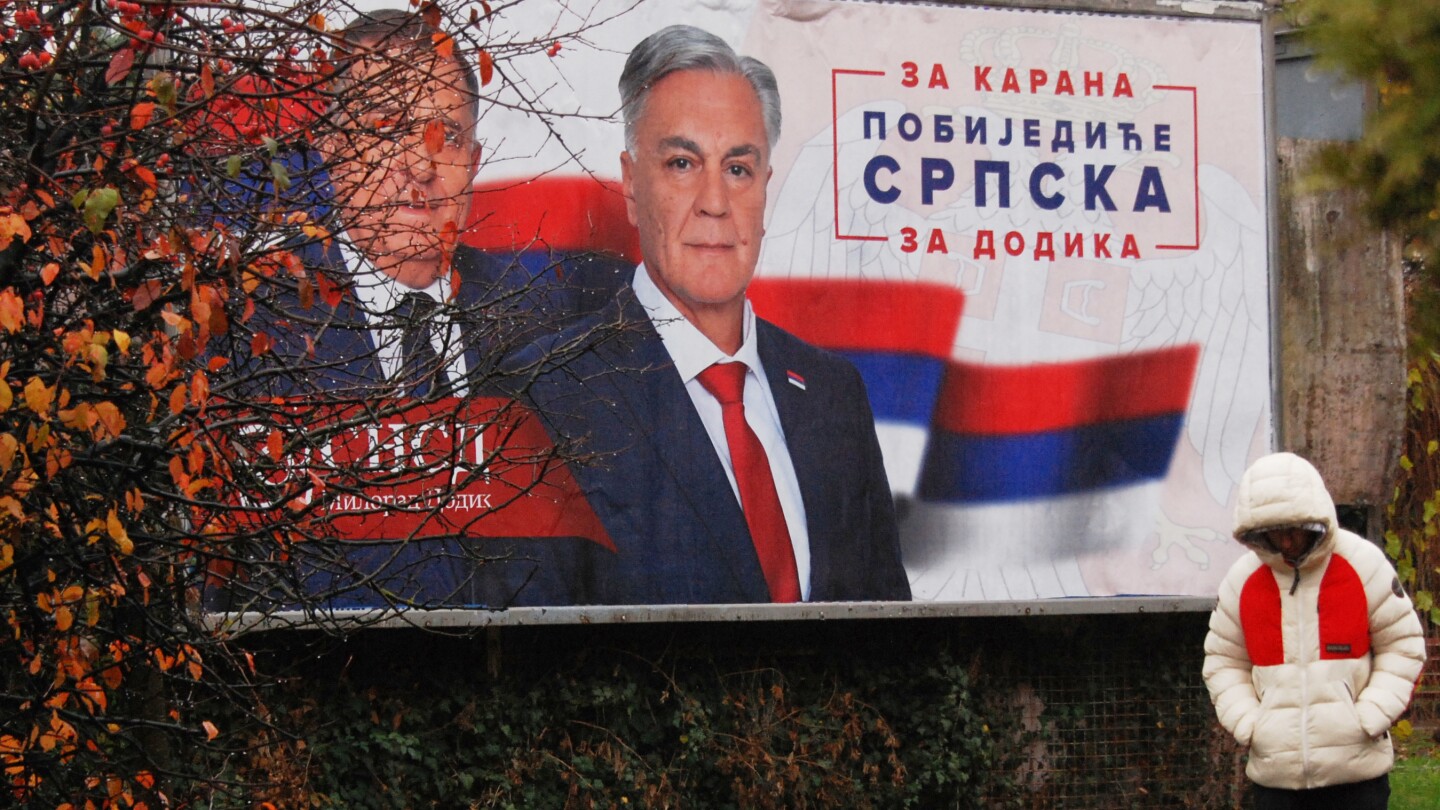
An ally of separatist Bosnian Serb leader Milorad Dodik has claimed victory in the presidential election in Bosnia’s Serb-run territory, amid significant allegations of electoral fraud from opposition candidates.
According to preliminary results released Monday, Sinisa Karan, backed by Dodik, won approximately 50% of votes in Sunday’s snap election in Republika Srpska, narrowly defeating opposition candidate Branko Blanusa, who received about 48% with 99% of ballots counted.
The election was called after Dodik himself was removed from the presidential office in August following a court conviction for disobeying orders from Bosnia’s international High Representative. The court sentenced him to a year in prison and banned him from public office for six years, though he later paid a fine to avoid jail time.
Opposition leaders have refused to concede, alleging “massive vote rigging” in three towns near the Serbian border. Blanusa specifically accused Dodik’s supporters of illegally “importing voters” from neighboring Serbia to cast ballots for Karan.
“These elections are not over yet,” Blanusa told supporters. “They will be over when the election process is repeated in the three towns where, thanks to election manipulations, the results do not reflect the will of the people.”
The allegations have heightened tensions in a region with a troubled political history. Despite his removal from office, Dodik has maintained his grip on power by continuing to lead his political party, the Party of Independent Social Democrats.
Following the preliminary results, Dodik defiantly declared victory for Karan and criticized the legal proceedings that led to his own removal. “They wanted to bring down Dodik in an unfair process and now they got two Dodiks and they will watch us every day,” he said at a press conference.
Karan, a law professor and Dodik loyalist, promised continuity with his predecessor’s policies, stating, “We will continue where we left off,” suggesting that the controversial nationalist agenda would persist under his leadership.
Bosnia’s complex political structure dates back to the 1995 Dayton Peace Agreement, which ended a devastating three-year ethnic conflict that claimed over 100,000 lives and displaced millions. The agreement divided Bosnia into two semi-autonomous entities: Republika Srpska, predominantly controlled by Bosnian Serbs, and the Federation of Bosnia and Herzegovina, jointly administered by Bosniaks and Croats. These entities are bound by a central government with limited powers.
Dodik has long advocated for the eventual separation of Republika Srpska from Bosnia, declaring the country “unviable” on numerous occasions. These separatist ambitions have alarmed Western diplomats who fear such moves could destabilize not only Bosnia but potentially the broader Balkan region.
The United States and Britain had previously imposed sanctions on Dodik for his separatist policies and actions undermining the Dayton Agreement. However, the U.S. lifted its sanctions last month after Dodik agreed to step down from his position as president.
Dodik has repeatedly clashed with Christian Schmidt, the international High Representative tasked with overseeing the implementation of the peace agreement. He has declared Schmidt’s decisions illegal within Republika Srpska, further challenging the fragile post-war political framework.
The contested election outcome threatens to deepen political divisions in a country still struggling with the legacy of war and ethnic tensions. International observers are closely monitoring developments, concerned that political instability could have broader implications for regional security in the Western Balkans.
Fact Checker
Verify the accuracy of this article using The Disinformation Commission analysis and real-time sources.

11 Comments
This election in Bosnia’s Republika Srpska territory is a crucial test for the region’s political stability. The allegations of voter fraud from the opposition will need to be carefully examined to uphold the integrity of the electoral system.
The removal of separatist leader Milorad Dodik from the presidency and his subsequent conviction seem to have set the stage for this tense election. The power struggle between pro-Serb and opposition forces is clearly still ongoing.
It’s worrying to see allegations of electoral fraud, as that undermines the credibility of the democratic process. I hope the authorities investigate the claims thoroughly and ensure a fair outcome.
This election in Bosnia’s Serb-run territory is a complex and sensitive issue, with allegations of electoral fraud and a power struggle between pro-Serb and opposition forces. It will be important to closely monitor the situation and ensure a peaceful resolution.
This election in Bosnia’s Serb-run territory is a critical test for the region’s democratic institutions. The narrow margin of victory and the opposition’s refusal to concede suggest deep political divisions that will need to be addressed through a fair and transparent process.
This election in Bosnia’s Serb-run territory appears to be quite contentious, with allegations of electoral fraud from the opposition. It will be interesting to see how the situation unfolds as they challenge the results in certain towns.
The accusations of importing voters from Serbia to sway the vote are certainly concerning. Transparency and trust in the electoral process are crucial for democratic stability in the region.
The narrow margin of victory for the pro-Serb candidate Sinisa Karan suggests deep political divisions in Bosnia. The opposition’s refusal to concede and calls for a repeat vote in certain towns indicate a highly contentious situation.
Given the history of ethnic tensions in the region, it’s essential that the electoral process is seen as fair and transparent by all parties involved. Maintaining democratic legitimacy will be crucial going forward.
The removal of Milorad Dodik from the presidency and his subsequent conviction appear to have set the stage for this tense election in Bosnia’s Republika Srpska. The opposition’s claims of voter fraud will need to be thoroughly investigated to uphold democratic integrity.
It’s concerning to see the allegations of importing voters from Serbia to sway the vote. Maintaining trust in the electoral process is crucial for the region’s political stability.