


Listen to the article
The chief executive of Air Canada apologized Thursday for his inability to communicate in French following backlash over a primarily English-language condolence message he issued after Sunday’s deadly crash in New York.
Michael Rousseau faced sharp criticism for the four-minute video posted online that included only two French words — “bonjour” and “merci” — despite the airline being headquartered in predominantly French-speaking Montreal, Quebec.
“I am deeply saddened that my inability to speak French has diverted attention from the profound grief of the families and the great resilience of Air Canada’s employees, who have demonstrated outstanding professionalism despite the events of the past few days,” Rousseau said in a statement.
“Despite many lessons over several years, unfortunately, I am still unable to express myself adequately in French. I sincerely apologize for this, but I am continuing my efforts to improve.”
The controversy has escalated to the highest levels of Canadian government, with Quebec Premier François Legault calling for Rousseau’s resignation on Wednesday. Canadian Prime Minister Mark Carney criticized the CEO’s actions, saying they demonstrated “a lack of compassion and judgment,” and indicated he expected to hear more from Air Canada’s board of directors about the situation.
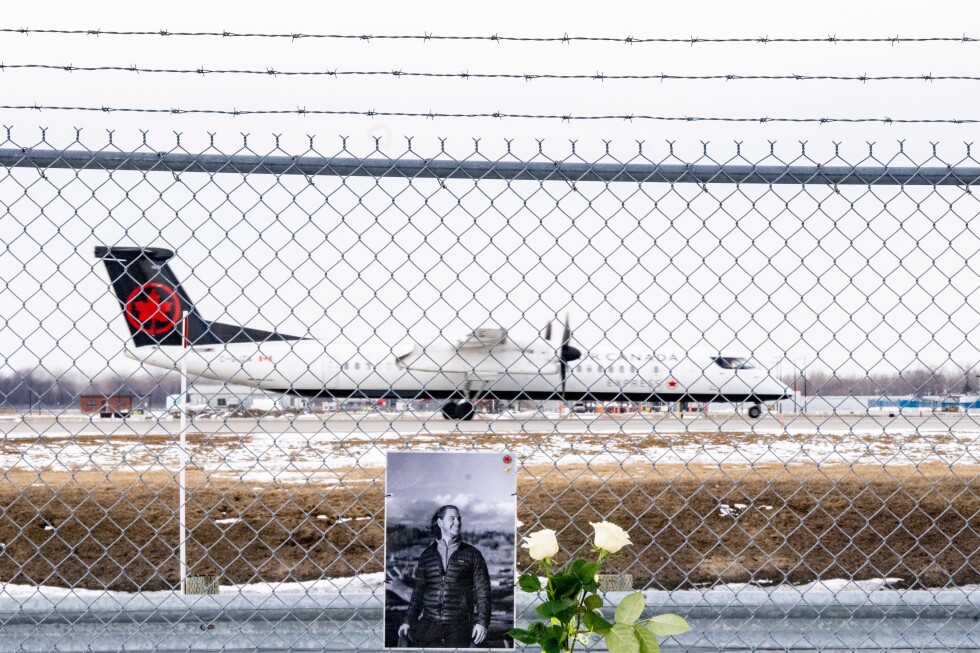
The timing of Rousseau’s language misstep was particularly problematic given that one of the two pilots killed in the crash at LaGuardia Airport, Antoine Forest, was a French-speaking Quebecer. Forest and co-pilot Mackenzie Gunther died when their Air Canada Jazz flight collided with a fire truck on the runway Sunday evening.
This isn’t Rousseau’s first language-related controversy. Daniel Béland, a political science professor at McGill University in Montreal, noted that Rousseau faced similar criticism shortly after his appointment as CEO in February 2021.
“Back in November 2021, less than a year after he was appointed CEO of Air Canada, one of his first major speeches in his role triggered a strong controversy among Francophones, as the speech was almost exclusively in English,” Béland explained. “At the time, in response to that controversy, Rousseau apologized and pledged to learn French. He did later take French lessons but, as the new controversy suggests, it was probably not very successful to say the least.”
The incident touches on deep cultural and linguistic tensions in Canada, a officially bilingual country where language has long been a sensitive political issue. Quebec’s cultural identity has been contentious since the 1760s when the British completed their takeover of what was then called New France. Today, approximately 80% of Quebec’s population is French-speaking.
Air Canada, as the country’s largest airline and flag carrier, has particular obligations regarding bilingualism. The Office of the Commissioner of Official Languages reported receiving hundreds of complaints about Rousseau’s video, highlighting the significant public concern over the issue.
When Rousseau was appointed president of the airline, he promised to learn French — a commitment that Premier Legault pointedly referenced in his criticism of the CEO.
Not all political figures joined in the calls for Rousseau’s resignation, however. Jason Kenney, a former Conservative Cabinet minister, suggested that the CEO would better serve the airline by focusing “his scarce time on safety and reliability than language training.”
The controversy comes at a particularly challenging time for Air Canada as it deals with the aftermath of the tragic crash, raising questions about leadership and cultural sensitivity at one of Canada’s most prominent corporations. The airline now faces not only the operational and emotional fallout from the accident but also renewed scrutiny of its commitment to Canada’s linguistic duality.
Fact Checker
Verify the accuracy of this article using The Disinformation Commission analysis and real-time sources.

8 Comments
While I appreciate the CEO’s acknowledgment and apology, this situation highlights the need for better language training and accountability at the senior leadership level in major Canadian companies. Representation matters.
Absolutely. Bilingual proficiency should be a key qualification for executives at companies like Air Canada that operate in both English and French. This was a significant oversight.
This is disappointing to see. As the CEO of an airline headquartered in Montreal, he should have been able to communicate in both official languages. It’s a basic requirement for leaders in a bilingual country like Canada.
I agree. It’s unacceptable for a top executive to be unable to speak the language of the company’s home base. He needs to make a real effort to improve his French skills.
While the CEO’s apology is a start, this incident highlights the need for stronger language requirements and training for executives at major Canadian companies. Fluency in both official languages should be a non-negotiable.
This is a concerning lack of cultural awareness and sensitivity from a corporate leader. Air Canada needs to do better at promoting and supporting bilingualism, especially in its top management ranks.
I agree. As a national airline, Air Canada has a responsibility to reflect Canada’s linguistic diversity. The CEO’s inability to communicate in French is unacceptable.
This is a disappointing lapse, but I hope the CEO follows through on his pledge to improve his French language skills. Air Canada needs to demonstrate a genuine commitment to bilingualism at the highest levels of the organization.