


Listen to the article
Over the course of 2025, a new reality has sunk in for Europe. The United States, long its strongest ally, has steadily eroded the European Union’s unity, economies, security and even its democracies, setting the backdrop for an EU summit this week at the end of an exceptionally challenging year.
After implementing an indefinite freeze last week on Russian assets in Europe, EU leaders now face a critical test of strength at Thursday’s summit. Ukraine is facing dire financial straits, and European leaders have promised to meet Kyiv’s economic and military needs for the next two years, most likely through a new reparations loan.
“It’s crunch time for Europe and Ukraine,” warned Danish Foreign Minister Lars Løkke Rasmussen, whose country holds the EU’s rotating presidency. “We need to take this decision in order to secure the Ukrainian economy, but also in order to send a signal to the rest of the world, which will include the White House in Washington D.C., that Europe is a strong geopolitical player.”
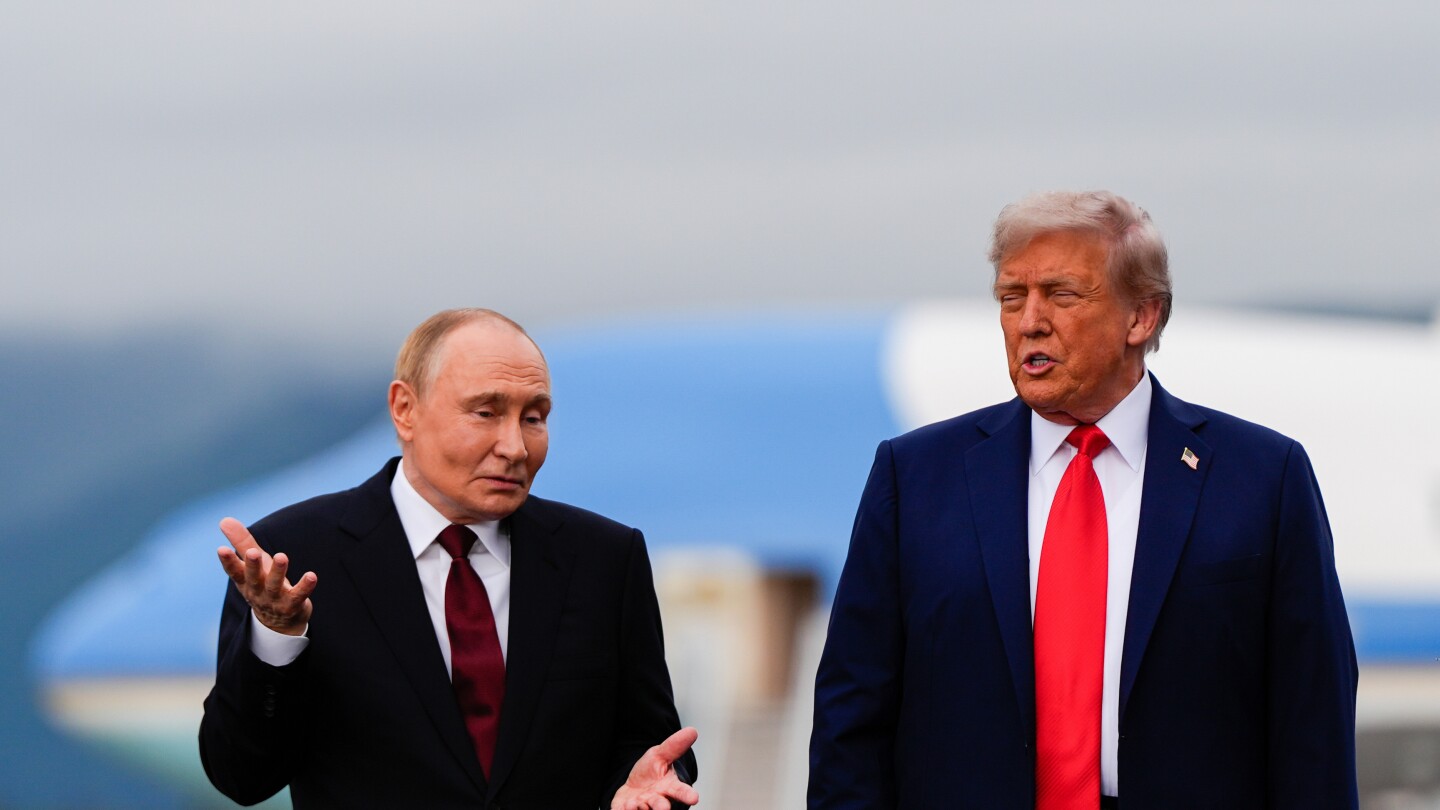
As the continent’s largest land war in decades continues to rage, Europeans have been repeatedly tested by President Donald Trump’s threats, his vocal support for Europe’s far-right movements, and his well-documented camaraderie with Russian President Vladimir Putin. European leaders initially responded with flattery, though this approach has noticeably diminished in recent months.
Since January, as EU leaders have struggled to keep Ukraine in the fight against its larger neighbor, Trump has vacillated between apparent support for Kyiv and Russia. His criticism of Europe has remained consistent, however, and has grown increasingly pointed over time.
European leaders have worked diligently to fill the gap and bolster military support for Ukraine, but they acknowledge that the United States remains an irreplaceable partner. Many also concede that Trump may be the only world leader with whom Putin might engage in meaningful peace talks.
German Chancellor Friedrich Merz delivered a stark assessment last week: “We are really witnessing a watershed moment now and nothing is the way it was before. We’re living in a different time, and this time requires different responses than we’ve given in the past.”
The shift in transatlantic relations became evident just weeks after Trump returned to office in January, when his administration signaled that U.S. security interests lie elsewhere. The message was clear: Europe must now take responsibility for its own security and Ukraine’s, a point underscored when Ukraine’s president reportedly faced a difficult reception at a White House meeting in February.
Days later, Vice President JD Vance met with a far-right leader in Germany, claiming that free speech is retreating in Europe. This move sparked allegations of election interference and further strained relations.
These themes were further developed this month in a new U.S. National Security Strategy document. The text criticized EU migration policy, suggesting that Europe faces “the prospect of civilizational erasure” and might not be reliable as an American partner.
“Europe has no choice but to respond,” said Judy Dempsey from the Carnegie Europe think tank. “Europe and the rest of the world now know how poorly this U.S. administration regards them and they cannot keep pretending otherwise.”
Chancellor Merz has already begun speaking more forcefully: “We in Europe, and so also in Germany, must become much more independent from the U.S. in terms of security policy. This is not a surprise, but it has now been confirmed again.”
Another concerning development for the EU emerged last month: the Trump administration’s 28-point plan to end the war, reportedly drafted with Russian input. The document contained longstanding Kremlin demands, promises of Russian business opportunities, and a call to rehabilitate Putin on the world stage.
The plan was largely unacceptable to Ukraine and its European supporters, but received a warm reception in Moscow. Russian Foreign Minister Sergey Lavrov stated that Trump is “the only Western leader” who shows “an understanding of the reasons that made war in Ukraine inevitable.”
Economic tensions have also played a significant role in the deteriorating relationship. In April, on so-called Liberation Day, Trump announced sweeping global tariffs, claiming they were necessary to protect national security. He stated that “our country has been looted, pillaged, raped and plundered” by other nations, including U.S. allies in NATO.
By July, the U.S. and EU had negotiated a trade framework setting a 15% tariff on most goods, avoiding potentially much higher import duties. The EU has responded by seeking trade agreements with other partners, particularly across Asia. European leaders have largely accepted that higher tariffs were likely the best compromise for continued U.S. support regarding Ukraine.
The defense relationship has also evolved rapidly. Despite trade tensions, European NATO members agreed to Trump’s demand that they invest 5% of GDP on defense, though it remains unclear whether many will meet this target by the 2035 deadline, given the struggles to reach the previous 2% benchmark.
The EU has since accelerated its defense spending and aims to develop independent defense capabilities by 2030. Officials believe Putin could potentially launch attacks elsewhere in Europe within three to five years if Russia defeats Ukraine.
In recent warnings, Blaise Metreweli, the new head of the UK’s MI6 intelligence agency, cautioned that Putin’s “export of chaos” is likely to continue until he “is forced to change his calculus.” British Armed Forces chief Air Chief Marshal Richard Knighton added that the Russian leader’s aim is “to challenge, limit, divide and ultimately destroy NATO.”
Thursday’s EU summit, focused on funding Ukraine’s economy and military efforts over the next two years, represents another step Europe is taking without U.S. support. EU Council President António Costa, who will chair the meeting, has threatened to keep leaders at EU headquarters for days until an agreement is reached.
Fact Checker
Verify the accuracy of this article using The Disinformation Commission analysis and real-time sources.

12 Comments
This is a complex situation with high stakes for Europe. I wonder how the EU’s support for Ukraine will impact their relationship with Russia, given the asset freezes and the ongoing conflict.
That’s a good point. The EU will need to carefully balance its support for Ukraine with managing its relationship with Russia, which remains a critical energy supplier for many European countries.
The EU’s reparations loan to Ukraine is a bold move, showing their commitment to supporting Ukraine during this difficult time. I’m curious to see how the US response factors into the EU’s calculations.
Agreed, the EU is taking a firm stance in the face of a less reliable US partner. It will be a test of their unity and geopolitical influence.
The EU’s ability to maintain unity and act decisively in the face of this challenge will be crucial. It’s an important test of their geopolitical clout on the global stage.
Absolutely. The EU’s response could have far-reaching implications for the future of transatlantic relations and the global balance of power.
This situation highlights the need for the EU to continue strengthening its strategic autonomy and reducing its reliance on the US, particularly when it comes to security and defense. It’s a wake-up call for Europe.
That’s a valid point. The EU’s experience with an unreliable US ally under Trump could accelerate efforts to build up its own capabilities and decision-making independence.
This is a challenging situation for the EU, having to adapt to a less reliable US ally under Trump. It will be interesting to see how they navigate the tensions and continue supporting Ukraine economically and militarily.
You’re right, the EU will need to demonstrate its strength as a geopolitical player in this critical moment.
The EU’s commitment to supporting Ukraine financially and militarily is commendable, but it will certainly test the unity and resolve of European leaders. This is a pivotal moment for the future of the EU’s geopolitical influence.
Agreed. The EU’s ability to navigate this crisis and maintain a strong, united front will be critical for its long-term strategic positioning on the global stage.