


Listen to the article
International Tensions Rise Over Nigeria’s Religious Violence Crisis
Nigeria’s escalating crisis of religious violence has sparked a diplomatic row, with the African Union and U.S. officials offering starkly different assessments of whether the killings of Christians in the West African nation constitute genocide.
African Union Commission Chairman Mahmoud Ali Youssouf recently rejected claims of Christian genocide during remarks at the United Nations. “There is no genocide in northern Nigeria,” Youssouf stated emphatically from the U.N. headquarters podium. “The first victims of Boko Haram are Muslims, not Christians, and I’m saying this with documented references.”
Youssouf cautioned against oversimplification, describing the situation as “extremely complex” and warning international actors not to reduce it to a single narrative. “The complexity of the situation in northern Nigeria should not be taken lightly, nor described with overly simple language,” he said.
His comments came in response to recent statements by former President Donald Trump, who threatened Nigeria with potential military action over the persecution of Christians. Trump’s administration has designated Nigeria a “country of particular concern” regarding religious freedom and reportedly ordered the Department of Defense to prepare for possible intervention.
The White House responded forcefully to Youssouf’s assessment. A senior official told Fox News Digital: “As the president stated, if the Nigerian government continues to allow the killing of Christians, the U.S. will immediately stop all aid and assistance to Nigeria and may take action to completely wipe out the Islamic terrorists who are committing these horrible atrocities.”
Nigeria’s northern and central regions have experienced years of deadly violence, with Christian communities reporting escalating attacks, killings, abductions, and village raids. The conflict involves multiple armed groups, including Boko Haram terrorists and ethnic Fulani militants, and has complex religious, ethnic, and economic dimensions.
Senator Ted Cruz (R-Texas) accused Nigerian officials of conducting a public relations campaign to deflect accusations of enabling persecution. “Nigerian officials know their policies have created an environment in which Christians are being persecuted and slaughtered, including their enforcement of sharia law and their tolerance of Islamist violence,” Cruz stated. “Instead of reversing these policies, they are waging a media campaign to escape exposure and accountability.”
Some U.S. lawmakers are advocating for stronger measures. Representative Riley Moore (R-W.Va.), recently designated by Trump along with Representative Tom Cole (R-Okla.) to lead an investigation into the killings, suggested the United States could impose sanctions or even take “kinetic military action” in response to what he termed “genocide” of Christians in Nigeria.
The United Nations has taken a more measured approach. U.N. Secretary-General spokesman Stéphane Dujarric acknowledged Nigeria’s struggle with insurgency but emphasized cooperation with Nigerian authorities. “We believe that the Nigerian government has been struggling with an insurgency that has been killing people, whether Muslims, Christians or others,” Dujarric said. “Whatever assistance is needed should be done with the cooperation of the Nigerian authorities.”
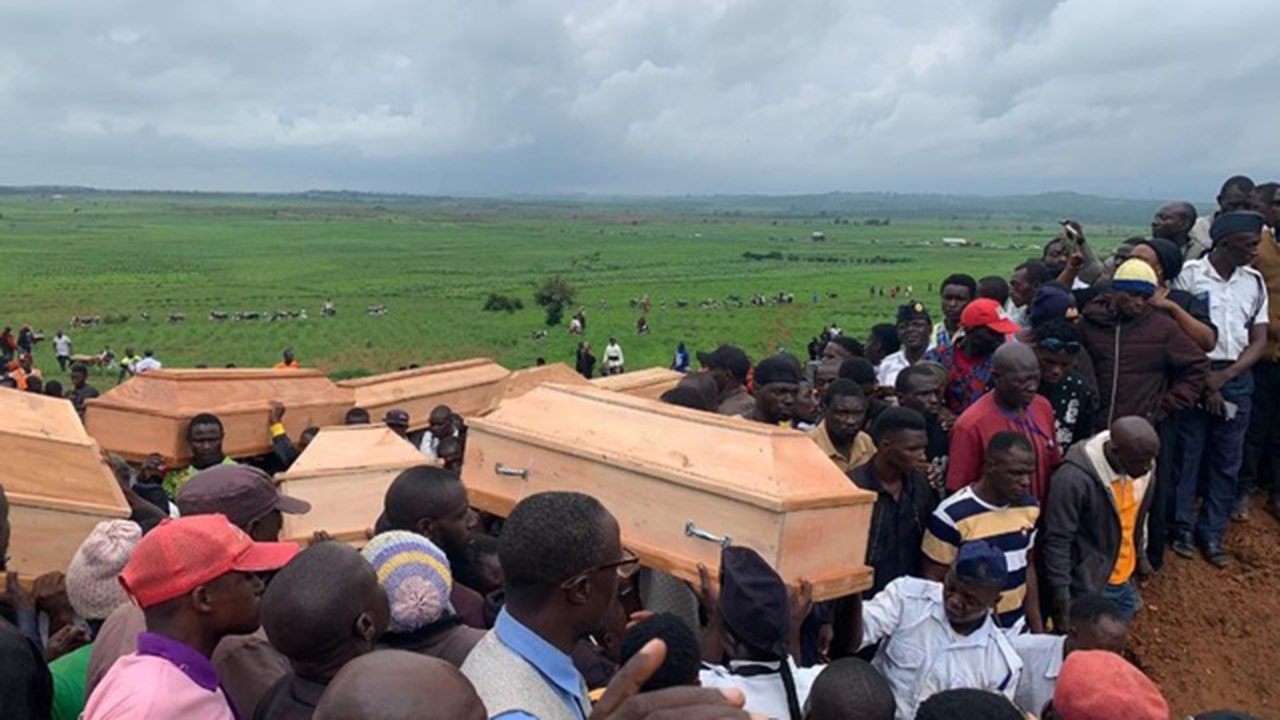
Recent violence in Nigeria’s Plateau state resulted in at least 51 Christians killed in a single attack, according to reports. Images from the region show funerals for dozens of Christians reportedly killed by Islamist Fulani tribesmen in villages like Bindi Ta-hoss.
The Nigerian government has successfully rescued hundreds of hostages, mostly children and women, from extremist captivity in northeastern Nigeria, but critics argue these efforts are insufficient to address the broader pattern of religious violence.
As international pressure mounts, the debate over how to characterize and address Nigeria’s crisis highlights the complex intersection of religion, ethnicity, terrorism, and governance in Africa’s most populous nation, where both Christians and Muslims have suffered greatly from ongoing violence.
Fact Checker
Verify the accuracy of this article using The Disinformation Commission analysis and real-time sources.

11 Comments
This seems like a complex and sensitive issue. It’s good to hear different perspectives on the religious violence in Nigeria, though the situation appears to be nuanced. I hope all sides can come together to find a peaceful resolution that protects vulnerable groups on both sides.
Agreed, oversimplifying complex conflicts rarely leads to effective solutions. Maintaining open dialogue and understanding multiple viewpoints will be crucial for addressing the root causes of the violence.
The African Union leader’s rejection of genocide claims against Christians is noteworthy. While the situation in Nigeria is deeply concerning, his emphasis on the complexity of the conflict and the need to avoid simplistic narratives seems prudent. Careful analysis of the facts on the ground will be important for determining the appropriate international response.
This is a sensitive and complex issue, and I appreciate the African Union leader’s caution against oversimplification. Religious conflicts often have deep historical and sociopolitical roots that defy easy solutions. Hopefully, all parties can come together to find a peaceful resolution that protects vulnerable communities on both sides.
The African Union leader’s rejection of genocide claims against Christians is noteworthy. His emphasis on the complexity of the situation and the need to avoid oversimplification is prudent. Careful analysis of the facts on the ground will be important for determining the appropriate response.
Absolutely. Jumping to conclusions or making hasty accusations could inflame tensions further. A measured, fact-based approach focused on protecting all vulnerable communities seems wise here.
The religious violence in Nigeria is deeply concerning. I’m curious to learn more about the African Union’s assessment and how it differs from the Trump administration’s perspective. Balancing the need for international attention and action with respect for national sovereignty will be a delicate challenge.
Agreed, understanding the nuances of the situation and avoiding a one-sided narrative will be crucial. Diplomacy and cooperation between regional and international actors may be the best path forward to address the root causes of the conflict.
This is a challenging and nuanced situation. I’m glad to see the African Union leader cautioning against oversimplification and emphasizing the need for a more nuanced understanding of the religious violence in Nigeria. Diplomatic efforts to find a peaceful resolution that protects all vulnerable communities should be the priority.
This is a complex and sensitive issue, and I appreciate the African Union leader’s caution against oversimplification. Religious conflicts often have deep historical and socioeconomic roots that defy easy solutions. Hopefully, all parties can come together to find a peaceful resolution that protects vulnerable communities on both sides.
The differing assessments of the religious violence in Nigeria between the African Union and the Trump administration are noteworthy. It’s clear this is a complex situation that requires careful analysis and a measured response. Oversimplification or heavy-handed interventions could potentially make the conflict worse. Hopefully, all parties can come together to find a peaceful solution.