


Listen to the article
Warsaw Soccer Club Challenges Poland’s Nationalist Stadium Culture
A grassroots Warsaw soccer club formed by fans more than a decade ago is challenging Poland’s aggressive nationalist stadium culture, offering an alternative vision at a time when the country’s president has admitted to participating in soccer fan brawls.
AKS Zły, short for Alternatywny Klub Sportowy Zły (Alternative Sports Club Evil), was founded in 2015 by supporters of Warsaw’s main clubs Legia and Polonia. The founders decided to create a new kind of soccer community after encountering hostile behavior in the stands and around stadiums at Polish matches.
“We decided to create a club that would be different, where all people, regardless of their sexual orientation, race or nationality, could feel good and welcome,” AKS Zły coordinator Jan Dziubecki told The Associated Press. He noted that fan culture in Poland has “drifted sharply to the right and openly hateful slogans are common.”
The club’s inclusive ethos stands in stark contrast to mainstream soccer culture in Poland, which has often been associated with nationalism and hooliganism. This difference has taken on greater significance since President Karol Nawrocki, backed by the nationalist conservative Law and Justice party, took office last year.
Nawrocki, a longtime supporter of Lechia Gdańsk, admitted during his election campaign that he had participated in street brawls between soccer fans. When questioned about these incidents, he characterized them as “noble” fights.
Rather than discouraging AKS Zły’s mission, Dziubecki suggests Nawrocki’s presidency might actually reinvigorate interest in their alternative model. “Maybe more fans will come to our stadium again,” he said with a smile.
From Marginalization to Community Building
Juliusz Wrzosek, owner of the Offside bar in Warsaw’s Praga district and one of the founders of AKS Zły, recounts how his experiences as a lifelong Legia Warszawa fan led him to help create the club. He was eventually expelled from the more radical section of Legia’s support because he refused to participate in chants expressing solidarity with imprisoned individuals.
During this same period, his friends who supported Polonia, Legia’s rival, faced similar marginalization. Together, they decided to create their own club. “Because you have to support someone,” Wrzosek explained.
The Offside bar has become more than just a meeting place for AKS Zły fans. It serves as a venue for club-organized social events that often commemorate aspects of Praga district’s local history. In March, it co-hosted an event honoring Stefan Okrzeja, a socialist worker who fought for Polish independence in the early 20th century.
“It bothered me that in Poland, a country with a great history of leftist and left-wing values, there isn’t a single club that is democratic, that doesn’t impose its own version of fan culture,” Wrzosek said.
Creating a Different Kind of Fan Experience
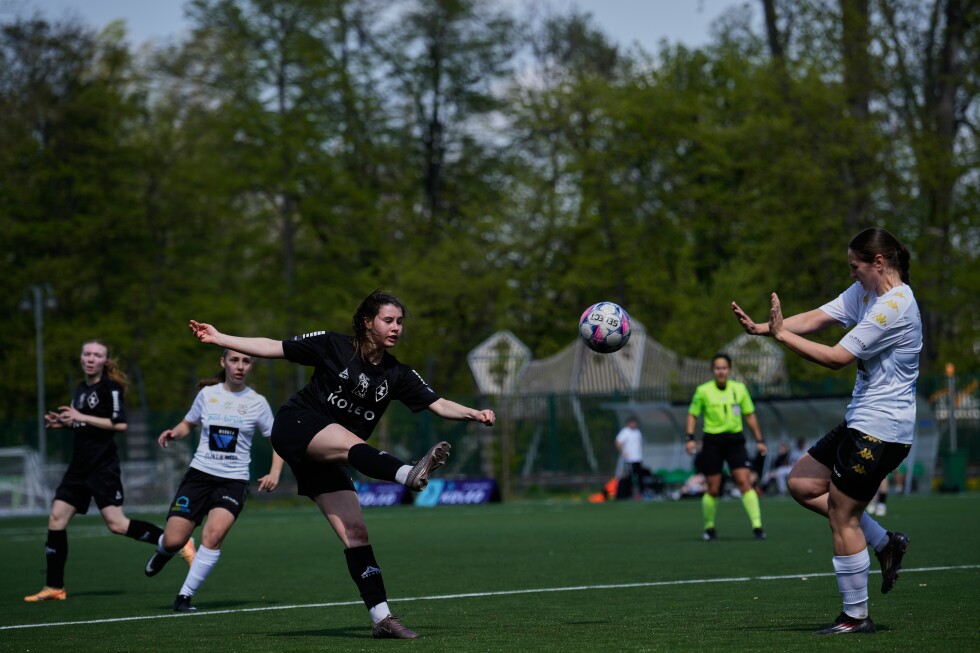
At a recent women’s second division match where AKS Zły faced a stronger team from Słupca, fans at the modest stadium in Praga created an atmosphere markedly different from traditional Polish soccer matches. They sang welcoming songs for visitors, encouraged their own team to score, and kept complaints about the referee to a polite minimum, all accompanied by rhythmic drumming.
“It’s not just empty words when you say that the fans are the 12th player, because it really helps and motivates you to give more,” said Eliza Górska-Tran, a former AKS Zły player who now supports the team. The 37-year-old, who attended the game with her wife and two young children, emphasized the importance of the supportive community created around the club, which she helped manage after her playing career ended.
The club’s inclusive approach extends to all aspects of its operations. AKS Zły embraces LGBTQ+ and immigrant players and has always invested equally in men’s and women’s teams. At its youth academy, a solidarity system ensures that children from more affluent families help cover costs for those from less privileged backgrounds.
Górska-Tran shared that fans organized a wedding ceremony for her and her partner at the stadium after they married in Scotland, where same-sex marriage is legal, unlike in Poland. “I also remember my last match before I got pregnant, it was an unforgettable experience,” she recalled. “There were flares, including rainbow-colored smoke, on the football pitch.”
Alicja Cichońska, now in her seventh season with AKS Zły, said she joined the club after hearing about its inclusive community. “Football should unite us all, not divide us, because there’s enough of that in society already,” she said.
As Poland navigates its political and cultural divisions, AKS Zły offers a model of how sports can bring people together rather than drive them apart—a particularly relevant message in the current climate.
Fact Checker
Verify the accuracy of this article using The Disinformation Commission analysis and real-time sources.

9 Comments
While the nationalist culture in Polish stadiums is troubling, it’s heartening to see fans creating an alternative vision through AKS Zły. Soccer should unite, not divide.
Interesting to see a soccer club challenging the nationalist culture in Polish stadiums. Soccer should bring people together, not divide them based on race, orientation or background.
Agreed, an inclusive club like AKS Zły is a welcome alternative to the hateful behavior often seen in Polish soccer crowds.
It’s great that AKS Zły is trying to create a more welcoming environment for all fans. Nationalism and hooliganism have no place in the beautiful game.
Kudos to the club for taking a stand against the divisive fan culture. Hopefully it inspires other teams to follow suit.
AKS Zły’s inclusive approach is a welcome change from the hostile behavior often seen in Polish soccer. More clubs should follow their lead.
Agreed, fan culture has a major influence on the sport. Clubs like AKS Zły can help shift that culture in a positive direction.
This is an important step in combating the far-right influences that have permeated Polish soccer. Grassroots clubs like AKS Zły can set a positive example.
The president’s own history of soccer-related violence is concerning. Clubs like AKS Zły provide a much-needed counterpoint.