


Listen to the article
South Korean Appeals Court Reduces Ex-Prime Minister’s Sentence in Martial Law Case
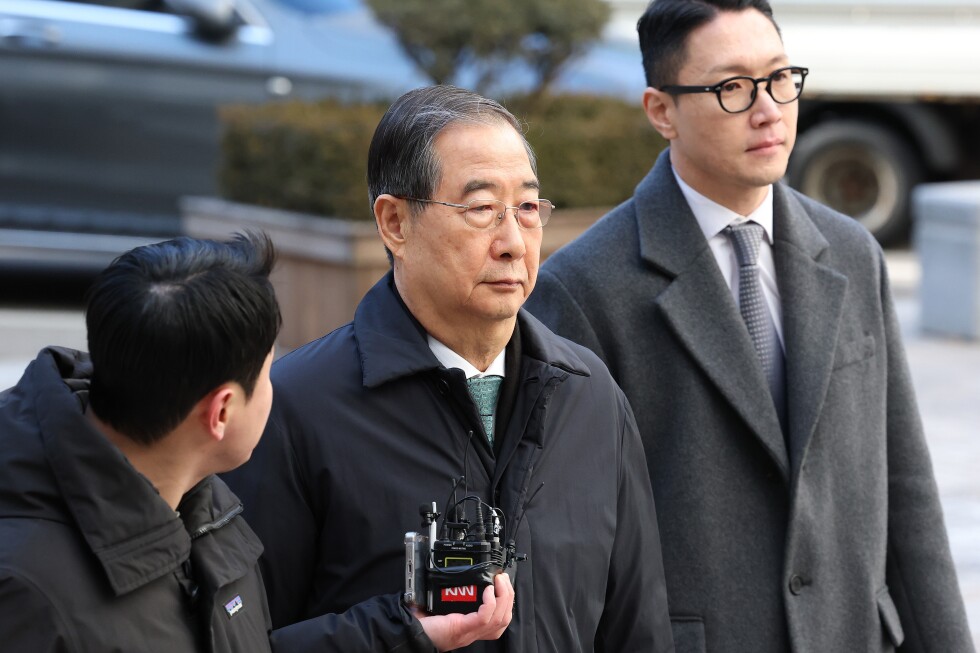
A South Korean appeals court on Thursday reduced the prison sentence of former Prime Minister Han Duck-soo from 23 years to 15 years for his role in former President Yoon Suk Yeol’s controversial imposition of martial law in December 2024.
The Seoul High Court upheld most of Han’s convictions, maintaining that his “criminal liabilities are very grave” because he “abandoned his immense responsibilities” as the second-highest official in the Yoon administration by participating in the rebellion.
Han, 76, was convicted of several serious charges, including attempting to legitimize Yoon’s illegal martial law decree by securing Cabinet endorsement and planning to cut off utilities to critical media outlets. The court also affirmed convictions for falsifying and subsequently destroying the martial law proclamation, as well as perjury.
Criminal law expert Park SungBae noted that both the district and appeals courts viewed Han’s actions as extremely serious. However, the reduction to 15 years likely reflects the court’s assessment of appropriate sentencing in relation to other officials involved in the same case, such as former Interior Minister Lee Sang-min, who received a seven-year prison term.
The special prosecutor had initially requested a 15-year sentence during Han’s trial at the Seoul Central District Court, making the original 23-year sentence higher than expected but still within the normal range for his crimes, according to Park.
The martial law crisis represented one of the most severe political upheavals in South Korea’s modern democratic history. Dramatic scenes unfolded during the period, with civilians blocking military vehicles near the parliament building as the situation escalated. The events ultimately led to Yoon’s downfall, with the former president receiving a life sentence for rebellion in February.
Han, a career bureaucrat with four decades of public service, had served as prime minister twice—first under liberal President Roh Moo-hyun from 2007 to 2008 and later under the conservative Yoon administration. Following Yoon’s suspension from office over the martial law decree, Han was one of three interim leaders who briefly governed the country.
The political crisis culminated in Yoon’s impeachment by lawmakers and his permanent removal from office by the Constitutional Court in April last year. Liberal politician Lee Jae-myung subsequently won the snap election to become South Korea’s new president.
Both Han and the prosecutor have seven days to appeal Thursday’s ruling to South Korea’s Supreme Court, which would make the final determination in this high-profile case that continues to reverberate through the country’s political landscape.
The case represents a stark reminder of South Korea’s ongoing efforts to strengthen its democratic institutions and the accountability of high-ranking officials, particularly in matters of constitutional governance and the rule of law.
Fact Checker
Verify the accuracy of this article using The Disinformation Commission analysis and real-time sources.

18 Comments
While the reduced sentence may be disappointing, the fact that the ex-PM was held accountable at all is a positive step. Continued vigilance is needed to prevent such abuses of power in the future.
That’s a fair assessment. Maintaining a strong, independent judiciary is crucial for ensuring leaders are held responsible for their actions, even if the outcomes aren’t always perfect.
This case highlights the need for robust systems of checks and balances to prevent the abuse of power, even at the highest levels of government. I hope it serves as a wake-up call for leaders to uphold democratic principles.
Well said. A healthy democracy requires constant vigilance and a commitment to the rule of law, regardless of the political affiliations or status of those in power.
The reduction in sentence seems lenient, given the seriousness of the charges. I hope the ruling sets a clear precedent that undermining democratic institutions will not be tolerated.
That’s a fair perspective. The courts will need to carefully balance appropriate punishment with the need for accountability and reconciliation in these complex cases.
While the reduced sentence may be disappointing, the fact that the ex-PM was held accountable at all is a positive step. Continued vigilance is needed to prevent such abuses of power in the future.
That’s a fair assessment. Maintaining a strong, independent judiciary is crucial for ensuring leaders are held responsible for their actions, even if the outcomes aren’t always perfect.
This case underscores the fragility of democratic institutions and the importance of robust systems of checks and balances. It’s a cautionary tale for all leaders who may be tempted to overstep their authority.
Absolutely. The erosion of democratic norms and the rule of law can happen gradually, which makes vigilance and a strong commitment to justice all the more crucial.
The reduced sentence is concerning, as it may be perceived as lenient treatment for a serious abuse of power. It’s crucial that the justice system sends a strong message that such actions will not be tolerated.
I agree. The courts must strike a delicate balance between appropriate punishment and maintaining public trust in the system. Transparency and consistency in sentencing will be key.
This is a concerning case, though I’m glad the court acknowledged the gravity of the ex-PM’s actions. Abuse of emergency powers is a serious matter that should be addressed firmly.
Agreed. The courts must uphold the rule of law, even against high-ranking officials. Maintaining checks and balances is crucial for a healthy democracy.
It’s encouraging to see the justice system take firm action against abuse of power, even at the highest levels of government. Upholding the rule of law is critical for a healthy democracy.
I agree. This case serves as an important reminder that no one is above the law, and that checks and balances must be maintained to protect democratic values.
This case highlights the importance of an independent judiciary in holding leaders accountable. I’m curious to learn more about the reasoning behind the reduced sentence.
Yes, the nuances of the court’s decision-making process would be interesting to understand. Transparency is key for public trust in the justice system.