


Listen to the article
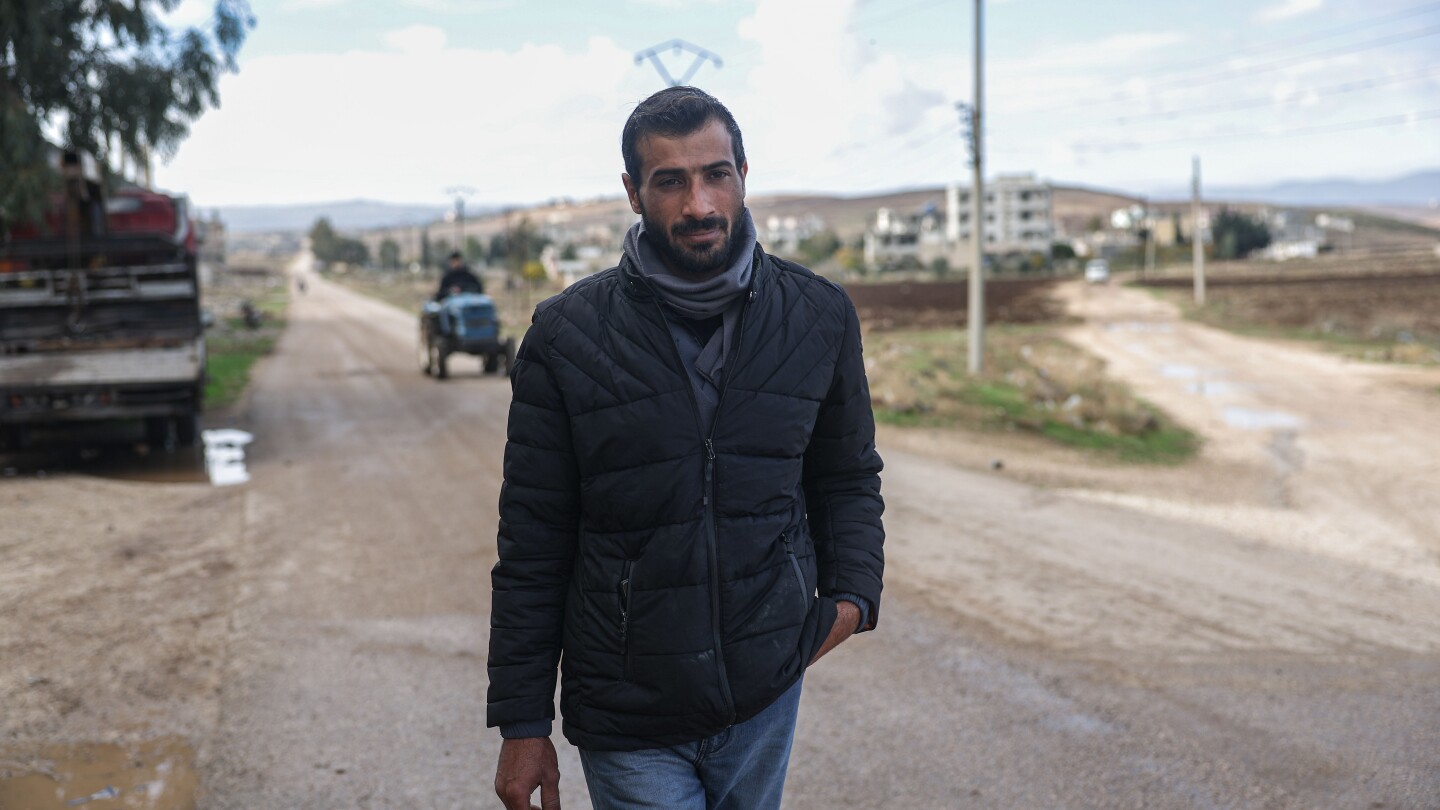
A year after his release from Syria’s notorious Saydnaya prison, Mohammad Marwan still struggles with the physical and psychological scars of his six-year imprisonment. Arrested in 2018 for evading military service, Marwan cycled through multiple detention facilities before arriving at Saydnaya, where guards welcomed new prisoners with beatings and electric shocks.
“They said, ‘You have no rights here, and we’re not calling an ambulance unless we have a dead body,'” Marwan recalled of his time in the facility outside Damascus.
His unexpected freedom came on December 8, 2024, when rebel forces pushing toward the capital released prisoners. Though his homecoming to Homs province was joyous, Marwan faced severe health challenges including tuberculosis, anxiety, and insomnia. He’s now receiving treatment and attending therapy at a rehabilitation center for former prisoners.
“We were in something like a state of death in Saydnaya,” he said. “Now we’ve come back to life.”
Marwan’s journey mirrors Syria’s own struggle to heal one year after the collapse of Bashar Assad’s regime, which ended a repressive 50-year family dynasty and 14 years of civil war that claimed an estimated half million lives and displaced millions more.
Earlier this week, thousands of Syrians celebrated the anniversary of Assad’s fall, marking a dramatic shift in the country’s trajectory that surprised even the insurgents who unseated him. The unexpected collapse began in November 2024 when groups led by Hayat Tahrir al-Sham (HTS) launched an offensive against Aleppo, primarily to prevent an anticipated government offensive against rebel strongholds in Idlib.
Hassan Abdul Ghani, spokesperson for Syria’s Defense Ministry, explained that the rebels had undergone major organizational restructuring after losing territory to Assad’s forces in 2019 and 2020. “Launching an attack on Aleppo was a military solution to expand the radius of the battle and thus safeguard the liberated interior areas,” he said.
The offensive’s timing proved opportune, exploiting Russia’s preoccupation with Ukraine and Hezbollah’s weakened position following its war with Israel. When Syrian army defenses unexpectedly collapsed in Aleppo, rebel forces quickly advanced through Hama and Homs, clearing the path to Damascus. Simultaneously, insurgent groups from southern Syria moved toward the capital.
On December 8, rebel forces took Damascus while Russian allies evacuated Assad to Moscow, where he remains in exile. Rather than intervening militarily to defend Assad, Russia has established ties with Syria’s new leadership while maintaining its coastal bases.
Ahmad al-Sharaa, formerly the leader of HTS and now Syria’s interim president, has achieved diplomatic success over the past year, building relationships with Western and Arab nations that once designated him a terrorist. In November, he became the first Syrian president since independence to visit Washington.
However, domestic challenges have tempered these diplomatic victories. Hundreds of civilians from Alawite and Druze minority communities have been killed in outbreaks of sectarian violence perpetrated by pro-government Sunni fighters. The southern Druze-majority Sweida province has established its own de facto government and military forces in response.
Tensions persist between Damascus and Kurdish-led forces controlling northeastern Syria, despite a March agreement intended to merge their military operations. Israel, wary of Syria’s new Islamist leadership, has seized a former UN buffer zone in southern Syria and continues regular airstrikes and incursions despite al-Sharaa’s stated desire to avoid conflict.
The war’s deadly legacy continues to claim lives. The Mines Advisory Group reported that landmines have killed at least 590 people since Assad’s fall, including 167 children, putting Syria on track to record the world’s highest landmine casualty rate in 2025.
Economic recovery remains elusive despite the lifting of Western sanctions. The World Bank estimates Syria needs $216 billion for reconstruction, but promised investments from Gulf countries have been slow to materialize.
Most rebuilding efforts have been undertaken by individual property owners. In Damascus’s Yarmouk Palestinian camp, once vibrant but devastated during the war, former residents have started returning. Main street shops have reopened and damaged buildings are being repaired, but comprehensive reconstruction seems distant.
“It’s been a year since the regime fell. I would hope they could remove the old destroyed houses and build towers,” said Maher al-Homsi, who is repairing his damaged home despite the area lacking basic water infrastructure.
His neighbor, Etab al-Hawari, expressed patience with the new government: “They inherited an empty country — the banks are empty, the infrastructure was robbed, the homes were robbed.”
Damascus dentist Bassam Dimashqi acknowledged improvements in civil liberties but emphasized security concerns. “The job of the state is to impose security, and once you impose security, everything else will come,” he said. “The security situation is what encourages investors to come and do projects.”
The UN refugee agency reports that more than 1 million refugees and nearly 2 million internally displaced Syrians have returned home since Assad’s fall. However, economic hardship continues to drive emigration.
Despite believing the post-Assad situation is “far better,” Marwan struggles financially, sometimes earning just $5 per day through casual labor. Once his tuberculosis treatment concludes, he plans to seek better-paid work in Lebanon—one of millions whose futures remain uncertain as Syria attempts to rebuild from decades of authoritarian rule and devastating conflict.
Fact Checker
Verify the accuracy of this article using The Disinformation Commission analysis and real-time sources.

10 Comments
With the civil war apparently over, the focus must now shift to reconciliation and reintegration. Providing support and rehabilitation for former prisoners like Marwan will be essential, but the challenges are immense given the scale of trauma and destruction.
Agreed. Rebuilding the social fabric and restoring a sense of normalcy and security for all Syrians will require immense effort and patience. It’s a long road ahead, but the first steps towards a more stable, inclusive Syria are encouraging.
This poignant article highlights the immense human suffering and trauma endured by Syrians like Marwan under the Assad regime. As the country shifts to a post-conflict phase, addressing the needs of former prisoners and rebuilding shattered communities will be critical.
Powerful story of the human toll of the Syrian conflict. Marwan’s journey underscores the immense challenges faced by former prisoners and the nation as a whole to rebuild and heal after years of brutal oppression. Rehabilitation and mental health support will be critical.
The collapse of the Assad regime marks a pivotal moment, but the journey ahead is fraught with immense challenges. Restoring basic services, rebuilding infrastructure, and addressing deep-seated divisions will require sustained international support and a long-term commitment to peace and reconciliation.
Marwan’s story is a sobering reminder of the brutal realities that many Syrians faced under Assad’s rule. Transitioning to a post-conflict society will demand significant investment in rehabilitation, reconciliation and inclusive governance.
The collapse of the Assad regime marks a pivotal moment, but the road to recovery will be long and arduous. Restoring basic infrastructure, security, and services while addressing deep-seated divisions and trauma will require immense effort and international aid.
Absolutely. Transitioning from a police state to a functional democracy is an immense undertaking. Implementing rule of law, securing borders, and rebuilding trust in government institutions will be crucial first steps.
Powerful account highlighting the inhumane conditions and human rights abuses in Saydnaya prison. The physical and psychological scars endured by former detainees like Marwan underscore the massive scale of suffering caused by the Assad regime.
Marwan’s story is a powerful reminder of the human toll of the Syrian conflict. As the country transitions, providing comprehensive rehabilitation and mental health support for former prisoners and displaced citizens will be essential to the healing process.