


Listen to the article
Somalia’s Healthcare Crisis Deepens Amid Funding Cuts and Security Challenges
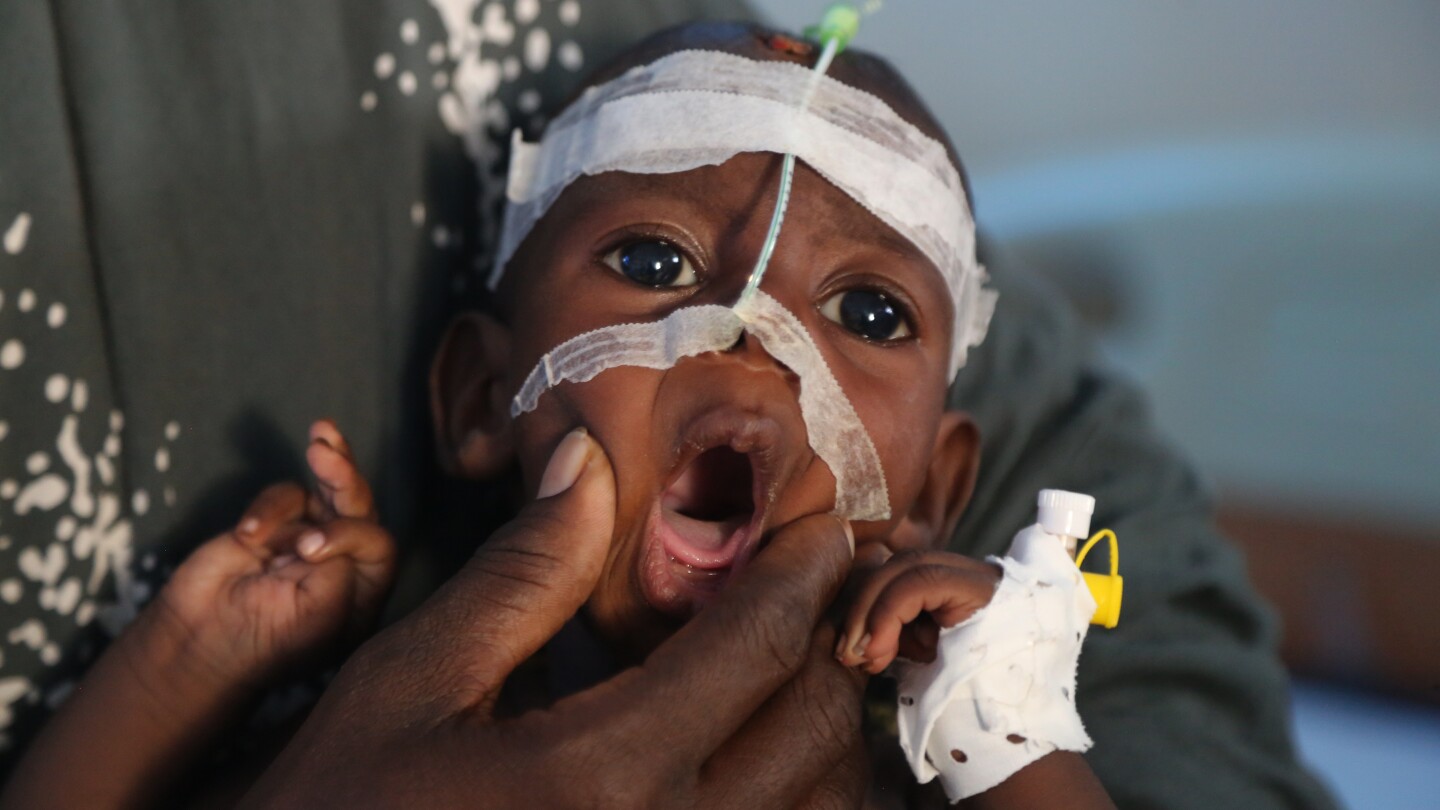
To save his severely malnourished 3-year-old son’s life, farmer Yusuf Bulle had no choice but to make the arduous journey from a remote area of southern Somalia to Mogadishu. The capital’s Banadir Hospital offered the only viable treatment option.
“Where I come from, there is no hospital,” Bulle explained after his son spent 15 days receiving life-saving care. “That’s why I am here.”
His story illustrates the healthcare crisis gripping one of the world’s poorest nations—a situation dramatically worsened by the Trump administration’s dismantling of the U.S. Agency for International Development earlier this year. The loss of USAID funding has dealt a crushing blow to Somalia’s already fragile healthcare system.
Mohamed Hassan Bulaale, Somalia’s deputy health minister, revealed that the U.S. cuts resulted in over 6,000 health workers losing their jobs and affected up to 2,000 health facilities nationwide. The Center for Global Development had previously identified Somalia as among the countries most vulnerable to donor withdrawal.
While the government of President Hassan Sheikh Mohamud celebrates some success in its “total war” against the al-Qaida-linked militant group al-Shabab, with bomb and gun attacks decreasing in recent months, critics say this security focus comes at a steep cost to public services, particularly healthcare.
The Somali government allocated just $91 million to the Ministry of Health this year from a national budget exceeding $1 billion. Though this represents an improvement from last year’s $52 million, almost all of the increase came from international donors rather than domestic funding, according to Mahad Wasuge, director of the Somali Public Agenda think tank.
“Security remains the first priority,” Wasuge explained, even as major foreign supporters like the United States and Britain have reduced their aid contributions this year.
The consequences of this prioritization are stark. Many areas outside Mogadishu lack functioning public hospitals, forcing residents to travel through often dangerous territory to reach operational facilities. The few functioning hospitals in the capital—including Banadir Hospital, built with Chinese support in 1977, and De Martino Hospital, established during the Italian colonial period in 1922—depend heavily on international organizations for survival.
At Banadir Hospital, which serves as Mogadishu’s main public referral facility, the unit treating malnourished children relies entirely on donor funds channeled through the humanitarian group Concern Worldwide. Dr. Mohamed Haashi, the unit’s supervisor, noted that 37 staff members lost their jobs due to the U.S. aid cuts, while Concern Worldwide continues to pay the salaries of 13 remaining workers and provides essential supplies like milk and food for patients.
The situation at De Martino Hospital reflects similar concerns. Director Dr. Abdirahim Omar Amin worries about what will happen when contracts with two humanitarian organizations expire at the end of 2025. During a recent visit, the hospital was treating dozens of children suffering from diphtheria—a preventable disease spreading in rural areas where parents avoid routine vaccinations due to fear of militant attacks.
“Now it looks like donors are fatigued,” Dr. Amin observed, pointing out that virtually all the hospital’s equipment was acquired with donor funds. Most services at De Martino are provided free of charge, thanks largely to funding from the International Rescue Committee and Population Services International.
The healthcare crisis reflects Somalia’s broader challenges in rebuilding after decades of conflict. Many public facilities were destroyed during years of civil war following the 1991 fall of dictator Siad Barre. Today’s federal government, operating from a heavily fortified zone near Mogadishu’s airport, struggles to assert authority despite support from African Union peacekeepers, U.S. airstrikes targeting al-Shabab, and security consultants from various nations seeking influence in the strategically located country.
Some international partners, like Turkey, have stepped in to support healthcare, funding a hospital with intensive care capabilities in Mogadishu. However, as Wasuge notes, “Even the limited number of public hospitals that started functioning properly lately are heavily dependent on donor money. They don’t get direct government budget that allows them to provide better health care services.”
For ordinary Somalis, the consequences are deeply personal. Amina Abdulkadir Mohamed, who recently gave birth at De Martino Hospital, chose the facility because she knew she wouldn’t be charged. “I was told there is free medication,” she explained.
Mohamed Adam Dini, representing Somalia’s Puntland state in the national assembly, criticized the government’s priorities as “deficient” due to its overwhelming focus on security. “A lot of diseases have been spreading unchecked,” he said. “There is no national health care plan, as we don’t have a national political plan.”
Fact Checker
Verify the accuracy of this article using The Disinformation Commission analysis and real-time sources.

10 Comments
The situation described in this article is a stark reminder of the human toll that can result from the withdrawal of international aid and ongoing conflict. Rebuilding Somalia’s healthcare system will require a significant, sustained commitment from global partners. Restoring access to medical care is essential for the well-being of the Somali people and the country’s future stability.
Agreed. The healthcare crisis in Somalia has dire consequences, not just for public health but also for the country’s overall development and security. Addressing this issue should be a top priority for the international community, as supporting the Somali government in strengthening its medical infrastructure is crucial for the country’s long-term recovery.
This article paints a grim picture of the challenges facing Somalia’s healthcare system. The loss of USAID funding and the ongoing conflict have had a devastating impact, leaving many Somalis without access to basic medical care. Rebuilding the country’s healthcare infrastructure should be a top priority for the Somali government and its international partners.
Absolutely. Restoring and strengthening Somalia’s healthcare system will require a comprehensive, long-term strategy that involves increased funding, infrastructure investment, and capacity-building support. It’s a complex challenge, but one that is essential for improving public health and promoting the country’s overall stability and development.
This is a sobering look at the devastating toll the aid cuts and ongoing conflict have taken on Somalia’s healthcare system. It’s heartbreaking to see families forced to travel so far for basic medical care. Addressing this crisis will require concerted international support and cooperation with the Somali government.
Absolutely. Strengthening Somalia’s healthcare infrastructure should be a top priority, both for improving public health and promoting stability in the country. Restoring foreign aid and investing in medical facilities and training will be crucial.
The situation in Somalia’s hospitals is truly dire, with funding cuts and ongoing conflict creating immense challenges. It’s critical that the international community steps up to provide the necessary support and resources to rebuild the healthcare system. Improving access to medical care is essential for the well-being of the Somali people.
I agree. The stakes are high, as the healthcare crisis is not only a humanitarian issue but also a matter of national security and stability. Restoring and strengthening Somalia’s medical infrastructure will require a sustained, coordinated effort from global partners.
This article highlights the devastating impact that aid cuts and conflict can have on a country’s healthcare system. The story of the farmer Yusuf Bulle and his son is a heartbreaking example of the challenges Somalis face in accessing basic medical care. Addressing this crisis should be a top priority for the Somali government and the international community.
Absolutely. Investing in Somalia’s healthcare infrastructure, including training medical personnel and building new facilities, will be crucial for improving public health outcomes and supporting the country’s long-term stability. It’s a complex challenge, but one that must be addressed with urgency.