


Listen to the article
Devastating floods swept through Petit-Goâve in southern Haiti as Hurricane Melissa unleashed its fury in late October, leaving at least 43 people dead nationwide and a community in mourning. The coastal town bore the brunt of the Category 5 storm’s destruction, with residents caught unawares when the La Digue river overflowed its banks after midnight.
Many victims were asleep when floodwaters surged through the town, sweeping away children, vehicles, and homes. Some residents managed harrowing escapes—one man fled through a window, while a woman clung to a car while holding her child, suffering a severely broken leg in the process.
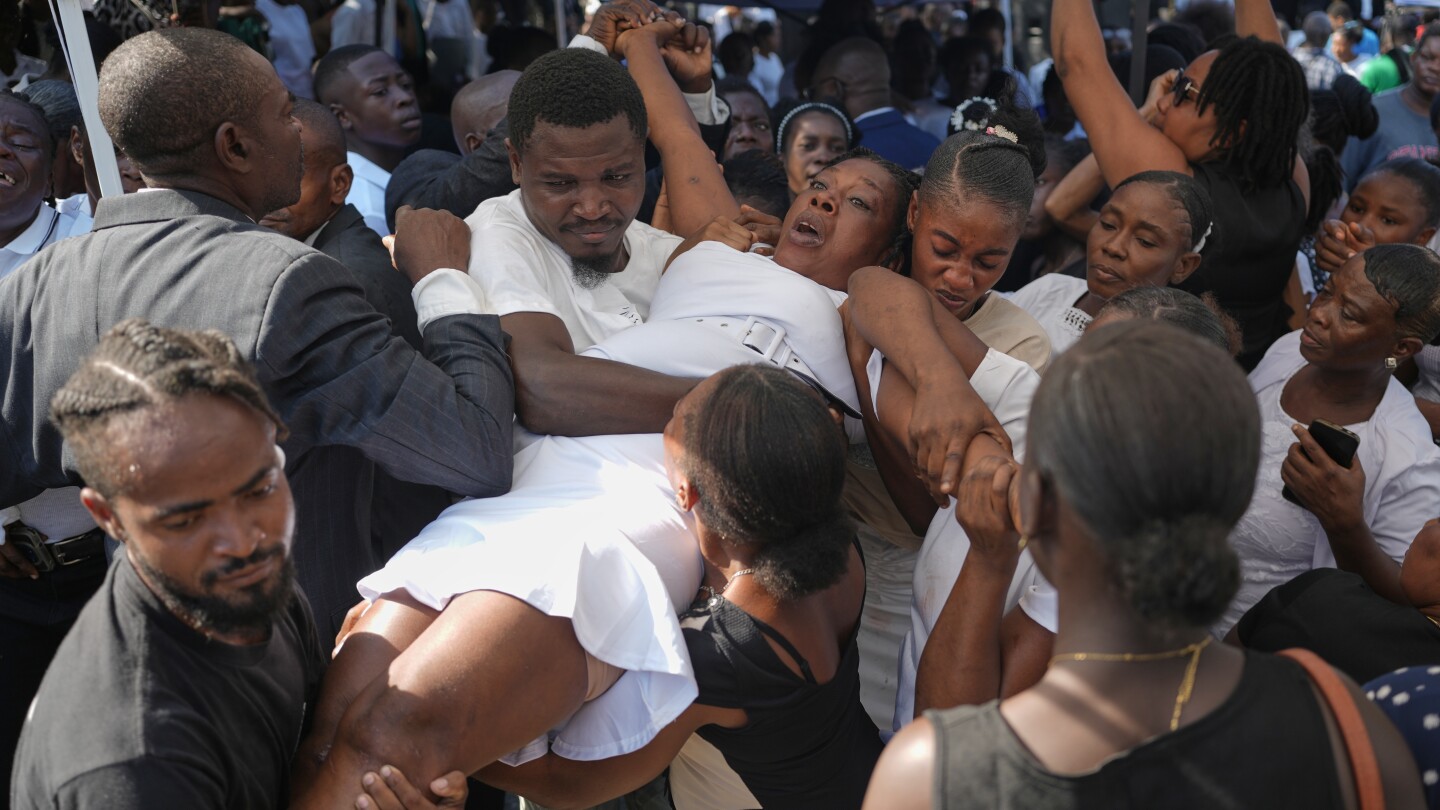
On Saturday, the community gathered to honor its dead in a solemn ceremony where 18 caskets adorned with vibrant yellow and orange flowers were carried into a public plaza. The small size of many coffins underscored the tragedy’s particular toll on children, with at least 10 young lives lost in Petit-Goâve alone.
“Where is my strength?!” cried Fanile Estinval, dressed in white mourning attire for her two sons who perished in the disaster. “A mother usually doesn’t bury her children,” she lamented. “When I die, who is going to bury me?”
The grief-stricken community’s sorrow is mingled with anger and frustration over what many see as inadequate government response. Residents have organized a protest for Monday along a key highway to demand faster action and increased aid. Many believe the deaths could have been prevented with better planning and infrastructure improvements.
Hurricane Melissa, one of the strongest Atlantic storms in recorded history, also claimed at least 45 lives in Jamaica where it made landfall. However, Haiti faces particularly dire long-term consequences due to its pre-existing vulnerabilities.
Petit-Goâve, once a thriving agricultural community with a bustling commercial center, saw approximately 90% of its farmland washed away by the storm. “It was very devastating,” said Wanja Kaaria, the United Nations World Food Program director for Haiti. “It will take a while to really restore the markets.”
The WFP has distributed food to more than 40,000 people in Petit-Goâve and plans to implement cash transfers soon. However, Kaaria noted a concerning gap in disaster preparedness—for the first time in a decade, the organization was unable to position emergency supplies in southern Haiti ahead of hurricane season due to funding shortfalls. The agency estimates Melissa affected 1.25 million people across Haiti, with 360,000 urgently needing food assistance.
Public health concerns are mounting in the aftermath of the storm. More than 30 suspected cholera cases and six deaths have already been reported in Petit-Goâve alone, according to Boris Matous, UNICEF’s emergency specialist in Haiti. The organization is working to rehabilitate water pumps, install sanitation stations, and establish mobile clinics, but faces significant challenges in reaching isolated areas.
“What is worrying here is that we are talking about areas that are not very easy to access,” Matous explained. The hurricane’s impact compounds Haiti’s existing struggles with poverty, political instability, food insecurity, and gang violence. “This hurricane, this catastrophe, is coming on the top of multiple other crises,” he added.
The storm’s physical toll on infrastructure has been severe, with more than 240 homes damaged or destroyed in Petit-Goâve and hundreds more flooded. Currently, about 100 families remain in temporary shelters, including a hotel and a private home opened by its owner to accommodate those displaced.
Sergile Henry from the nonprofit Project Hope described the heart-wrenching situation of two small children completely alone in a shelter, unable to locate their parents. “It was catastrophic,” he said of Melissa’s impact.
As Haiti struggles to recover from this latest disaster, the international aid community faces the challenge of providing immediate relief while addressing the underlying vulnerabilities that make the nation particularly susceptible to natural disasters.
Fact Checker
Verify the accuracy of this article using The Disinformation Commission analysis and real-time sources.

8 Comments
This is a devastating tragedy for the people of Petit-Goâve. My heart goes out to the families who lost loved ones, especially the children. Natural disasters like this can be truly devastating for small, close-knit communities. I hope the town can find the strength to rebuild and recover from this immense loss.
Agreed. The grief these families are experiencing must be overwhelming. I hope they receive all the support and resources needed to help them through this difficult time.
The images of the small caskets are just heartbreaking. No parent should have to bury their child. I can only imagine the pain and anguish the community is feeling. Hopefully, the world rallies to provide humanitarian aid and assist in the recovery efforts.
You’re right, it’s an unimaginable tragedy. I hope the international community responds quickly to help Petit-Goâve and other affected areas in Haiti rebuild and recover.
This is a stark reminder of the devastation natural disasters can bring, especially to vulnerable communities. My condolences to the people of Petit-Goâve as they mourn their loved ones and work to recover from the destruction. Disasters like this underscore the need for better disaster preparedness and response efforts.
This is a heartbreaking situation. My heart goes out to the families in Petit-Goâve who are grieving the loss of their loved ones, especially the children. I hope the community is able to find the strength and resources to rebuild and recover from this devastating disaster.
The scale of this disaster in Petit-Goâve is truly overwhelming. I hope the Haitian government and international aid organizations are able to provide the necessary support and resources to help the community rebuild and recover. Disasters like this highlight the need for more investment in disaster resilience and mitigation.
Absolutely. Effective disaster preparedness and response is critical, especially in regions prone to extreme weather events. I hope the global community steps up to assist Haiti during this difficult time.