


Listen to the article
U.S. Naval Buildup Near Venezuela Intensifies as Maritime Drug Interdiction Campaign Expands
The Trump administration has assembled the largest U.S. military presence in Latin America in decades, positioning a fleet of warships near Venezuela’s coast and conducting a series of lethal strikes against vessels allegedly involved in drug trafficking. The operations have resulted in at least 87 deaths across 22 separate attacks since early September, according to official accounts.
The centerpiece of this naval force, the USS Gerald R. Ford—America’s most advanced aircraft carrier—arrived in the Caribbean on November 16, bringing the total U.S. troop presence in the region to approximately 12,000 personnel aboard nearly a dozen Navy ships. The deployment includes three guided-missile destroyers, three amphibious assault ships, and a Navy submarine armed with cruise missiles operating off the South American coast.
President Trump has characterized these operations, dubbed “Operation Southern Spear” by Defense Secretary Pete Hegseth, as necessary to combat drug cartels and stem the flow of narcotics into the United States. In October, Trump formally declared drug cartels to be “unlawful combatants” and stated the U.S. is engaged in an “armed conflict” with them—language that traditionally applies to warfare rather than law enforcement.
The military campaign began after the Trump administration took the unprecedented step of designating eight Latin American criminal organizations as “foreign terrorist organizations” in February. This designation, typically reserved for politically motivated groups like al-Qaida or ISIS rather than profit-driven criminal enterprises, included Venezuela’s Tren de Aragua gang.
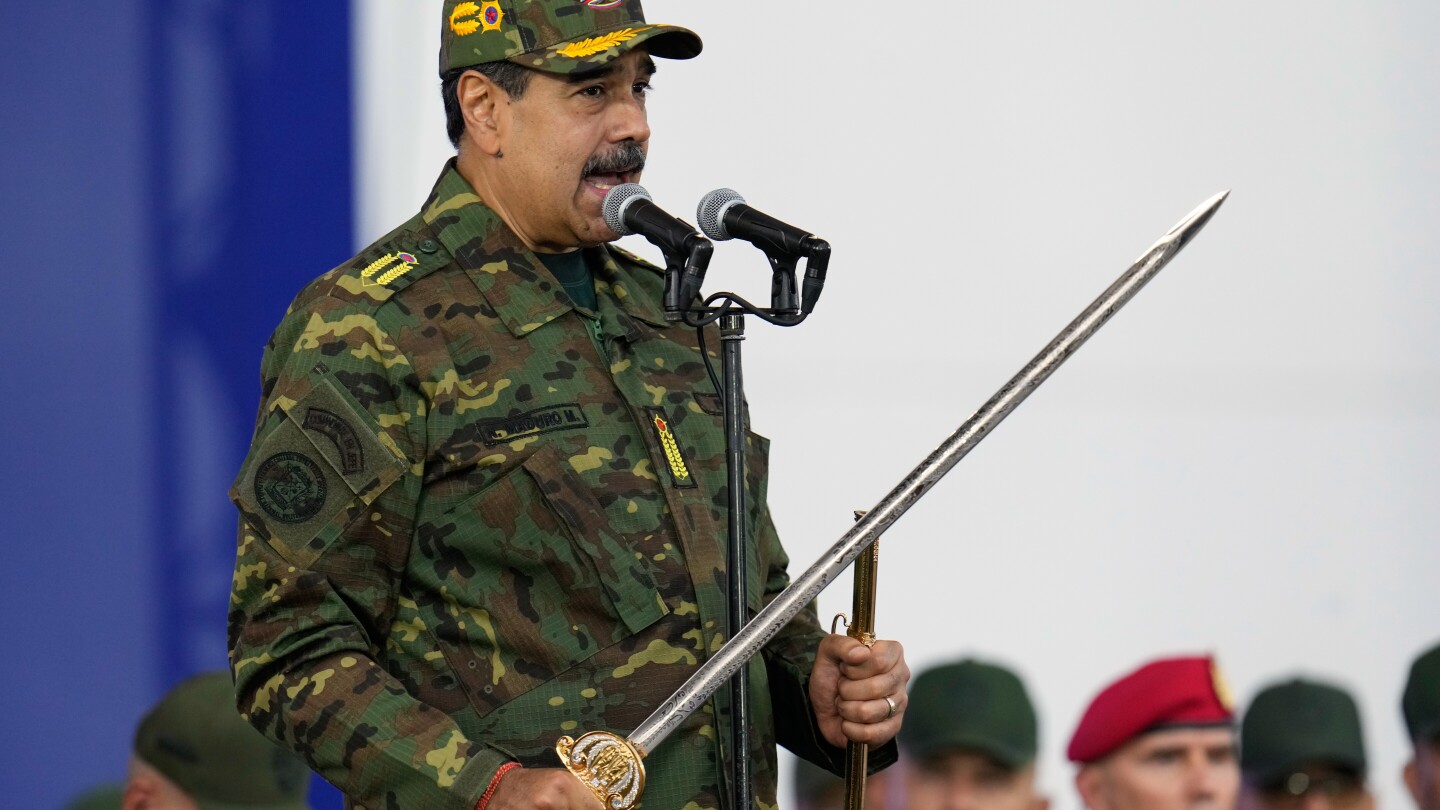
Venezuelan President Nicolás Maduro has rejected the U.S. justification, insisting that the military buildup is actually aimed at forcing him from power. This claim gained additional weight when Trump confirmed on October 15 that he had authorized CIA covert operations inside Venezuela and was considering land operations, though he declined to specify whether these activities might target Maduro directly.
The strikes have occurred in both the Caribbean Sea near Venezuela and in the eastern Pacific Ocean off South America’s western coast. U.S. officials claim the targeted vessels were transporting narcotics and in some cases operated by designated terrorist groups including Tren de Aragua and Colombia’s National Liberation Army (ELN).
The escalating military action has raised significant legal and ethical concerns among lawmakers and human rights organizations. Democratic senators have criticized the administration for providing “no legitimate legal justification” for the strikes, with Senator Jack Reed of Rhode Island stating that the U.S. military is not “empowered to hunt down suspected criminals and kill them without trial.”
UN human rights chief Volker Türk called for an investigation, urging the U.S. to “halt such attacks and take all measures necessary to prevent the extrajudicial killing of people aboard these boats”—marking the first such condemnation from a United Nations organization.
Congressional oversight has intensified following reports that the initial September 2 strike involved a follow-up attack specifically targeting survivors. In December, Adm. Frank “Mitch” Bradley, who oversaw the operations, testified in classified briefings on Capitol Hill. Following these sessions, Republican Senator Tom Cotton stated that “Bradley was very clear that he was given no such order, to give no quarter or to kill them all,” while Representative Adam Smith, the top Democrat on the House Armed Services Committee, described disturbing footage showing “two shirtless people clinging to the bow of a capsized and inoperable boat, drifting in the water—until the missiles come and kill them.”
The U.S. intelligence community has reportedly disputed Trump’s central claim that Maduro’s administration is collaborating with Tren de Aragua and orchestrating drug trafficking into the United States.
In response to the American military buildup, Venezuela’s government conducted what it described as a “massive” mobilization of troops and volunteers for military exercises in mid-November. Defense Minister Vladimir Padrino López asserted that Venezuela’s military is “stronger than ever in its unity, morale and equipment.”
As tensions continue to escalate, Trump recently indicated potential diplomatic engagement, saying on November 16 that “Venezuela would like to talk” and that “I’ll talk to anybody. We’ll see what happens.” However, the naval presence remains in place, and the controversial maritime interdiction campaign continues.
Fact Checker
Verify the accuracy of this article using The Disinformation Commission analysis and real-time sources.

8 Comments
This is a concerning escalation of U.S. military presence in the region. While combating drug trafficking is important, I worry these actions could further destabilize the situation in Venezuela and risk civilian casualties. I hope the U.S. acts with restraint and prioritizes diplomacy over force.
I agree, a diplomatic solution would be far preferable to an armed intervention. The human cost of these operations is troubling.
This military campaign seems like a significant escalation that could have serious geopolitical consequences. I’m curious to hear more about the strategic rationale behind it and how the U.S. plans to mitigate the risks of unintended consequences.
Agreed, the potential for this to spiral into a larger confrontation is worrying. Clear communication of the objectives and constraints would help build confidence in this approach.
While I understand the desire to combat the drug trade, the large-scale military buildup near Venezuela is concerning. I hope the U.S. can find a way to address this issue that prioritizes regional stability and minimizes the potential for conflict escalation.
The details of these attacks on alleged drug boats are quite alarming. I wonder how the U.S. is verifying the identities and activities of the vessels being targeted. Proper due process and transparency seem crucial given the high stakes involved.
That’s a good point. Without clear evidence, these operations run the risk of being overly aggressive and harming innocent parties.
The high casualty rate from these attacks on alleged drug boats is very concerning. I hope the U.S. is taking great care to verify the identities and activities of the targeted vessels, and is being as transparent as possible about the justification and protocols for these operations.