


Listen to the article
Bangladesh’s central region was hit by a powerful 5.5 magnitude earthquake Friday morning, killing at least eight people and leaving more than 300 injured as buildings swayed and panicked residents fled into the streets.
The earthquake struck at 10:38 a.m. with its epicenter located in the Ghorashal area of Narsingdi district, approximately 25 kilometers (16 miles) from the capital Dhaka, according to the U.S. Geological Survey. The quake had a relatively shallow depth of 10 kilometers (6 miles), which likely contributed to the intensity felt across the region.
Among the fatalities were two children, as reported by Dhaka-based DBC Television. Most deaths resulted from collapsing roofs and walls. In one particularly tragic incident in Dhaka’s old city area of Armanitola, three people were killed when a building’s railings collapsed onto a butcher’s shop. The victims were rushed to a hospital but were pronounced dead on arrival, according to the Prothom Alo newspaper.
“I came out when I heard a loud noise and saw that some bricks had fallen, and I saw some people injured also,” said local resident Mohammed Arif, describing the chaotic scene that unfolded during the quake.
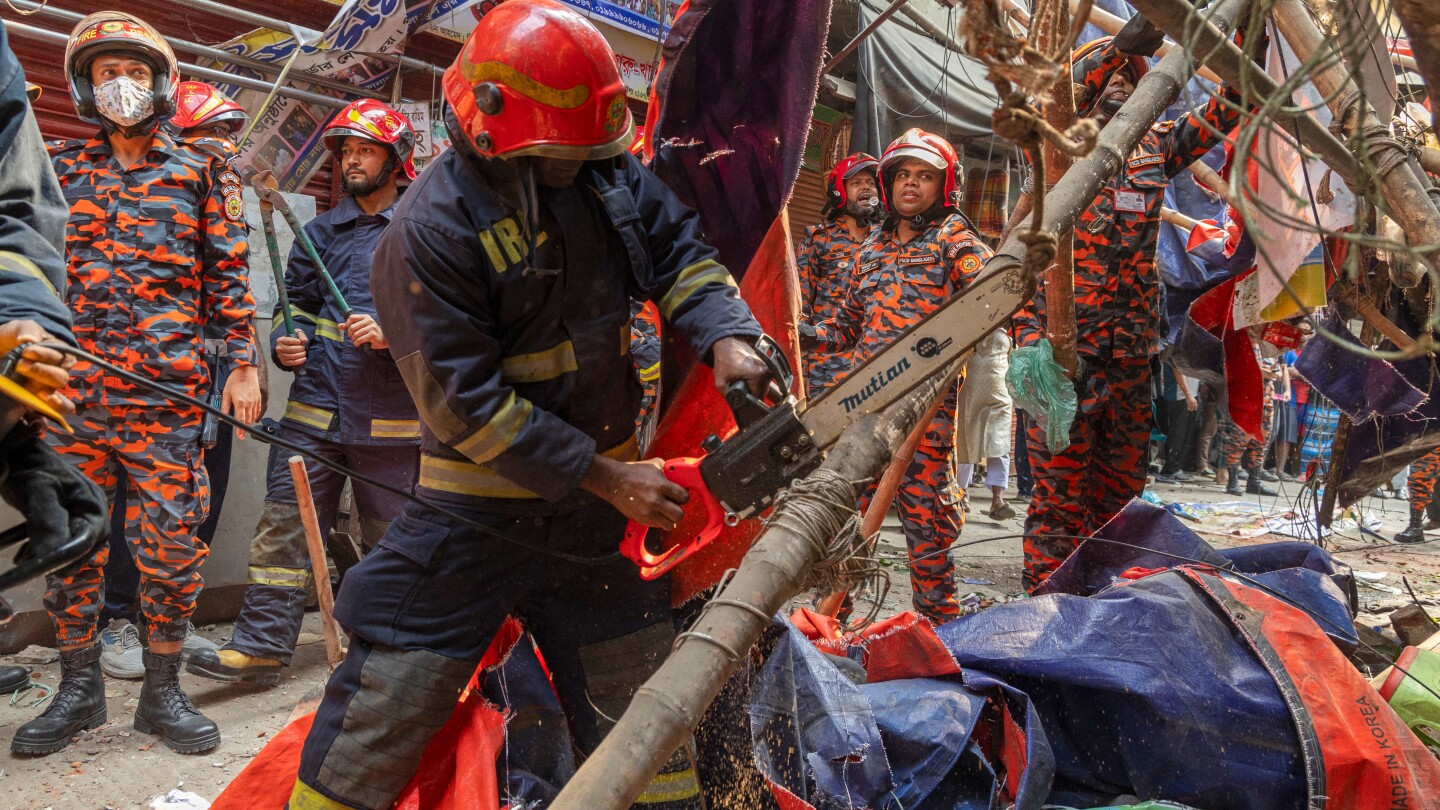
Emergency services responded quickly, with the Fire Service and Civil Defense department dispatching firefighters to locations where residents reported tilting buildings. Teams were also sent to address a fire that broke out in Dhaka’s Baridhara neighborhood following the tremor.
The industrial area of Gazipur, just outside Dhaka, was particularly hard hit. Prothom Alo reported that 252 people, predominantly garment workers, were hospitalized in this district alone. The region hosts hundreds of garment factories and industrial facilities that form the backbone of Bangladesh’s export economy.
Many of the injuries occurred during panic-induced stampedes as factory workers rushed to evacuate buildings when the shaking began. Television footage showed distressing scenes of worried family members in tears as victims were transported to medical facilities, including the state-run Dhaka Medical College Hospital. At Dhaka University, frightened students reportedly jumped from upper floors of dormitories in an attempt to escape.
While Bangladesh sits in a seismically active region due to the interaction between the India and Eurasia tectonic plates, the USGS notes that the central area of the country where Friday’s quake occurred typically experiences less seismic activity compared to the northern and southeastern regions. Since 1950, only 14 earthquakes of magnitude 5.5 or greater, including two magnitude 6 quakes, have been recorded within a 250-kilometer (156-mile) radius of the epicenter of Friday’s earthquake.
This unusual seismic event has raised concerns among experts who warn that Bangladesh, home to 170 million people, is largely unprepared for higher-magnitude earthquakes that could cause widespread destruction. Dhaka, with its approximately 2.1 million buildings, many constructed without adequate earthquake-resistant features, is considered particularly vulnerable to major seismic events.
The garment industry, which represents more than 80% of Bangladesh’s exports and employs about 4 million workers, could face significant disruptions if factory inspections reveal structural damage requiring temporary closures. Many facilities in industrial zones like Gazipur operate in buildings not originally designed to withstand significant seismic activity.
Authorities are continuing to assess damage to infrastructure across the affected regions, while hospitals remain on alert for additional casualties. The Bangladesh Meteorological Department has advised residents to remain vigilant for potential aftershocks in the coming days.
Fact Checker
Verify the accuracy of this article using The Disinformation Commission analysis and real-time sources.

14 Comments
Natural disasters like this can expose the need for better emergency response capabilities. I wonder if Bangladesh has plans to enhance early warning systems and disaster management protocols to save more lives in the future.
The death toll is tragic, but it could have been even higher without the quick actions of emergency services. Continued investment in disaster preparedness is crucial for earthquake-prone regions.
Earthquakes in densely populated areas can be especially devastating. My condolences to the families in Bangladesh who lost loved ones. I hope the injured receive proper medical care and that rebuilding efforts can strengthen infrastructure to better withstand future quakes.
The shallow depth of this quake likely contributed to the intensity felt across the region. Improving early warning systems and disaster response capabilities should be a focus for earthquake-prone countries like Bangladesh.
My heart goes out to the victims and their families. Earthquakes can be devastating, especially in densely populated areas with aging infrastructure. Improving building codes and disaster resilience should be a priority for Bangladesh.
The shallow depth of this quake likely exacerbated the shaking and damage. Investing in early warning systems and emergency response capabilities can help save lives when the next earthquake strikes.
This is a sobering reminder of the vulnerability of communities in earthquake-prone regions. I hope the Bangladeshi government can learn from this tragedy and take steps to better protect its citizens from future seismic events.
Earthquakes disproportionately impact the most vulnerable populations. Addressing poverty, improving construction standards, and enhancing disaster preparedness should all be priorities moving forward.
Tragic news from Bangladesh. Earthquakes in densely populated areas can be devastating, especially when buildings are not constructed to withstand shaking. My condolences to the families who lost loved ones.
The shallow depth of this quake likely amplified the shaking felt across the region. Disaster resilience and improved building codes are critical for earthquake-prone countries like Bangladesh.
This is a tragic event, and my heart goes out to the people of Bangladesh. Earthquakes can be devastating, especially in areas with aging infrastructure and limited disaster preparedness. I hope the government can learn from this experience and take steps to improve building codes and emergency response capabilities.
The shallow depth of the quake likely amplified the shaking and damage. Investing in disaster resilience should be a priority for earthquake-prone regions to save more lives in the future.
This is a grim reminder of the risks faced by vulnerable communities in developing countries. I hope the injured receive proper medical care and that rebuilding efforts can strengthen infrastructure to better withstand future quakes.
Earthquakes disproportionately impact the poor, who often live in substandard housing. Addressing poverty and improving construction standards should be priorities for disaster mitigation.