


Listen to the article
Two mountain climbers have died on New Zealand’s tallest peak Aoraki, while two others from the same climbing group were successfully rescued, authorities confirmed on Tuesday.
The bodies of the deceased climbers have been located, and specialist search teams are now working to recover them in what officials described as “a challenging alpine environment,” according to Police Area Commander Inspector Vicki Walker. Though the climbers have not been publicly identified, the New Zealand Mountain Guides Association released a statement confirming that one of the deceased was a member of their organization, and the other was that guide’s client.
Sergeant Kevin McErlain told The Timaru Herald that the pair had been tethered together by rope when they fell near the summit of Aoraki, which is also known as Mount Cook.
The emergency began late Monday night when authorities received an alert that four climbers needed assistance on the mountain, which is located on New Zealand’s South Island. Rescue teams responded quickly, with helicopters dispatched to the scene. Two climbers were successfully evacuated by helicopter in the early hours of Tuesday morning, Walker confirmed. These survivors were reportedly uninjured.
Search teams in two helicopters continued their efforts throughout the night, ultimately locating the bodies of the other two climbers several hours later.
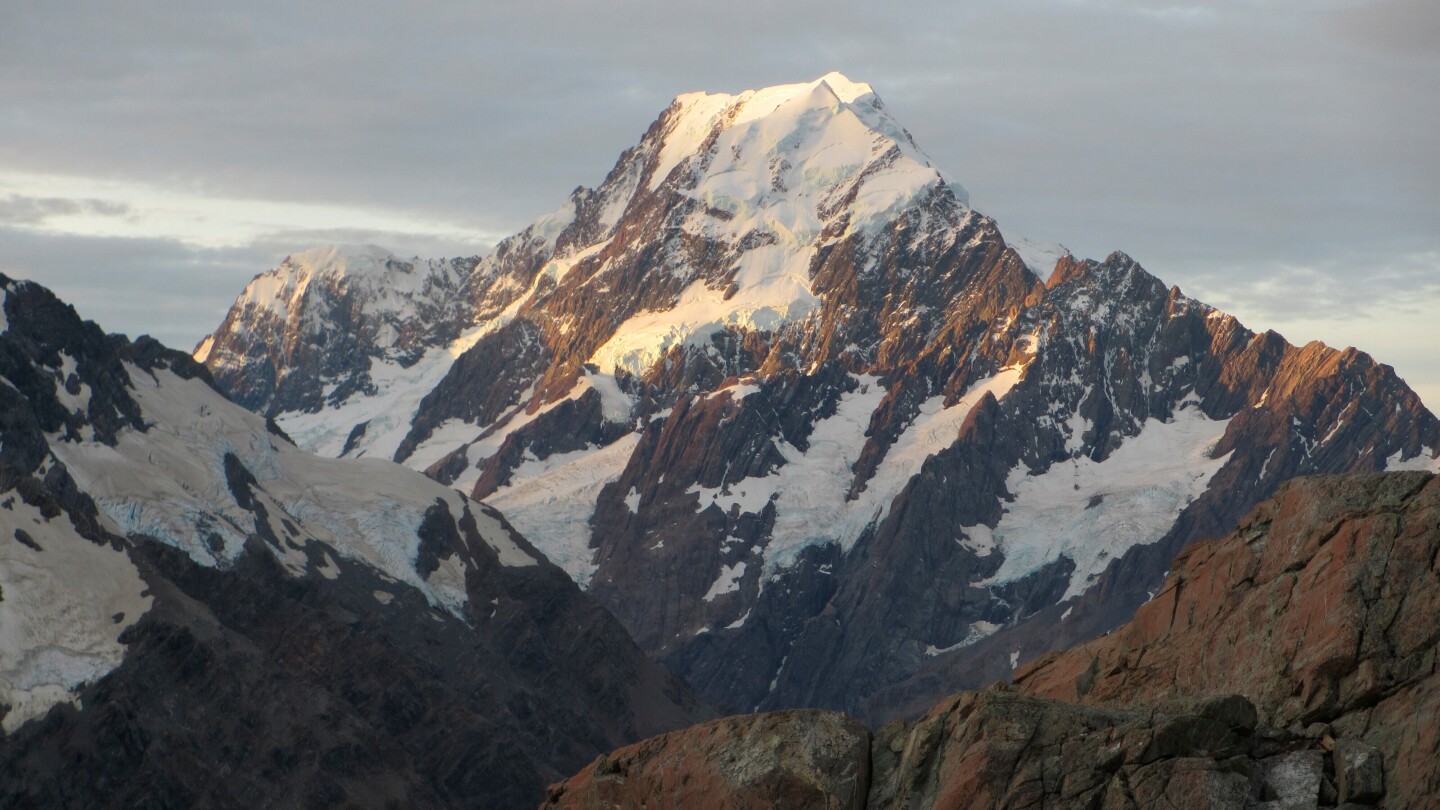
Aoraki stands at 3,724 meters (12,218 feet) and forms part of the Southern Alps, the dramatic mountain range that extends along the length of New Zealand’s South Island. Both the mountain and the settlement at its base are popular destinations for domestic and international tourists seeking to experience the country’s renowned natural beauty.
Despite its popularity, Aoraki presents significant challenges even to experienced mountaineers. The peak features technically demanding terrain characterized by treacherous crevasses, substantial avalanche risk, unpredictable weather patterns, and constantly shifting glaciers.
The dangers of the mountain are well-documented. More than 240 deaths have been recorded on Aoraki and in the surrounding national park since the beginning of the 20th century. In a sobering testament to the mountain’s hazardous nature, dozens of those who have perished on its slopes have never been recovered.
This latest incident follows the presumed deaths of three men on the mountain in December 2024. Two Americans—Kurt Blair, 56, from Colorado and Carlos Romero, 50, from California—both certified alpine guides, along with a Canadian climber, went missing on Aoraki. After an extensive five-day search operation, New Zealand authorities suspended their efforts, concluding that discoveries of the men’s belongings indicated they had likely fallen to their deaths.
Climbing fatalities on Aoraki highlight the inherent risks associated with alpinism, even for highly trained professionals. The mountain’s combination of high altitude, technical difficulty, and extreme weather conditions creates an environment where small mistakes or sudden changes in conditions can have fatal consequences.
New Zealand’s Southern Alps are known worldwide for their spectacular beauty but also for their challenging climbing conditions. The region attracts thousands of adventurers annually, ranging from casual hikers to elite mountaineers seeking to test their skills against some of the world’s most demanding alpine terrain.
Local authorities regularly emphasize the importance of proper preparation, equipment, and risk assessment for those venturing into the Southern Alps, particularly when attempting technical climbs on peaks like Aoraki.
As recovery operations continue, the climbing community in New Zealand and internationally will once again confront the stark realities and inherent dangers of pursuing high-altitude mountaineering in one of the world’s most beautiful but unforgiving alpine environments.
Fact Checker
Verify the accuracy of this article using The Disinformation Commission analysis and real-time sources.

16 Comments
It’s always tragic to hear about fatalities in outdoor pursuits like mountaineering. My heart goes out to the loved ones of the two climbers who perished on Aoraki/Mount Cook. While the thrill of conquering a peak can be alluring, the risks must always be carefully weighed. I hope this serves as a sobering reminder of the importance of safety protocols.
Absolutely. Responsible mountaineering organizations should examine this incident closely and look for ways to enhance training, equipment, and emergency response procedures. Minimizing risks, while still allowing for adventurous exploration, should be the top priority.
This is a heartbreaking incident on Aoraki/Mount Cook. My condolences to the loved ones of the two climbers who lost their lives. While the thrill of scaling a challenging peak is undeniable, the dangers are severe, as this tragedy demonstrates. I hope the surviving climbers receive the support they need, and that the investigation leads to improved safety measures for mountaineering expeditions.
Well said. Mountaineering pushes the limits of human endurance and skill, but the risks can be mitigated through robust training, equipment, and emergency protocols. Hopefully, this incident will prompt a thorough review to enhance safety and prevent future tragedies on New Zealand’s highest peak.
This is a stark reminder of the inherent dangers of technical mountain climbing, even for experienced guides and their clients. My sincere condolences to the families and climbing community affected by this devastating loss. I hope the rescued climbers are able to recover physically and mentally from this traumatic experience.
Well said. Mountaineering requires exceptional skill and preparation, yet even the most seasoned climbers can face unpredictable perils. The survivors will undoubtedly need time and support to process this harrowing ordeal.
Climbing Aoraki/Mount Cook is an incredible feat, but also extremely perilous. I’m saddened to hear about the loss of life in this incident. My thoughts are with the loved ones of the deceased climbers. I hope the investigation into the cause of the accident can provide some answers.
Agreed, understanding what led to this tragedy is important. Proper training, equipment, and risk assessment are essential for high-altitude mountaineering. Hopefully lessons can be learned to improve safety going forward.
This is a tragic situation on New Zealand’s highest peak. My condolences to the families and climbing group of the two climbers who lost their lives. Climbing in challenging alpine environments can be extremely risky, and it’s heartbreaking when accidents like this occur.
Agreed, the loss of life is always devastating. I hope the rescue teams are able to recover the bodies and provide closure for the loved ones.
It’s good to hear that two of the climbers were successfully rescued, despite the unfortunate outcome for the other two. Mountain climbing can be incredibly dangerous, even for the most experienced adventurers. This serves as a sobering reminder of the risks involved.
Yes, the successful rescue of the two climbers is a positive outcome amidst the tragedy. Kudos to the emergency responders for their quick actions.
This is a tragic loss of life on New Zealand’s highest mountain. My deepest sympathies go out to the families and climbing group affected. Mountaineering, while exhilarating, can be extremely perilous, even for the most experienced. I hope the investigation into this accident can uncover any learnings to improve safety for future expeditions.
I agree, any insights gained from this investigation could help prevent similar tragedies in the future. While the risks can never be eliminated entirely, enhancing safety protocols and climber preparedness is crucial. My thoughts are with all those impacted by this devastating event.
While mountaineering offers incredible views and a sense of accomplishment, the risks are severe. My heart goes out to the families and friends of the climbers who perished on Aoraki/Mount Cook. I hope this incident prompts a review of safety protocols and training for future expeditions.
You make a good point. Evaluating safety measures and climber readiness is crucial to mitigate such tragedies in the future. Responsible mountaineering organizations should take a hard look at their practices.