


Listen to the article
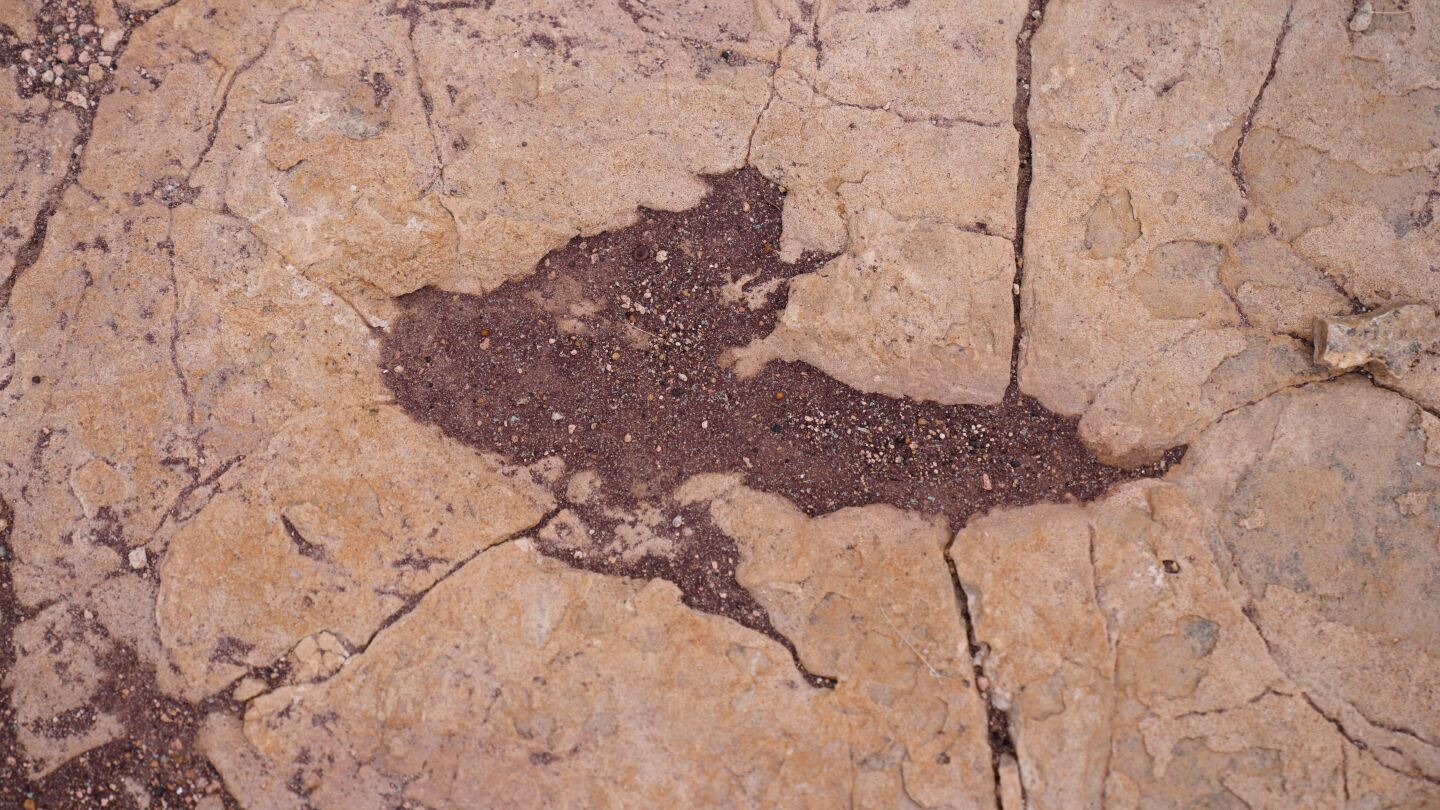
In the quiet Bolivian highlands of Toro Toro, ancient footprints once inspired local legends of claw-bearing monsters with supernatural strength. Today, these impressions tell a different but equally fascinating story – one that has just earned a place in the scientific record books.
A team of paleontologists, primarily from California’s Loma Linda University, has documented an unprecedented 16,600 footprints left by theropod dinosaurs – the group that includes the fearsome Tyrannosaurus rex. This discovery, detailed in a study published last Wednesday in the journal PLOS One, represents the largest collection of theropod footprints ever found at a single location worldwide.
“There’s no place in the world where you have such a big abundance of footprints,” said Roberto Biaggi, who co-authored the study with lead researcher Raúl Esperante. “We have all these world records at this particular site.”
The six-year research project revealed not only walking tracks but also 1,378 traces of dinosaurs apparently attempting to swim. These massive creatures scratched at the soft lake-bottom sediment, leaving claw marks that were preserved when rising water levels sealed the impressions in mud, protecting them from erosion over millions of years.
Richard Butler, a paleontologist at the University of Birmingham not involved in the research, confirmed the significance of the find. “The preservation of many of the tracks is excellent,” he said, adding that to his knowledge, the number of footprints found at Toro Toro is unprecedented.
“This is a remarkable window into the lives and behaviors of dinosaurs at the end of the Cretaceous,” Butler noted, referencing the period that ended approximately 66 million years ago when an asteroid impact caused a mass extinction event that wiped out all non-avian dinosaurs and 75% of Earth’s species.
The footprints have survived for over 60 million years, but human activity has threatened their preservation. For decades, local farmers threshed crops on the plateaus containing these ancient impressions. Nearby quarry operations continued without regard for the paleontological significance of the area, and as recently as two years ago, highway construction nearly destroyed a major tracksite before park authorities intervened.
These human disturbances may partly explain why, despite the abundance of footprints, the site has yielded virtually no dinosaur bones, teeth, or eggs – remains that are commonly found in fossil-rich regions like Argentine Patagonia and Brazil’s Campanha.
Natural factors likely played a role as well. The research team believes the quantity and pattern of tracks – all found within the same sediment layer – suggest that dinosaurs didn’t permanently inhabit the area but rather used it as part of a coastal migration route that stretched from southern Peru into northwest Argentina.
The footprints reveal remarkable diversity in dinosaur size. Impressions indicate that massive theropods, potentially reaching heights of 10 meters (33 feet), traveled alongside diminutive species no larger than chickens, standing just 32 centimeters (1 foot) tall at the hip.
“Footprints reveal what skeletons cannot,” explained Anthony Romilio, a paleontologist at Australia’s University of Queensland who wasn’t part of the study. The impressions provide insights into everyday dinosaur behavior – showing when they walked leisurely or accelerated, when they paused or changed direction.
What remains unclear is why so many dinosaurs congregated in this particular location. Romilio speculated, “It may have been that they were all regular visitors to a large, ancient, freshwater lake, frequenting its expansive muddy shoreline.”
Biaggi offered another hypothesis: “They could have been running away from something or searching for somewhere to settle.”
The national park at Toro Toro now protects these remarkable traces of prehistoric life, and researchers believe many more footprints await discovery just beyond the currently excavated areas. As Biaggi noted, “I suspect that this will keep going over the years and many more footprints will be found right there at the edges of what’s already uncovered.”
In this remote corner of Bolivia, what once fueled children’s nightmares about mythical monsters now illuminates a crucial chapter in Earth’s history, providing unprecedented insights into the daily lives of creatures that vanished from our planet more than 60 million years ago.
Fact Checker
Verify the accuracy of this article using The Disinformation Commission analysis and real-time sources.

9 Comments
It’s amazing to think that these footprints lay undiscovered for millions of years, only to be brought to light by the careful work of the research team. Paleontology continues to surprise and delight with its ability to uncover new chapters of Earth’s history. Kudos to the scientists behind this remarkable find.
As someone fascinated by the history of life on our planet, I’m in awe of this discovery. Sixteen thousand dinosaur footprints – it’s almost hard to fathom the scale. I hope the researchers are able to glean valuable insights about these creatures’ behaviors and ecosystems from this unprecedented trove of fossil evidence.
Sixteen thousand footprints – that’s a staggering number! The researchers must have been both excited and daunted by the scale of this discovery. I can only imagine the care and patience required to properly document and preserve such a vast array of fossil evidence. Kudos to the team for their incredible work.
Sixteen thousand footprints – that’s an astonishing number! The researchers must have faced significant logistical challenges in documenting and preserving so many impressions. I’m impressed by their dedication and attention to detail. Can’t wait to see what else they uncover at this remarkable site.
As someone interested in mining and natural resources, I’m curious if there are any potential economic implications from this discovery. Could the fossilized footprints provide clues about the local geology or mineral deposits? Or might they impact future development in the Toro Toro region? Either way, it’s an incredible scientific find that deserves recognition.
Incredible find! Documenting over 16,000 dinosaur footprints in Bolivia is a remarkable achievement. The sheer scale of this discovery provides an unprecedented window into prehistoric creature behavior. I’m really looking forward to learning more about the swimming traces and what they reveal.
The idea of walking in the footsteps of dinosaurs is both thrilling and humbling. This find in Bolivia demonstrates how much we still have to learn about the distant past. I’m really looking forward to seeing the results of further analysis and what they reveal about the lives of these ancient creatures.
The idea of these massive theropods paddling through an ancient lake is both fascinating and a little unnerving. I wonder what environmental conditions would have driven them to attempt swimming, and how their swimming abilities compared to their fearsome land movements. This is a great example of how paleontology can uncover surprising insights.
The swimming traces are particularly intriguing. I wonder if the researchers have been able to determine what species left those marks, and whether they were purposeful swimming movements or more of a struggling response to being in the water. Either way, it provides a rare glimpse into dinosaur behavior.