


Listen to the article
The literary landscape of 2025 was marked by several standout publications that captivated readers across genres, from highly anticipated fiction to revealing memoirs and incisive political analyses.
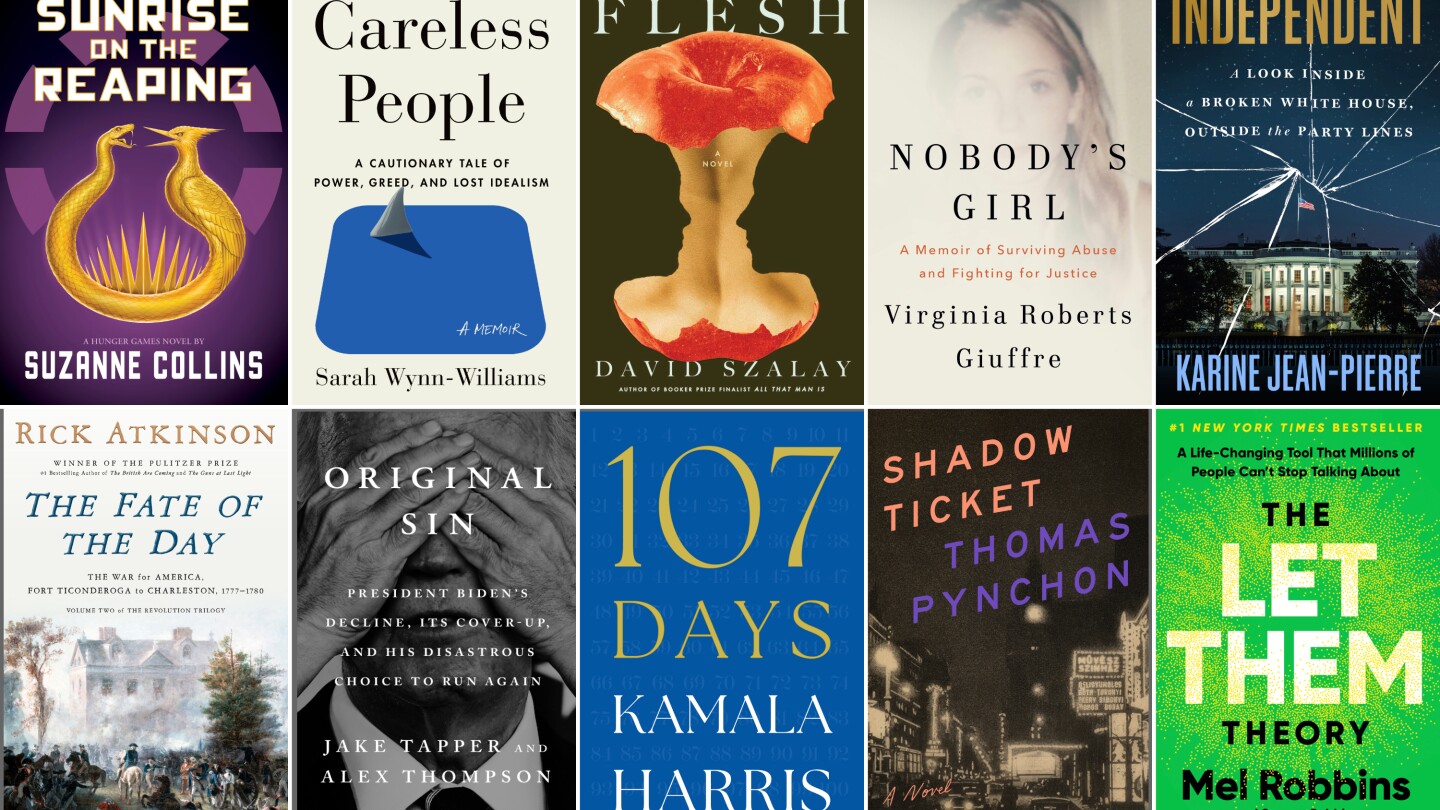
Suzanne Collins proved the enduring appeal of “The Hunger Games” universe with “Sunrise on the Reaping,” a prequel set 24 years before the original series. Despite Collins’ reluctance to promote the book—giving only one interview with her editor David Levithan—it sold more than 4 million copies worldwide. At a February launch event, fans in their 20s and 30s reflected on how their appreciation of Collins’ dystopian world had evolved from their teenage years, with 26-year-old attendee Savannah Miller noting, “As an adult I connected to the characters a lot more and had more of an emotional response.”
In the self-help category, Mel Robbins’ “The Let Them Theory” dominated bestseller lists throughout the year. The book offered timely advice on focusing on one’s inner self rather than trying to change the unchangeable. Robbins acknowledged influences ranging from ancient Stoics to Martin Luther King Jr., with her opening chapter echoing the Serenity Prayer: “Stop Wasting Your Life on Things You Can’t Control.” Her widespread impact earned her a spot in Time magazine’s top 100 creators list for empowering “millions to stop overthinking, start exercising and ignore their inner critic.”
David Szalay’s “Flesh” captured the Booker Prize with its unflinching portrayal of István, a working-class Hungarian whose life journey spans sexual improprieties, juvenile detention, military service in Iraq, and the high life in London before his inevitable downfall. Despite its dark themes, the novel earned praise from diverse admirers including pop star Dua Lipa and Booker judge Roddy Doyle, who remarked, “It is, in many ways, a dark book but it is a joy to read.”
Corporate exposés made headlines, particularly Sarah Wynn-Williams’ “Careless People,” which revealed troubling practices at Meta. The former director of global public policy alleged that CEO Mark Zuckerberg had offered to accommodate Chinese government censorship demands and that executives including Sheryl Sandberg and Joel Kaplan enabled workplace abuses. Meta attempted to suppress the book, claiming it contained “out-of-date” information and “false accusations,” and secured a legal ruling barring Wynn-Williams from promoting it. The strategy backfired spectacularly, propelling the book to the top of The New York Times bestseller list.
Virginia Giuffre’s posthumous memoir “Nobody’s Girl” detailed her experiences as a “sex slave” in Jeffrey Epstein’s network, generating significant political repercussions. Her accounts helped build Republican support for releasing Justice Department files on Epstein and contributed to King Charles III’s decision to strip his brother, the former Prince Andrew, of his royal title. Buckingham Palace acknowledged the gravity of the situation, stating that “their Majesties’ thoughts and utmost sympathies have been, and will remain with, the victims and survivors of any and all forms of abuse.”
Rick Atkinson’s “The Fate of the Day,” the second volume in his Revolutionary War trilogy, cemented his reputation as a premier military historian. The meticulously researched work—backed by some 50 pages of source material—combines detailed battle accounts from 1777-1780 with compelling character portraits. The New York Times praised Atkinson as “the best writer of narrative history” working today.
Literary giant Thomas Pynchon returned at age 89 with “Shadow Ticket,” a characteristically complex tale following private detective Hicks McTaggart’s search for a missing cheese heiress through 1930s Milwaukee and Budapest. Meanwhile, filmmaker Paul Thomas Anderson adapted Pynchon’s 1990 novel “Vineland” into the acclaimed film “One Battle After Another,” noting that he worked “with Pynchon’s blessing.”
The political aftermath of the 2024 election produced several notable works examining the Democratic Party’s defeat. CNN’s Jake Tapper and Axios’ Alex Thompson’s “Original Sin” analyzed President Joe Biden’s cognitive decline and its concealment, concluding that “the original sin of Election 2024 was Biden’s decision to run for reelection.”
Kamala Harris’s “107 Days” chronicled her abbreviated presidential campaign after Biden’s withdrawal. She distributed blame broadly, criticizing Biden’s staff for zero-sum thinking (“If she’s shining, he’s dimmed”), acknowledging her own missteps, and lamenting the insufficient timeframe: “One hundred and seven days were not, in the end, long enough to accomplish the task of winning the presidency.”
Former White House press secretary Karine Jean-Pierre surprised many with “Independent,” which signaled her departure from the Democratic Party. Unlike other critics, Jean-Pierre defended Biden’s mental acuity, arguing he “remained thoughtful, clearheaded, and well-informed” despite his poor debate performance, and criticized both the press and fellow Democrats for their treatment of the president.
Together, these works reflect a publishing year defined by political introspection, powerful personal narratives, and the return of beloved literary voices to the cultural conversation.
Fact Checker
Verify the accuracy of this article using The Disinformation Commission analysis and real-time sources.

8 Comments
The Epstein memoir sounds like it could be quite controversial and revelatory. I’m curious to learn more about his personal life and the factors that enabled his crimes. A balanced, nuanced portrayal would be valuable.
Robbins’ book on cultivating inner peace and accepting what we can’t change seems like a timely message in our turbulent times. Blending ancient wisdom with modern psychology is an intriguing approach.
Robbins’ focus on inner growth and acceptance aligns with a lot of the self-help trends I’ve been seeing lately. Curious to see how her advice compares to other recent books in this space.
2024 was certainly an eventful and divisive year. Reliving those events through a literary lens could provide new perspectives and insights. I’ll have to keep an eye out for this book.
Agreed, it could be a thought-provoking read. Dissecting the events of 2024 from multiple angles could yield valuable lessons.
An Epstein memoir could be quite polarizing, but it’s an important story that deserves to be told. I hope the author handles it sensitively and avoids sensationalism.
It’s impressive that Collins’ Hunger Games prequel sold so well, even without a major publicity push. The enduring popularity of that dystopian world is a testament to the power of her storytelling.
Interesting to see Collins revisit the Hunger Games world. I wonder how the prequel explores the backstory and origins of the dystopia. Fans must be excited to dive back into that complex, layered narrative.