


Listen to the article
Quetta Seminar Calls for Youth Leadership Against Extremism and Digital Misinformation
A seminar held in Quetta has highlighted the critical role of youth in combating violent extremism and digital misinformation, describing these twin threats as deeply entrenched social challenges requiring immediate attention. The event, organized by the Press Information Department (PID) under its Counter Violent Extremism (CVE) Project, brought together academics, journalists, and students from across Balochistan to develop strategies against these growing problems.
Speakers at the gathering delivered a stark warning about the infiltration of extremist ideologies throughout Pakistani society. “Extremism has infiltrated our society like a cancerous growth, and the wrongful propagation of news on social media has further fueled this evil,” noted panelists, emphasizing the interconnected nature of radicalization and digital falsehoods.
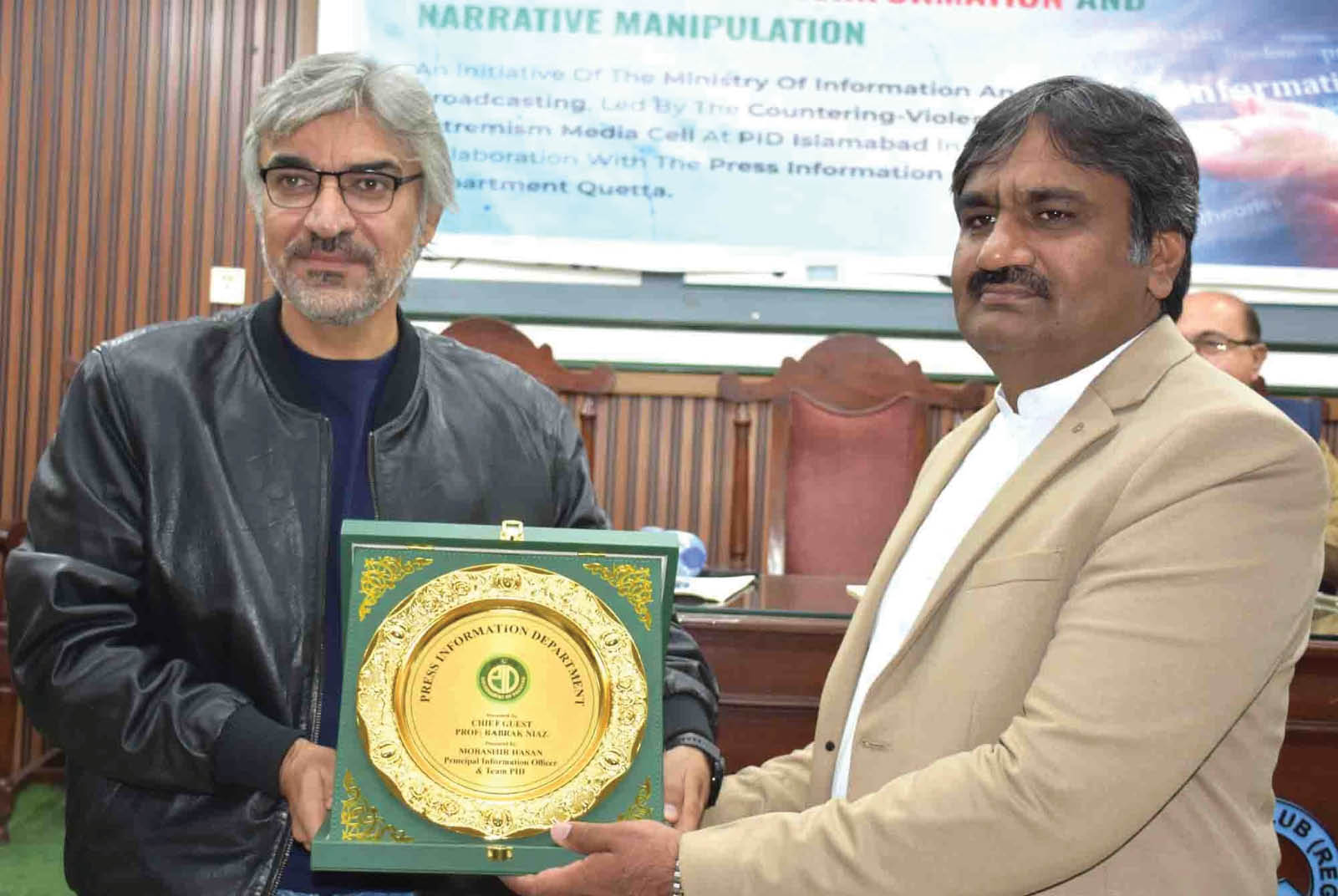
The seminar featured prominent voices including Project Director Shahid Imran Ranjha, professors Babrak Niaz and Dr. Muhammad Rahim Nasar, senior journalist Ayub Tareen, and Deputy Director PID Quetta Asad Khan Mandokhail. Their collective message stressed the urgent need for youth engagement in challenging extremist narratives.
Pakistan’s Balochistan province has long faced security challenges, including sectarian violence and separatist movements. The region’s complex socio-political landscape makes it particularly vulnerable to extremist messaging, a situation experts believe is exacerbated by unfiltered social media content and digital misinformation campaigns.
Discussions centered on practical approaches to counter these trends, with speakers advocating for awareness campaigns through traditional and digital media, educational curriculum reforms, and regular public forums like the seminar itself. The goal, according to participants, is to equip young people with critical thinking skills that enable them to identify and resist extremist ideologies.
The explosive growth of social media platforms in Pakistan has created unprecedented challenges for information integrity. With smartphone penetration increasing rapidly even in remote areas of Balochistan, nearly every citizen now has access to unfiltered content that may include dangerous propaganda or deliberate misinformation.
“The prevention of false news is only possible when we meticulously scrutinize the truth and the sources of the news we share,” one speaker explained, highlighting the importance of digital literacy. “If we engage in this critical reflection, we can stop the spread of false news.”
Participants emphasized that addressing disinformation requires both individual responsibility and coordinated institutional efforts. They called on educational institutions to incorporate media literacy into their curricula and urged media organizations to uphold journalistic standards in the digital age.
The PID’s Counter Violent Extremism Project represents part of a broader national strategy to address radicalization through preventative measures rather than solely relying on security operations. Similar initiatives have been launched across Pakistan in recent years, reflecting growing recognition that combating extremism requires addressing its ideological roots.
The seminar concluded with Project Director Ranjha outlining the specific objectives of the CVE initiative, followed by the distribution of shields and certificates to participants. The strong turnout of university students from across Balochistan was noted as an encouraging sign of youth engagement with these critical issues.
As digital platforms continue to reshape information ecosystems worldwide, Pakistan faces particular challenges due to its diverse population, regional tensions, and ongoing security concerns. Events like the Quetta seminar represent attempts to build resilience against extremism by focusing on its information dimensions, placing youth at the center of these efforts.
The success of such initiatives may ultimately depend on whether young people themselves embrace the role of critical information gatekeepers in their communities, a responsibility that seminar participants were actively encouraged to adopt.
Fact Checker
Verify the accuracy of this article using The Disinformation Commission analysis and real-time sources.

17 Comments
Extremism and misinformation can have devastating societal impacts. I’m glad to see this seminar addressing these problems head-on and engaging the youth, who are so influential on digital platforms.
Absolutely. Equipping young people with the critical thinking skills to identify and counter false narratives is crucial. This seminar seems like a positive step in the right direction.
Interesting that they’re highlighting the interconnected nature of radicalization and digital falsehoods. It’s an important point – misinformation can often fuel extremist ideologies and vice versa.
Yes, the two issues are very much intertwined. Tackling them in tandem is the best approach to make meaningful progress.
It’s encouraging to see prominent voices from different sectors coming together to address these challenges. Collaborative, interdisciplinary approaches will be key to developing effective strategies.
Agreed. Bringing together diverse perspectives and expertise is crucial for crafting holistic, impactful solutions.
This is a timely and necessary initiative. Empowering youth to be discerning consumers and producers of digital content is key to building resilience against extremism and misinformation.
I’m curious to learn more about the specific strategies and tools that will be developed at this seminar to equip young people for this important work. Engaging diverse perspectives is crucial.
Agreed. Involving academics, journalists, and students from across the region will help ensure a comprehensive and contextually relevant approach.
This seminar seems like a positive step, but tackling extremism and misinformation will require a sustained, multi-pronged effort. I hope this is the start of ongoing engagement and support for youth-led initiatives.
It’s great to see the government taking this issue seriously and mobilizing resources to address it. Partnerships between public institutions, media, and civil society will be key.
This is an important issue that needs urgent attention. Tackling extremism and misinformation on digital platforms is crucial, especially for empowering the youth to be part of the solution.
I agree. The youth have a vital role to play in combating these challenges through responsible digital engagement and promoting factual, constructive content.
Equipping youth with the skills to identify and counter misinformation is so important. I hope this seminar will empower them to become digital ambassadors in their communities.
Kudos to the organizers for recognizing the urgency of this problem. Extremism and misinformation are pervasive and damaging, so this initiative targeting the youth is really important.
Absolutely. The youth are so influential, so equipping them to be part of the solution is a smart and necessary approach.
Combating extremism and misinformation is no easy task, but this seminar seems like a positive step. I hope the youth participants will be empowered to become digital literacy champions in their communities.