


Listen to the article
Social Media Consumption Increases Anxiety Among Romanians, Survey Finds
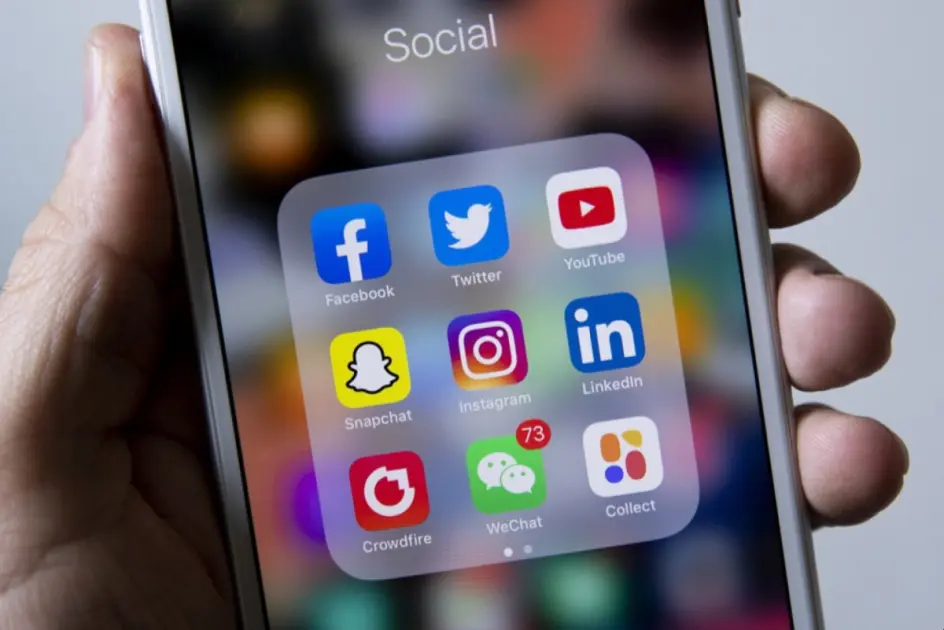
Television remains the primary information source for most Europeans, but social media’s influence is rapidly growing, especially in Romania, according to the latest Eurobarometer survey. While 72% of Romanians still rely on television for news, 48% now turn to social media platforms for information—significantly higher than the European average of 40%.
The trend is particularly pronounced among younger demographics. For Europeans aged 15-24, social media has already surpassed television as the preferred source of news, raising concerns about the quality and reliability of information being consumed.
Romania’s higher dependence on social media coincides with the decline of traditional journalism in the country since the 2007-2009 economic crisis. Once-respected news outlets have transformed into propaganda channels with questionable funding, while the advertising market—the primary revenue source for traditional media—has contracted dramatically.
“The public is not wrong to perceive the qualitative decline of the media and is rightfully turning away from it, especially in markets like Romania, but that doesn’t solve their truth problem on social media,” the survey notes.
Romanian Social Media Preferences Raise Geopolitical Concerns
Facebook remains the dominant network among Romanians at 76% usage, compared to 58% across the EU. However, the survey highlighted concerning trends with platforms like TikTok, where 46% of Romanians get their information—the highest percentage in Europe and significantly above the EU average of 31%.
Security experts have flagged TikTok’s Chinese ownership as potentially problematic, particularly regarding data security and the app’s potential use for targeted influence operations. The platform’s role in promoting fringe presidential candidate Călin Georgescu during Romania’s recent elections has come under scrutiny.
WhatsApp usage for political and social information is also elevated in Romania at 36%, compared to 27% across Europe. Only Italy ranks slightly higher at 37%. The closed, non-public nature of WhatsApp groups makes monitoring disinformation challenging, with reports linking WhatsApp groups to Georgescu’s surprising electoral performance.
YouTube consumption is similarly high among Romanians at 66%, versus the EU average of 57%. Almost half of Romanian respondents (48%) prefer video content under one minute for information consumption—a format experts warn is far too brief for meaningful context or analysis.
Algorithm-Driven Content Consumption
The notion that social media users curate their own information environment appears increasingly illusory. The survey reveals 85% of Romanian users “passively consume” political and social content they weren’t actively seeking—content served to them by platform algorithms. This figure exceeds the European average of 76%.
Though 76% of Romanians actively search for information (compared to 66% across Europe), this behavior doesn’t negate their exposure to algorithm-selected content. This pattern creates vulnerability to systematic influence campaigns.
Overall, Romanian social media behavior generally mirrors trends observed in other southern and eastern European countries with less affluent economies, diverging significantly from patterns in northern and western nations.
Heightened Awareness of Disinformation
Romanians demonstrate greater awareness of disinformation than many European counterparts. Fifty-five percent believe they’ve been exposed to disinformation campaigns in the past week—the second-highest percentage in the EU after Hungary.
In response, Romanians report verifying information through multiple sources more frequently than the European average (57% versus 49%), including checking authors, comments, and alternative sources.
“All this points to a commendable critical spirit, but also reveals a state of uncertainty,” according to the survey analysis. “Uncertainty is a defining feature of the contemporary world, given the geopolitical shifts of recent years. And it breeds anxiety, which can easily slide into conspiratorial thinking.”
The survey concludes that Romanians are approximately 1.5 times more likely to encounter disinformation on platforms like TikTok compared to other Europeans, suggesting the need for enhanced media literacy and more discriminating information consumption habits.
As social media continues to reshape information landscapes across Europe, Romania’s case highlights both the broader regional trends and unique vulnerabilities that emerging democracies face in navigating the digital information ecosystem.
Fact Checker
Verify the accuracy of this article using The Disinformation Commission analysis and real-time sources.
