


Listen to the article
Pakistan Recycles Unverified Claims About Strikes on Indian Military Facilities
Pakistani social media channels have revived claims of successful strikes against Indian military installations in Punjab during Operation Sindoor, but independent verification reveals no evidence to support these assertions. The resurgence of these claims, particularly focused on areas near Amritsar, comes seven months after the actual conflict.
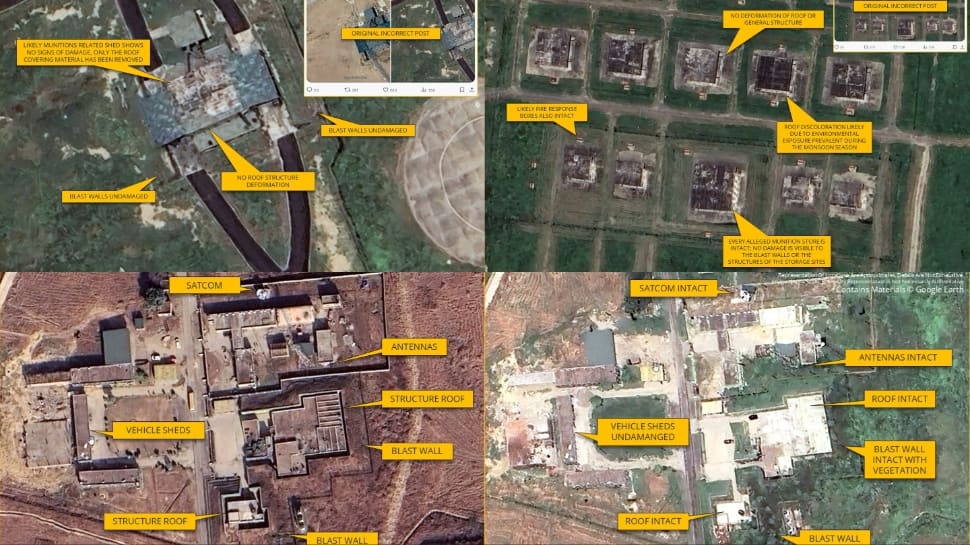
Multiple verification efforts by open-source analysts have confirmed that the alleged target locations show no signs of damage. The military facilities mentioned in Pakistani social media posts remain fully intact, with no visible evidence of blast impacts, structural damage, or secondary effects typically associated with military strikes.
“What’s particularly notable is the timing of these claims,” says a defense analyst who requested anonymity due to the sensitive nature of India-Pakistan relations. “During the actual conflict in May, Pakistan was unable to produce any satellite imagery or credible evidence. Now, months later, we’re seeing unverified images circulating without proper attribution or timestamps.”
The images being shared lack crucial verification elements including satellite source details, precise timestamps, and resolution information that would normally accompany legitimate military intelligence imagery. Comparative analysis of the locations before and after the alleged strikes shows no observable changes to the infrastructure.
This appears to be part of a pattern of information operations that emerged during the conflict. In the immediate aftermath of Operation Sindoor, Pakistani social media narratives included claims of “victory ratios” and assertions of striking India’s strategic “center of gravity” – claims that failed to gain international credibility due to lack of evidence.
Open-source intelligence experts who examined the recently circulated images point out several red flags. “These images show selective framing and a complete absence of damage indicators you would expect to see – no craters, debris patterns, scorch marks, or infrastructure collapse,” explained a regional security expert who specializes in satellite imagery analysis.
The continuing circulation of these misleading visuals despite easy debunking suggests a deliberate disinformation campaign rather than genuine disagreement over facts. Security analysts believe such tactics serve multiple purposes: shaping domestic perception within Pakistan, compensating for lack of verifiable military success during the actual conflict, and creating doubt among less-informed international audiences.
The India-Pakistan conflict has a long history of information warfare running parallel to physical confrontations. Both sides have engaged in efforts to control narratives around military engagements, though international observers have noted an increasing sophistication in digital disinformation tactics in recent years.
The recycled claims come at a time of continued tension between the nuclear-armed neighbors, with both countries maintaining heightened military readiness along their shared border. Military analysts note that verifiable evidence of cross-border strikes would carry significant implications for regional security dynamics and would likely prompt international diplomatic intervention.
Despite the persistent social media campaign, no credible evidence has emerged to support claims of successful Pakistani strikes on Indian military facilities in Punjab during Operation Sindoor. The latest social media push appears to rely entirely on unverified imagery and previously debunked narratives that do not withstand independent scrutiny.
As regional tensions continue, the proliferation of unverified claims underscores the complex information environment surrounding India-Pakistan relations, where military realities and public narratives often diverge significantly.
Fact Checker
Verify the accuracy of this article using The Disinformation Commission analysis and real-time sources.

12 Comments
This is a good example of why it’s important to be skeptical of unverified military claims, especially during times of heightened tensions. The satellite evidence appears to contradict the social media narratives.
It’s good to see open-source analysts taking a close look at these allegations. Careful verification of military claims, especially during tense times, is essential for maintaining objectivity and preventing further escalation.
Agreed. Unverified claims can easily become misinformation, which is why responsible reporting and analysis is so important in these sensitive geopolitical matters.
It’s concerning to see unsubstantiated military claims circulating on social media. I’m glad the open-source analysis was able to provide a more reliable and fact-based perspective on the situation.
The lack of visible damage at the alleged target sites raises serious doubts about the veracity of these claims. I wonder if there is any alternative explanation or context that could shed more light on the situation.
This highlights the need for reliable, fact-based reporting on military operations. Without credible evidence, these claims seem to be more political posturing than reality. Responsible journalism is crucial in such matters.
The timing of these resurfaced claims, several months after the actual conflict, is quite curious. I wonder if there are any ulterior motives behind the renewed push to spread this unverified information.
The lack of visible damage at the alleged strike sites raises serious questions about the credibility of these claims. It’s important to have a clear, objective understanding of what actually occurred.
Absolutely. Without credible evidence, these claims seem more like political posturing than factual reporting. Responsible journalism is essential in such high-stakes situations.
This seems to be another case of social media being used to spread unsubstantiated narratives. I’m glad the satellite evidence was able to provide a more reliable picture of the situation.
Yes, it’s a good reminder to be cautious about claims made on social media, especially when they involve sensitive military operations. Fact-checking and corroborating evidence is crucial.
Interesting to see the satellite evidence debunk these claims. It’s important to verify such sensitive military information before sharing it publicly, especially during a conflict. Unsubstantiated assertions can escalate tensions further.