


Listen to the article
Pakistan has called on the United Nations to take concrete measures to combat weaponized disinformation and hate speech that fuel conflict and mask human rights abuses. The appeal comes amid growing concerns over the manipulation of information in an increasingly polarized global landscape.
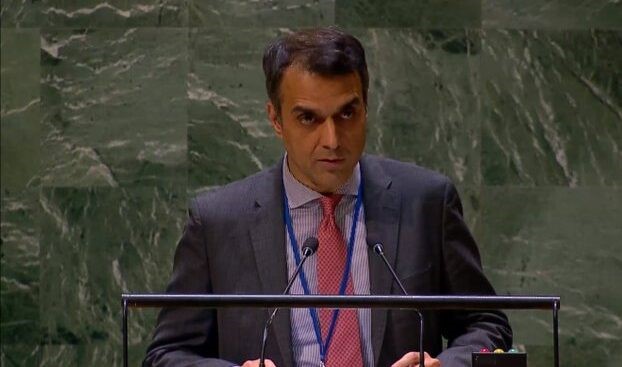
Speaking before the UN Committee on Information, Pakistan’s Deputy Permanent Representative to the UN, Usman Jadoon, emphasized that accurate and impartial communication has become critically important in a world marked by geopolitical tensions and widening inequalities.
“False narratives are deployed to obscure human rights violations, demonize lawful struggles for self-determination and silence affected populations,” Jadoon told the committee. He specifically warned about the dangerous trend of weaponizing disinformation during foreign occupations and armed conflicts to distort ground realities.
The Pakistani envoy highlighted the paradox of technological advancement in the global information ecosystem. While digital platforms have democratized access to information, they have simultaneously accelerated the spread of misinformation at unprecedented rates, undermining public trust and social cohesion.
“The persistence of hate speech, racism, xenophobia and Islamophobia in digital spaces is particularly alarming, often translating into real-world harm,” he noted. These challenges, according to Jadoon, strike at the core of not only social harmony but also the credibility of multilateral institutions, including the United Nations itself.
The rise of artificial intelligence and generative technologies presents additional challenges to information integrity. While acknowledging their potential benefits for communication and development, Jadoon warned about the serious risks they pose when misused to spread disinformation.
“Our collective response must be comprehensive and balanced,” he emphasized, suggesting that information should serve as a bridge for dialogue and cooperation rather than becoming a tool for manipulation, division, or repression.
The current global information disorder comes at a particularly sensitive time, with multiple ongoing conflicts, rising geopolitical tensions, and increasing polarization across societies worldwide. Technology platforms have struggled to effectively moderate content while balancing free expression concerns, allowing bad actors to exploit these systems to spread harmful narratives.
Recent studies have shown that misinformation can spread up to six times faster than factual information on social media platforms, with emotional and divisive content receiving significantly more engagement. This digital ecosystem often rewards sensationalism over accuracy, creating perverse incentives that undermine healthy public discourse.
The UN has previously recognized this challenge through initiatives like the Secretary-General’s Global Principles for Information Integrity, which Jadoon praised as both “timely and necessary.” These efforts aim to ensure the UN maintains its position as an authoritative and trusted source of information amid the growing challenges.
Pakistan’s call for action reflects broader international concerns about information warfare and its destabilizing effects on global peace and security. Several UN member states have similarly expressed alarm over the systematic spread of false information to influence public opinion and policy decisions.
The appeal also comes as Pakistan itself navigates complex geopolitical tensions in South Asia, where information operations have sometimes exacerbated regional conflicts and complicated diplomatic efforts at resolution.
Jadoon’s remarks underscore the urgent need for a global approach to fostering an information environment that prioritizes truth, inclusivity, and respect for human dignity. He emphasized that such an environment is essential not only for peaceful coexistence but also for protecting vulnerable communities from targeted disinformation campaigns.
The UN Committee on Information, a subsidiary body of the General Assembly, is tasked with overseeing the work of the Department of Global Communications and is seen as a critical forum for addressing these emerging challenges in the global information landscape.
Fact Checker
Verify the accuracy of this article using The Disinformation Commission analysis and real-time sources.

8 Comments
Weaponizing disinformation to distort facts and demonize lawful struggles is a concerning trend that undermines the very principles of the UN. Promoting truth and transparency should be a top priority.
Concerning to hear about weaponized disinformation being used to cover up human rights abuses. The UN must take this threat seriously and find ways to promote truth and transparency, especially in conflict zones.
I agree, the unchecked spread of misinformation can have devastating consequences. Strong global action is needed to combat this growing problem.
Pakistan is right to call on the UN to address the rise of coordinated disinformation campaigns. Undermining public trust in facts and reality is a dangerous trend that undermines democracy.
Absolutely. Defending freedom of information and access to the truth should be a top priority for the UN in today’s polarized world.
It’s crucial that the UN takes concrete steps to address this growing threat to global stability and human rights. Disinformation is a powerful tool that must be confronted head-on.
The impact of weaponized disinformation on vulnerable populations in conflict zones is deeply troubling. Impartial information and fact-based reporting must be protected at all costs.
Agreed. The UN needs to develop robust mechanisms to identify and counter state-sponsored disinformation campaigns that obscure human rights abuses.