


Listen to the article
In a stunning political reversal, newly elected Hungarian Prime Minister Peter Magyar has publicly condemned the country’s state broadcaster as a “factory of lies” peddling “propaganda” comparable to North Korea. His comments, made just three days after his landslide electoral victory, highlight the remarkable path his Tisza party traveled to defeat Viktor Orbán’s 16-year grip on power despite facing a heavily controlled media environment.
Orbán’s media dominance was comprehensive by most measures. Through restrictive laws, partisan enforcement, and strategic takeovers, approximately 80% of Hungary’s traditional media outlets had become aligned with his Fidesz party. These outlets reportedly received about 90% of state advertising revenue, creating a financial stranglehold on independent journalism. The government also enacted legislation designed to silence critical voices in academic institutions and civil society organizations.
Magyar’s electoral triumph represents a case study in how digital platforms can circumvent traditional media control. While he maintained a rigorous in-person campaign schedule, visiting multiple villages daily, his success hinged significantly on leveraging internet platforms to reach Hungarian voters directly.
Small, independent online news outlets proved crucial in this strategy. Sites like 444.hu, Direkt36, and Telex.hu continued investigating government scandals despite the hostile media environment. A watershed moment came in February 2024 when these outlets broke a story revealing that Hungary’s president, Katalin Novák, had pardoned someone convicted of covering up child sexual abuse at a government-run children’s home. Further investigation connected a prominent religious leader close to Orbán to the controversial pardon.
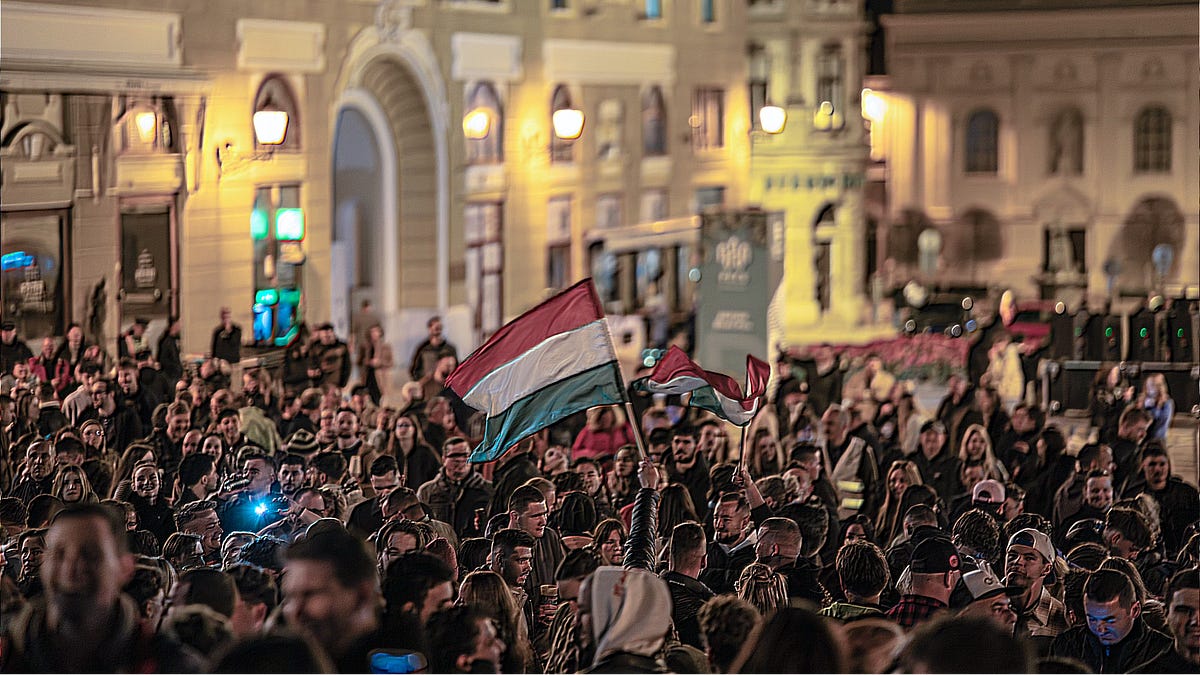
Though traditional media initially downplayed or ignored the story, it exploded across social media platforms, triggering massive public protests. The scandal forced Novák to resign, followed by Justice Minister Judit Varga, who had been involved in granting the pardon.
This moment catalyzed Magyar’s political ascent. As a former Fidesz member and Varga’s ex-husband, his explosive interview with online channel Partizan, where he accused the party of corruption, garnered 2.8 million views in a country of just 10 million people. His subsequent social media posts, including leaked recordings allegedly documenting government interference in corruption cases, went viral, building momentum for his newly formed Tisza party.
Despite being vastly outspent by Fidesz in political advertising on platforms like Meta, Tisza consistently generated stronger organic engagement. According to Polish data analytics firm ResFutura, Tisza’s per-post engagement rate was approximately three times higher than Fidesz’s, indicating Magyar’s content resonated more effectively with audiences even as the ruling party posted more content with greater resources.
The Hungarian case challenges conventional wisdom about social media’s role in democracy. Rather than undermining democratic institutions, digital platforms provided a crucial counterbalance to authoritarian control of traditional media. A 2025 survey by the Future of Free Speech think tank found that Hungary ranked third globally in popular support for free expression, despite citizens reporting one of the sharpest declines in their actual ability to speak freely.
This phenomenon helps explain why authoritarian leaders like Xi Jinping in China and Vladimir Putin in Russia have implemented comprehensive digital censorship systems like the “Great Firewall” and the “Red Web,” which include real-time control of online discourse and bans on American tech platforms. They recognized that controlling traditional media alone isn’t sufficient in the digital age.
For liberal democracies grappling with online misinformation, Hungary’s experience suggests that free expression remains essential. Some leaders, including Emmanuel Macron in France and Friedrich Merz in Germany, have recently pushed for greater restrictions on online speech to combat perceived threats to democracy. However, such measures risk silencing legitimate dissent.
Alternative approaches include Taiwan’s model of combating misinformation through transparency and crowdsourced fact-checking rather than censorship. This approach inspired Twitter’s “Community Notes” feature (now on X), which allows users to collaboratively flag misleading content, though the system’s effectiveness depends on safeguards preventing platform owners from manipulating the process.
Magyar’s victory demonstrates that free speech isn’t merely a luxury for democracies but a fundamental prerequisite for effective self-governance. It enables voters to identify what authorities are concealing and provides a mechanism for marginalized voices to be heard. Democratic governments that attempt to silence criticism may ultimately face the same fate as Orbán—finding that in the digital age, determined voices will continue to reach audiences regardless of attempts to control the narrative.
Fact Checker
Verify the accuracy of this article using The Disinformation Commission analysis and real-time sources.

9 Comments
This is an important victory for democracy in Hungary. The ability of citizens to freely access information and hold their leaders accountable is crucial, even in the face of authoritarian control of mainstream media.
I wonder how the new government will approach media regulation and ensure a more balanced and independent press going forward. Rebuilding trust in public institutions will be a key challenge.
Fascinating to see how the opposition in Hungary used social media to overcome the government’s stranglehold on traditional media. It highlights the power of digital platforms to give voice to alternative narratives, even in highly restrictive environments.
I’m curious to learn more about the specific tactics and strategies the opposition employed on social media to reach voters. It seems they were able to effectively counter the government’s propaganda machinery.
It’s encouraging to see the power of social media being used to challenge authoritarian rule and give voice to underrepresented groups. The opposition’s success in Hungary demonstrates the potential for digital platforms to disrupt entrenched political structures and promote democratic change.
I’m curious to see how the new government will approach the regulation of social media and online content, given the role it played in their electoral victory. Striking the right balance between freedom of expression and media accountability will be crucial.
This story underscores the fragility of authoritarian control in the digital age. While the government may dominate traditional media, the opposition was able to leverage social media to reach the public directly and mobilize support. A cautionary tale for leaders who seek to suppress free speech.
This is a remarkable story of how grassroots activism and strategic use of social media can overcome the odds and defeat an entrenched authoritarian regime. It’s a testament to the resilience of the Hungarian people and the power of digital tools to empower citizens and foster democratic change.
The use of social media to circumvent traditional media control is a fascinating case study. It highlights the potential for digital platforms to empower citizens and foster more transparent and accountable governance, even in repressive political environments.