


Listen to the article
The Decade of Rage: Social Media Fuels Anti-Government Protests Across Asia
If the 1920s were roaring, the 2020s are shaping up to be the decade of rage, with waves of anti-government protests sweeping across Asia. In the past five years, mass demonstrations have toppled governments and brought megacities to a standstill, all powered by a new digital catalyst: social media.
In 2022, Sri Lanka’s streets erupted for more than 100 days during the country’s worst economic crisis, leading to the fall of the powerful Rajapaksa family and their government. Two years later, Bangladesh’s once-untouchable Prime Minister Sheikh Hasina fled the capital by helicopter after protesters stormed her palace, ending her 15-year reign.
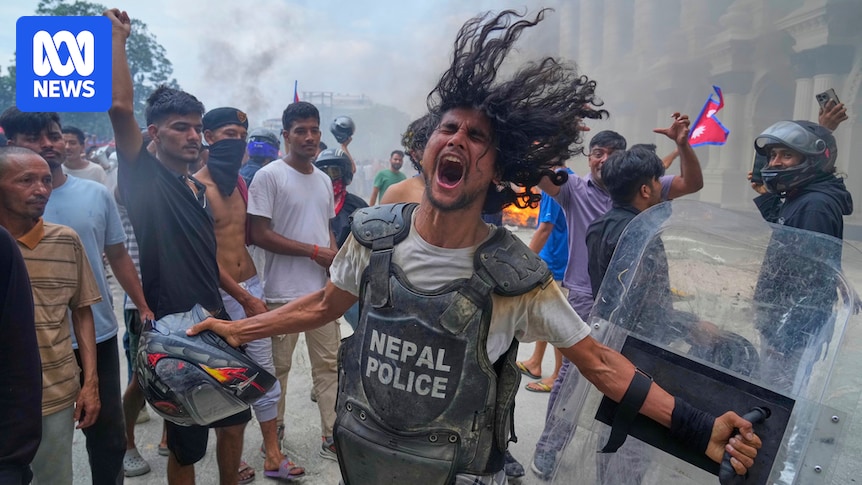
The unrest has continued in recent weeks. Indonesia and Nepal have both seen blood on their streets, while marches are planned across the Philippines. These Asian uprisings follow a global pattern of social media-supercharged protests, from Egypt in 2010 to Hong Kong in 2019 and Iran in 2022.
“Social media is no longer just a site for entertainment and networking. It has increasingly become a political site,” explains Dr. DB Subedi, a lecturer in Peace and Conflict Studies at the University of Queensland. “Governments are not able to deliver on their promises. Social media is providing a platform for the exchange of ideas, but also to voice dissatisfaction and anger.”
In Indonesia, public fury erupted in August after videos circulated showing lavish benefits for government ministers, followed by viral footage of a delivery driver being killed by a police vehicle. In Nepal, the government’s attempt to ban social platforms backfired spectacularly when #NepoBabies videos went viral, showing politicians’ children flaunting luxury European holidays and extravagant weddings while 20 percent of the country’s youth remained unemployed.
“A lot of youth were sharing their experiences of when they had to deal with government agencies. They found out that there are so many like them who had experienced things they wouldn’t have if governance worked in Nepal,” explains Ujjwal Acharya, Project Head of NepalFactCheck.org in Kathmandu.
What began as discussions on Reddit and Discord quickly engulfed cities across Nepal, ultimately toppling Prime Minister K.P Sharma Oli’s government. The protests revealed the double-edged nature of social media in modern political movements—platforms that effectively mobilize demonstrators can also undermine the very movements they help create.
“A lot of misinformation was being spread at this time,” Acharya notes. “For a day there was misinformation saying that it’s a military coup… This was dangerous because people were trying to taint the army, saying that they were acting on behalf of a foreign power and had imprisoned all the leaders.”
Other false claims circulated that a sacred Hindu temple was under attack and that the protests were a plot to reinstate the monarchy—scenarios that could have triggered violent backlash. Perhaps most damaging was a widely shared map of Kathmandu identifying politicians’ residences, originally intended for peaceful demonstrations.
“The map was developed for the youth to go in front of the houses of politicians and demonstrate. It wasn’t meant to be used to go to the houses and set them on fire,” Acharya said. But that’s exactly what happened in some cases. Rabi Laxmi Chitrakar, the wife of a former prime minister, sustained severe burns after a mob set fire to her home.
The situation spiraled out of control when an arson spree swept Kathmandu in a single afternoon. Protesters destroyed the parliament building, the Supreme Court, and key ministry buildings for education, health, and energy. Even the Special Court, which ironically prosecutes corruption cases, was reduced to ashes.
“The original organizers never wanted to go to the parliament, never wanted to attack the parliament,” Acharya emphasizes. “When you look at these people who were on the gate of the parliament building trying to force their way in, they don’t look like they were Gen Z. But when police started using heavy-handed tactics, innocent protesters who had no idea that this would flare up into live ammunition firing were hit.”
In the aftermath of Nepal’s Gen Z revolution, concerning patterns have emerged that raise questions about future political stability in the region. With Nepal facing elections in six months, there are fears that misinformation could be weaponized more strategically.
“Most of the content used during this was either rumors, or content that was very easy to identify as misinformation,” warns Acharya. “What will happen if people have time to plan for this? Groups who intentionally want to spread misinformation, they have time to prepare.”
As social media continues to lower barriers to political mobilization across Asia, governments are scrambling to adapt to this new reality—one where viral videos and hashtags can quickly transform into street movements powerful enough to bring down regimes that once seemed unshakable.
Fact Checker
Verify the accuracy of this article using The Disinformation Commission analysis and real-time sources.

26 Comments
If AISC keeps dropping, this becomes investable for me.
Good point. Watching costs and grades closely.
Good point. Watching costs and grades closely.
I like the balance sheet here—less leverage than peers.
Good point. Watching costs and grades closely.
Good point. Watching costs and grades closely.
Uranium names keep pushing higher—supply still tight into 2026.
Good point. Watching costs and grades closely.
Good point. Watching costs and grades closely.
Exploration results look promising, but permitting will be the key risk.
Good point. Watching costs and grades closely.
Interesting update on Asia’s Social Media Protests Gain Momentum Amid Rising Misinformation Concerns. Curious how the grades will trend next quarter.
Good point. Watching costs and grades closely.
Good point. Watching costs and grades closely.
Exploration results look promising, but permitting will be the key risk.
Silver leverage is strong here; beta cuts both ways though.
Good point. Watching costs and grades closely.
Good point. Watching costs and grades closely.
The cost guidance is better than expected. If they deliver, the stock could rerate.
Exploration results look promising, but permitting will be the key risk.
Good point. Watching costs and grades closely.
If AISC keeps dropping, this becomes investable for me.
Production mix shifting toward Social Media might help margins if metals stay firm.
Good point. Watching costs and grades closely.
Good point. Watching costs and grades closely.
Nice to see insider buying—usually a good signal in this space.