


Listen to the article
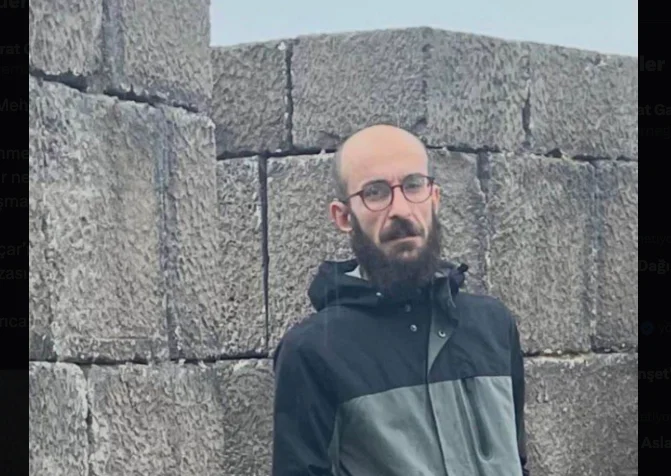
Turkish authorities have handed down a suspended prison sentence to Kurdish journalist Mehmet Üçar on terrorism propaganda charges, marking another chapter in the country’s ongoing scrutiny of journalists covering Kurdish issues.
The Batman 2nd High Criminal Court issued a suspended sentence of more than one year after convicting Üçar of disseminating terrorist propaganda. The charges stemmed from articles he published in the Germany-based Yeni Özgür Politika newspaper and PolitikArt, a culture and arts magazine, as well as freelance payments he received for his work.
While the suspended sentence means Üçar will not serve time in prison immediately, he faces incarceration if he commits a similar offense within the next five years. This conditional freedom places significant constraints on his ability to continue reporting on sensitive topics.
Üçar was among nine journalists swept up in a wider crackdown on November 26, 2024, when Turkish authorities detained 240 people as part of an investigation conducted by the Eskişehir Chief Public Prosecutor’s Office. During that operation, he was initially accused of membership in the Kurdistan Workers’ Party (PKK), an organization designated as terrorist by Turkey and many Western nations including the United States and European Union.
After spending approximately eight months in pretrial detention, authorities released Üçar in July 2025 under judicial supervision while his case proceeded through the courts.
The case highlights Turkey’s contentious approach to journalism related to the Kurdish question, a complex issue encompassing demands for equal rights, cultural recognition, and political representation by the country’s estimated 15-20 million Kurdish citizens.
Media freedom advocates have consistently criticized Turkey’s use of anti-terrorism legislation against journalists. Organizations including the Committee to Protect Journalists and Reporters Without Borders argue that authorities frequently conflate legitimate journalistic activity—such as interviewing sources across the political spectrum, covering contentious topics, or receiving payment for reporting—with criminal acts supporting terrorist organizations.
Press freedom watchdogs point out that such prosecutions typically lack evidence of direct involvement in violence or explicit incitement, instead focusing on journalistic output that may be critical of government policies or that covers perspectives authorities deem problematic.
The Media and Law Studies Association, which reported on Üçar’s sentencing, has documented numerous similar cases where journalists face legal consequences for their reporting on Kurdish issues, creating what they describe as a chilling effect on press freedom in the country.
This pattern of legal pressure on journalists has contributed to Turkey’s low standing in international press freedom rankings. According to the 2025 World Press Freedom Index published by Reporters Without Borders, Turkey ranks 159th out of 180 nations, reflecting significant concerns about the state of media independence in the country.
Expression Interrupted, a project tracking freedom of expression violations in Turkey, reports that 27 journalists are currently imprisoned in the country. Many face terrorism-related charges similar to those brought against Üçar.
Turkey’s approach to media freedom has drawn criticism from international human rights bodies, including the European Court of Human Rights, which has ruled against the country in multiple cases involving journalist detentions and prosecutions.
Media experts note that the suspended sentence against Üçar, while not resulting in immediate imprisonment, represents a form of judicial control that may lead to self-censorship and limit journalistic coverage of politically sensitive issues, particularly those related to the Kurdish population and their concerns.
Fact Checker
Verify the accuracy of this article using The Disinformation Commission analysis and real-time sources.

10 Comments
It’s disappointing to see another journalist facing prosecution in Turkey for their reporting. While national security is important, the conviction of Mehmet Üçar on terrorism propaganda charges seems like an overreach that could have a chilling effect on media coverage of the Kurdish issue. I hope the authorities will take a more nuanced approach that respects the role of a free press.
I share your concerns about the implications of this conviction for press freedom in Turkey. The authorities should carefully balance national security with the need for an independent and critical media that can hold power to account.
While I understand the need for national security, the conviction of this journalist on such charges seems like an overreach. Reporting on sensitive topics should not be equated with terrorism propaganda. I hope the authorities will reconsider this decision and uphold the principles of a free press.
You make a fair point. There needs to be a balance between national security and press freedom. Criminalizing journalism is a concerning step that merits closer examination.
This is a concerning development for press freedom in Turkey. Criminalizing journalism on sensitive topics like the Kurdish issue sets a dangerous precedent. I hope the authorities reconsider this conviction and allow journalists to report without fear of repression.
I agree, the prosecution of journalists for their reporting is highly problematic. A free press is essential for a functioning democracy.
The conviction of this Kurdish journalist on terrorism propaganda charges is deeply troubling. It appears to be another attempt by the Turkish government to silence critical voices and restrict access to information about Kurdish issues. This is a concerning trend that merits close international scrutiny.
I share your concerns. The crackdown on journalists in Turkey is alarming and raises serious questions about the state of press freedoms in the country.
This case highlights the ongoing challenges journalists face in Turkey when reporting on Kurdish issues. The conviction of Mehmet Üçar on terrorism propaganda charges is a troubling development that raises concerns about the ability of the media to cover sensitive topics without fear of reprisal.
I agree, the conviction of this journalist is deeply concerning and speaks to the broader challenges facing press freedom in Turkey. The authorities should reconsider this decision and ensure that journalists can report without fear of prosecution.