


Listen to the article
In a surprising examination of “The Iliad,” modern readers may find themselves questioning the moral foundations of one of Western civilization’s foundational texts. Upon reading Homer’s epic in its entirety for the first time, what stands out isn’t just the expected absence of modern values, but rather the perplexing motivation of ordinary soldiers in a war seemingly fought for the personal grievances of nobility.
The central conflict of “The Iliad” revolves around Paris of Troy kidnapping Helen, wife of Menelaus, brother to King Agamemnon of Mycenae. This single act of personal transgression launches a massive military campaign with thousands of Greek soldiers sailing to Troy. Yet the text never adequately explains why common soldiers would risk their lives for what amounts to a nobleman’s marital dispute.
Even more curious is the Trojans’ willingness to defend Paris despite widespread acknowledgment of his wrongdoing. During a Trojan assembly depicted in Book 7, Antenor argues that Troy should return Helen to end the bloodshed. Paris refuses to relinquish Helen, though he offers to return her property. King Priam, Paris’s father, notably refers to his son as “the cause of this whole conflict,” yet takes no action to force his hand.
The subplot involving Achilles further illustrates this dynamic. Agamemnon takes Briseis, a woman Achilles won in battle, sparking Achilles’ withdrawal from fighting. Despite universal agreement that Agamemnon acted unjustly, Greek soldiers continue fighting for him without question.
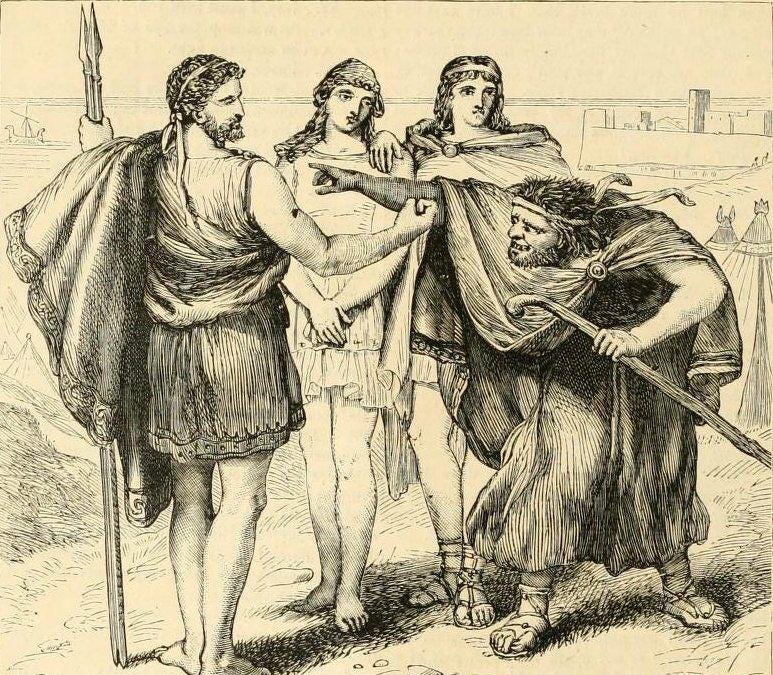
Only one character of lower social status challenges this arrangement—Thersites. In a remarkable scene, this common soldier publicly criticizes Agamemnon, questioning why his personal desires should take precedence over the wellbeing of the army. For his honesty, Thersites is described as physically deformed, labeled a “blabbermouth,” and beaten by Odysseus while the other soldiers laugh and approve of his humiliation.
To modern sensibilities, Thersites presents a compelling argument—essentially functioning as what we would now call loyal opposition. His objection isn’t to the war itself but to Agamemnon’s selfish behavior that undermines the Greek effort. Yet Homer portrays him as contemptible, and his fellow soldiers celebrate his punishment.
The text reveals a stark class division in how dissent is handled. Elites like Achilles may withdraw their support but aren’t physically punished for disagreement. Commoners like Thersites face immediate, violent repercussions. Even the name “Thersites” translates to something like “boldness” or “impudence,” suggesting inherent disapproval of his speaking out.
The motivational tools for common soldiers appear strikingly crude. In Book 2, elder statesman Nestor promises rape and plunder as rewards for fighting, while threatening execution for deserters. There’s no appeal to patriotism or collective glory—only base incentives and fear.
This raises questions about “The Iliad’s” function in Greek society. Rather than portraying leaders as particularly virtuous—which might create uncomfortable comparisons to contemporary rulers—the epic establishes that elite authority should be obeyed regardless of merit. When leaders like Agamemnon fail, they can blame divine intervention, providing a convenient excuse for poor leadership.
The story of Thersites particularly reinforces this system. He is correct in his criticism but punished anyway, demonstrating that questioning authority is never acceptable for commoners. The message is clear: only “ugly, cowardly cripples” dare criticize their superiors.
The development of “The Iliad” likely reflects centuries of cultural evolution rather than deliberate propaganda. Starting with the historical destruction of Troy around 1200 BCE, the narrative was likely shaped through generations of retelling, with elements that threatened elite power gradually eliminated. Bards seeking patronage would naturally adapt their stories to please noble audiences.
This elite-friendly narrative structure may have paradoxically contributed to Greek civilization’s flourishing. By defending aristocratic prerogatives rather than promoting worship of individual rulers (as in Persia or Egypt), “The Iliad” helped maintain a relatively open society that could benefit from debate among elites while still preserving overall social stability.
While speculative, this reading of “The Iliad” suggests that Western literature’s founding text might be better understood not just as a reflection of ancient values, but as an instrument that actively reinforced a particular social order—one that protected elite interests while allowing enough flexibility for Greek civilization to innovate beyond the more rigidly hierarchical societies of its time.
Fact Checker
Verify the accuracy of this article using The Disinformation Commission analysis and real-time sources.

14 Comments
The Iliad’s depiction of the common soldiers’ willingness to risk their lives for the personal disputes of the nobility is quite puzzling. It seems to highlight the propaganda and manipulation used by the ruling class to maintain their power and authority.
Yes, the Iliad provides an intriguing window into the dynamics between the aristocracy and the masses, and how the former can leverage propaganda to justify their actions, even when they come at great cost to the common people.
This analysis of the Iliad offers a thought-provoking critique of how the text may have served as propaganda to justify the authority of the aristocratic class. The disconnect between the nobility’s personal grievances and the sacrifices of the common soldiers is striking and raises important questions about the moral foundations of this foundational work.
Absolutely, the Iliad’s focus on the elite’s personal disputes at the expense of the common people is a fascinating lens through which to examine the text’s underlying themes of power, propaganda, and the dynamics between the ruling class and the masses.
The Iliad does seem to highlight the disconnect between the aristocratic ruling class and the common soldiers who bore the brunt of their conflicts. It’s an insightful critique of how elite interests can overshadow the broader good of society.
You make a good point. The Iliad’s focus on the personal grievances of nobility at the expense of the common people is an interesting lens through which to view this classic work.
Fascinating analysis of Homer’s Iliad through a modern lens. It’s surprising how the nobility’s personal grievances drove such a massive military campaign, with ordinary soldiers risking their lives. Curious to see how the Trojans defended Paris despite acknowledging his wrongdoing.
Indeed, the dynamics between the nobility and common soldiers in the Iliad raise some intriguing questions about the moral underpinnings of this foundational text.
The Iliad’s portrayal of the common soldiers’ willingness to fight and die for the personal disputes of the nobility is a compelling critique of how the ruling class can leverage propaganda to maintain their authority. It’s an insightful examination of this foundational text and the moral questions it raises about the disconnect between elite interests and the broader good of society.
Well said. The Iliad provides a valuable window into the ways in which the aristocratic class can use propaganda and manipulation to justify their actions, even when they come at great cost to the common people. It’s a thought-provoking perspective on this classic work.
This is a fascinating analysis of the Iliad and the way it may have served as propaganda to support the authority of the aristocratic class. The disconnect between the personal grievances of the nobility and the sacrifices of the common soldiers is quite striking and raises important questions about the moral foundations of this foundational text. It’s an insightful critique that sheds new light on this classic work.
Absolutely, the Iliad’s focus on the elite’s personal disputes at the expense of the common people is a compelling lens through which to examine the text’s underlying themes of power, propaganda, and the dynamics between the ruling class and the masses. It’s a thought-provoking perspective that challenges our traditional understanding of this foundational work.
A thought-provoking examination of the Iliad’s underlying themes of propaganda and the wielding of power by the aristocratic class. It’s striking how the personal dispute between Paris and Menelaus escalated into such a massive military campaign, with ordinary soldiers as the pawns.
Absolutely, the Iliad raises important questions about the disconnect between the ruling elite and the common people who bore the brunt of their conflicts. It’s a valuable perspective on the use of propaganda to justify the authority of the aristocracy.