


Listen to the article
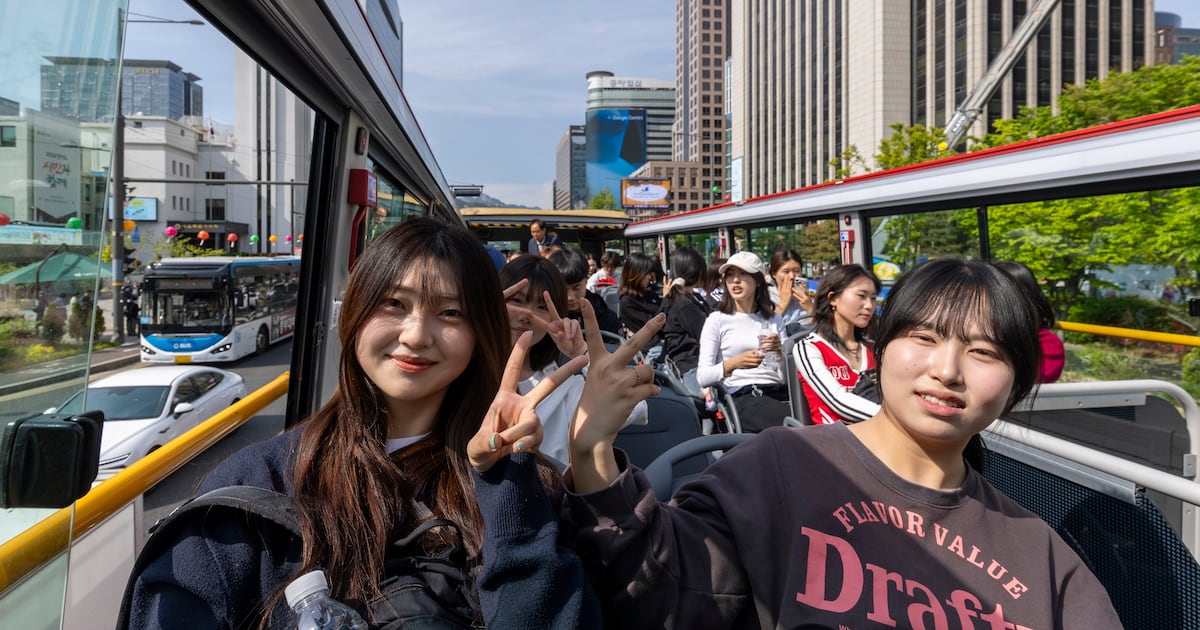
A group of North Korean teenagers who defected to South Korea recently toured Seoul’s bustling districts, experiencing firsthand the stark contrast between the reality of South Korean life and the propaganda they were raised to believe.
The tour, organized by a local nonprofit supporting North Korean refugees, took the teenagers through iconic areas like Gangnam and Myeongdong, offering them a glimpse of the modern, prosperous society that was previously described to them only through state-controlled narratives of poverty and suffering.
“In North Korea, we were taught that South Koreans lived in desperate conditions, that people were starving in the streets and that American soldiers treated citizens cruelly,” said Min-jun, a 16-year-old who escaped North Korea two years ago with his mother. His name has been changed to protect family members who remain in North Korea.
Min-jun stood mesmerized in front of a luxury department store in Gangnam, watching shoppers enter and exit with branded shopping bags. “Our teachers told us South Korea was a failed state dependent on American aid. Now I see with my own eyes how different the truth is,” he said.
The teenage defectors, ranging in age from 14 to 18, represent a growing demographic of young North Koreans who have risked their lives crossing the heavily militarized border or, more commonly, taking the perilous journey through China to reach South Korea. According to the Ministry of Unification, approximately 33,000 North Koreans have defected to the South since the end of the Korean War, with about 10% being minors at the time of their arrival.
Adaptation challenges for these young defectors extend beyond the cultural shock. Many struggle with educational disparities, social integration, and psychological trauma from their escape experiences. South Korean authorities have developed specialized educational programs to bridge these gaps, but integration remains challenging.
Ji-eun, a 17-year-old who arrived in South Korea last year, was particularly struck by the technological landscape of Seoul. “In Pyongyang, we had computers in school, but most were very old and the internet was restricted to an internal network,” she explained. “Here, everyone has smartphones more powerful than any computer I had seen before.”
The nonprofit behind the tour, New Beginnings Foundation, focuses on providing practical experiences that help young defectors reconcile their past understanding with current reality. Kim Tae-woo, the organization’s director, emphasized the importance of these excursions.
“These teenagers have been told their entire lives that South Korea is the enemy, a failed state where people suffer under American imperialism,” Kim said. “Seeing modern Seoul with their own eyes helps them process the magnitude of the deception they experienced and accelerates their adaptation to their new home.”
The tour included visits to educational institutions, where the teens interacted with South Korean students their age. These encounters revealed both cultural differences and shared interests that transcend political boundaries.
Hee-young, an 18-year-old defector who has been in South Korea for three years, noted how her perspective has evolved. “When I first arrived, I was constantly suspicious of South Koreans’ kindness. I thought it might be a trick,” she said. “Now I understand that the real deception was what we were taught in North Korea.”
Economic indicators highlight the profound difference between the two Koreas. South Korea’s GDP per capita exceeds $30,000, while North Korea’s is estimated to be less than $2,000, though precise economic data from the isolated nation remains difficult to verify.
The day concluded with a meal at a popular Korean barbecue restaurant, where the teens experienced another aspect of South Korean abundance. For many, it was their first time seeing such quantities and varieties of meat available for everyday consumption.
Experts in Korean reunification studies point to these young defectors as potentially important bridges between the divided nations. Dr. Park Sun-young of Seoul National University, who specializes in inter-Korean relations, notes that “these young people understand both worlds. They speak the same language but have experienced radically different systems. Their perspective will be invaluable if reunification eventually occurs.”
As the day ended, Min-jun reflected on his journey. “I miss my friends and some parts of my hometown, but I don’t miss the hunger or the fear,” he said. “I hope someday all North Koreans can see what I’ve seen today.”
Fact Checker
Verify the accuracy of this article using The Disinformation Commission analysis and real-time sources.

14 Comments
Fascinating to hear the stark contrast between North Korean propaganda and the reality of modern, prosperous South Korea. It must be eye-opening for these defector teens to experience the bustling cities and thriving economy they were told didn’t exist.
I wonder how their perspectives will continue to evolve as they integrate into the South Korean society. This is an important story to share and highlight the power of propaganda.
The stark contrast between the North Korean regime’s propaganda and the reality of modern, prosperous South Korea must have been profoundly disorienting for these teenage defectors. This story highlights the distorting power of state-controlled information and the importance of access to objective truth.
I’m curious to learn more about the long-term challenges these North Korean defectors face as they rebuild their lives in South Korea. Overcoming the effects of propaganda and building a new identity must be a complex and difficult process.
This is a powerful example of how propaganda can distort reality and shape the worldview of an entire generation. The experience of these North Korean teenage defectors visiting Seoul is a stark reminder of the importance of access to objective information and the ability to see beyond state-controlled narratives.
I commend the work of the nonprofit organization that facilitated this eye-opening tour for the defector teens. Initiatives like this play a crucial role in helping North Korean refugees integrate into South Korean society and overcome the effects of propaganda.
It’s disheartening to hear how North Korean youth were indoctrinated with such blatant propaganda about the conditions in South Korea. This story highlights the importance of access to objective information and the ability to see the world beyond state-controlled narratives.
I’m curious to learn more about the efforts of the nonprofit organization that arranged this eye-opening tour for the North Korean defector teens. Their work seems crucial in supporting these young people’s transition.
The stark contrast between the North Korean regime’s propaganda and the reality of modern, prosperous South Korea must have been profoundly disorienting for these teenage defectors. This is a powerful reminder of the distorting effects of state-controlled information and the importance of access to the truth.
I hope these defectors are able to build fulfilling lives in South Korea and use their experiences to shed light on the realities of life under the North Korean regime.
Witnessing the thriving consumer culture and bustling urban centers of Seoul must have been a surreal and eye-opening experience for the North Korean teenage defectors. This story highlights the profound disconnect between the regime’s propaganda and the actual conditions in South Korea.
I’m curious to learn more about the long-term support and integration efforts for North Korean defectors in South Korea. Overcoming the effects of state-sponsored misinformation must be a significant challenge.
The tour through Seoul’s iconic districts must have been a surreal experience for these North Korean teenagers. Seeing the thriving economy and consumer culture firsthand, in stark contrast to the state narratives they were raised with, is a powerful lesson in the distortion of truth.
I hope this exposure to the realities of South Korean life helps these defectors build a more accurate understanding of the world beyond North Korea’s borders.