


Listen to the article
Russian Youth Military Program Draws Children into War Culture in Occupied Ukraine
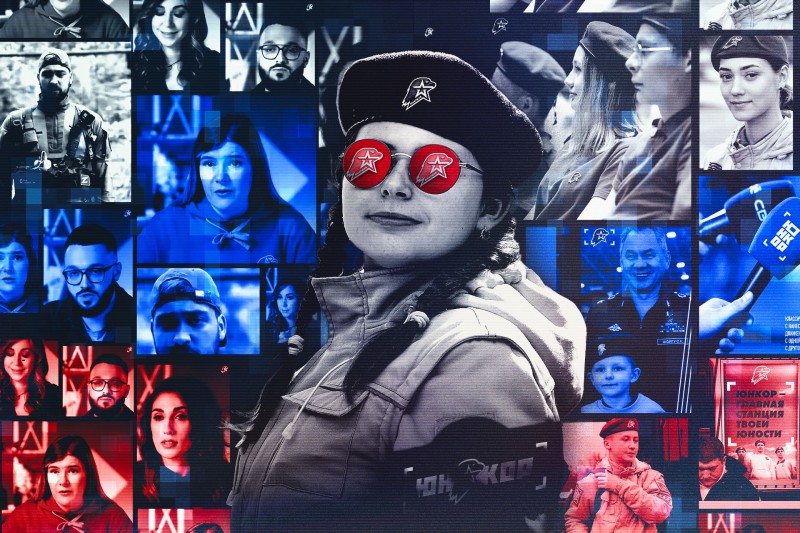
A propaganda and militarization effort targeting Ukrainian youth in Russian-occupied territories is raising concerns about the long-term impact on children caught in the crossfire of war. The program, known as “Yunkor,” has transformed ordinary schoolchildren into mouthpieces for Russian military narratives.
One striking case involves Marina, a teenager from occupied Kherson region, whose transformation illustrates how deeply military values have penetrated everyday life. In January, she published an emotional Telegram post calling the Ukrainian military “one of the most brutal executioners in history” and declaring such people should be “destroyed, burned like the plague.”
Marina’s outburst followed a drone strike on a restaurant and hotel in the Russian-occupied village of Khorly. According to occupation authorities, 27 people died, including children. Ukrainian military sources countered that they only target legitimate military objectives, with an anonymous source telling Ukrinform that Russian special services personnel attended the New Year’s Eve gathering.
The teenager’s story represents a troubling pattern. She was just 11 when Russian forces occupied her village in early 2022. By the following year, she was posting selfies in military camouflage on VKontakte with the caption “I serve Russia.” Her father, 54-year-old Vitaly, now fights for Moscow, while Marina holds a Russian passport and frequently expresses pride in his service.
Marina has become a key contributor to “Yunarmia Pravda,” a youth publication produced by students at a small Black Sea village school. Under the mentorship of Russian journalist Andrei Fetisov, the publication has released seven editions since fall 2023. Marina’s name appears second on the masthead, just after Fetisov.
Reporters obtained several scans of the publication from a source in Kherson region. Despite its modest appearance, the two-page newspaper reveals how thoroughly military values have permeated these children’s lives. Nearly every article focuses on war themes – from Stalingrad heroes to profiles of current Russian soldiers.
Marina herself authored a profile of a “deeply religious” Russian soldier with the callsign “Poet,” who reportedly writes verses about his faith while serving on the front lines. She also reports on military-themed youth activities.
One such activity is Zarnitsa 2.0, a national live-action wargame organized by Yunarmia. The program revives a Soviet-era exercise from the 1960s where participants divide into teams competing to capture each other’s headquarters. Today’s version assigns youth specific military roles, including squad leader, assault trooper, medic, drone operator, and “war correspondent” – a category judged by the number of media reports produced during the game.
In spring 2024, Marina covered a regional Zarnitsa competition at her school, describing how “fighters raced to assemble and disassemble Kalashnikov assault rifles, donned gas masks, cleared mines in fields, demonstrated their knowledge of history, and demonstrated their compass navigation skills.”
This militarization of youth education stands in stark contrast to the relatively upbeat, non-aggressive content produced by other young participants like Kateryna, another teen from the region who joined Yunkor the same year as Marina.
Experts worry these programs represent more than simple propaganda – they form part of a comprehensive system designed to socialize children in occupied territories into Russian military culture. By combining journalism, military training, and patriotic indoctrination, these initiatives aim to reshape the identities of Ukrainian youth in Russian-controlled areas.
Marina and her father did not respond to requests for comment about their involvement in the program.
As the war continues into its third year, the long-term psychological and social impacts of such militarized education systems on children in occupied territories remain a significant concern for child welfare advocates and Ukrainian authorities alike.
Fact Checker
Verify the accuracy of this article using The Disinformation Commission analysis and real-time sources.

12 Comments
This is a disturbing report about Russia’s efforts to indoctrinate Ukrainian youth in occupied territories. Turning children into mouthpieces for Russian propaganda is a troubling tactic that raises concerns about the long-term impact on these young people.
Agreed. Exploiting vulnerable children for political narratives is highly unethical and risks further traumatizing them. The international community must closely monitor these activities and call them out firmly.
This propaganda effort seems to be part of a broader strategy to cement Russian control over occupied regions by indoctrinating the next generation. Recruiting Ukrainian teens as mouthpieces is a worrying tactic that violates child rights and human dignity.
I share your concerns. Weaponizing youth for political gain is a reprehensible abuse of power. The international community must intervene to protect these vulnerable children and uphold humanitarian principles.
While the details of this story are distressing, it’s important to maintain an objective perspective. Both sides likely have their own narratives and motivations at play. Carefully monitoring the situation and gathering reliable information will be crucial going forward.
That’s a fair point. It’s important to avoid rushing to judgment and to seek a nuanced understanding of the dynamics at play. Maintaining impartiality and gathering credible evidence will be key to addressing this complex issue.
The story of Marina highlights the depth of Russia’s campaign to reshape the worldview of Ukrainian youth. Portraying the Ukrainian military as ‘executioners’ is a blatant distortion of reality aimed at turning these kids against their own country.
It’s a concerning example of how occupation authorities are leveraging young people to spread disinformation and justify the invasion. The mental and emotional toll on these children is likely immense.
The transformation of ordinary schoolchildren into propaganda mouthpieces is deeply troubling. This appears to be a concerted effort by Russian authorities to shape the worldview of Ukrainian youth and undermine their national identity. The long-term consequences could be severe.
I agree. Indoctrinating children is a particularly egregious tactic that violates their rights and dignity. The international community must intervene to protect these vulnerable young people and ensure they are not permanently scarred by this experience.
This report highlights the alarming reality that Russian forces are actively recruiting and exploiting Ukrainian teenagers to serve their propaganda goals. It’s a chilling example of how the war is traumatizing an entire generation of young people caught in the crossfire.
You’re absolutely right. Weaponizing children for political purposes is a despicable tactic that must be condemned in the strongest possible terms. The long-term psychological and emotional damage to these young people is deeply concerning.