


Listen to the article
NATO’s Entertainment Industry Outreach Sparks Debate on Creative Influence
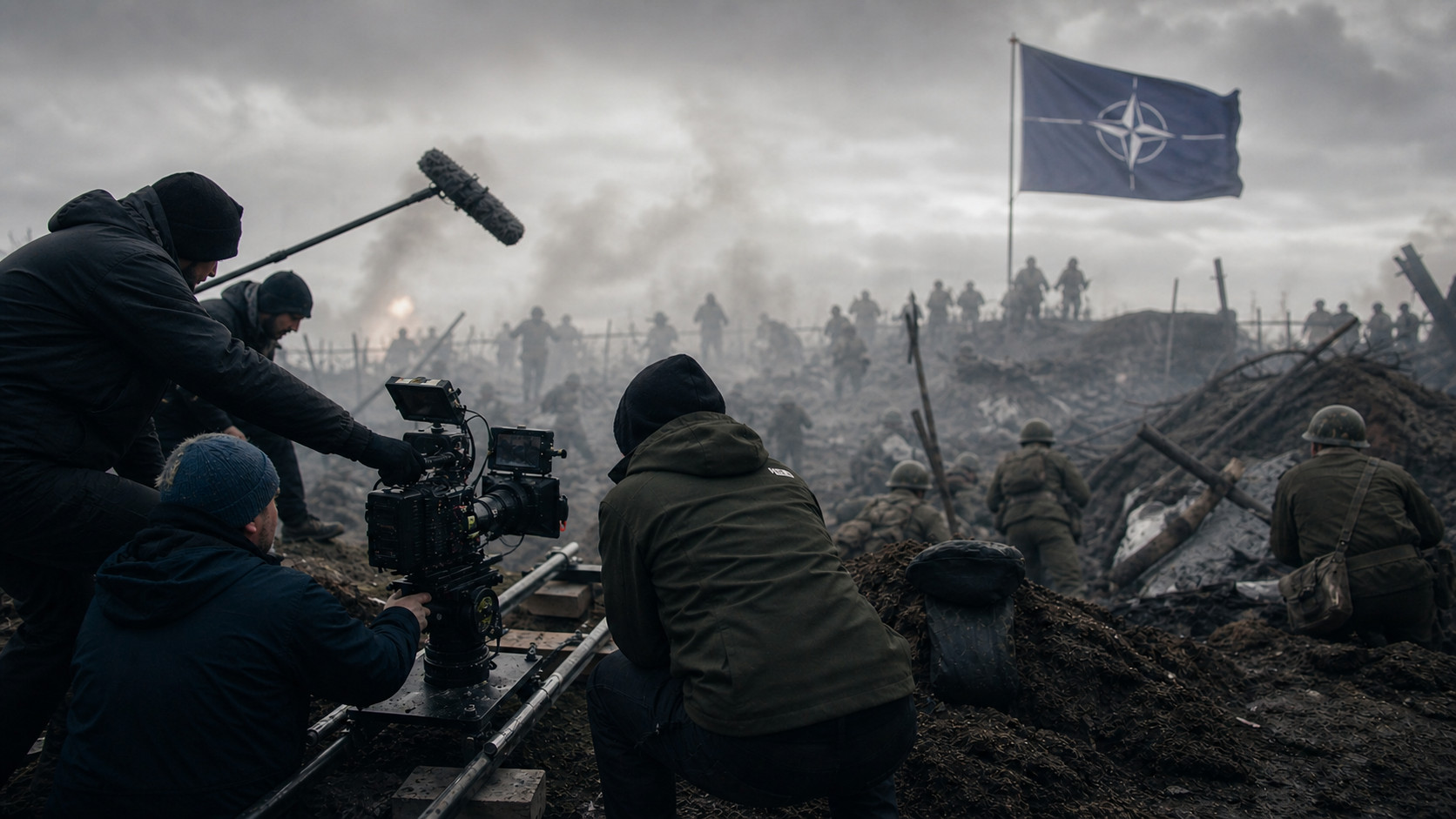
NATO has embarked on a series of closed-door meetings with screenwriters, directors, and producers across major entertainment hubs, raising questions about the military alliance’s growing influence in Hollywood storytelling. The sessions, held in Los Angeles, Brussels, and Paris—with London next on the agenda—operate under the Chatham House Rule, allowing information to be used while keeping participant identities confidential.
While NATO frames these meetings as educational briefings on “the changing security situation in Europe,” the initiative has provoked significant pushback from industry professionals who view it as an attempt to shape war narratives in entertainment.
Irish screenwriter Alan O’Gorman didn’t mince words, calling the meetings “outrageous” and “clearly propaganda.” He added, “I thought it was tone-deaf and crazy to present this as some kind of positive opportunity.”
Writer and producer Faisal A. Qureshi expressed similar concerns about the power dynamic at play: “They have simply been given something that has the appearance of truth, provided by an authority that rarely deals with the public, and there is a sense of privilege regarding obtaining such access.”
This sense of exclusive access appears to be yielding results for NATO. According to an email reported by The Guardian, the alliance claims these sessions have already inspired three different creative projects among participants—a significant outcome in an industry where early concept development determines which stories reach audiences.
The timing is particularly noteworthy as war-themed productions enjoy renewed prominence in global entertainment. One high-profile example currently in development is “Alone at Dawn,” a major war drama directed by Ron Howard for Amazon MGM Studios. The film stars Adam Driver as Medal of Honor recipient John Chapman alongside Anne Hathaway, depicting the Battle of Takur Ghar during the Afghanistan war. This prestige project exemplifies the industry’s continued investment in military narratives that blend realism, heroism, and psychological complexity.
NATO’s outreach isn’t unprecedented. Earlier in 2024, Hollywood screenwriters participated in a delegation to NATO headquarters organized by the Center for Strategic and International Studies, where they received briefings from senior officials, observed military exercises, and met with Ukrainian soldiers. Participants described the experience as “overwhelming,” highlighting the emotional impact such direct access can create.
What distinguishes NATO’s current approach is its focus on early development stages, when narratives are still malleable. This upstream engagement creates a unique ethical tension: filmmakers naturally seek authentic details for war stories, but when that information comes from an organization with clear geopolitical interests, questions arise about narrative independence.
The Chatham House Rule further complicates transparency. While promoting candid dialogue, it also obscures the potential influence on creative decisions. Audiences watching future productions will have no way to identify whether or how military or political entities shaped the storytelling.
For studios and streaming platforms, these considerations extend beyond ethics to commercial calculations. War content continues to attract viewers and awards recognition globally. Projects like “Alone at Dawn” indicate ongoing audience appetite for conflict-based stories that balance spectacle with emotional depth. If NATO’s briefings influence early concept development, even indirectly, that impact could ripple through the types of projects that receive funding and reach screens worldwide.
However, dismissing these initiatives outright as propaganda oversimplifies a complex relationship. Access doesn’t automatically guarantee control, and creative professionals aren’t passive recipients—they interpret and transform information through their own artistic lenses.
The fundamental question remains whether creative independence can be maintained while benefiting from institutional access. Can writers and directors engage with NATO without adopting their perspectives? Can audiences trust that the stories they watch stem from artistic vision rather than aligned institutional narratives?
As NATO prepares for its next session in London, in collaboration with the Writers Guild of Great Britain, these questions grow increasingly urgent. In today’s content landscape, influence rarely arrives as direct instruction—it comes through access, information, and exclusive invitations.
And the creative decisions made in those rooms may shape far more than individual scripts.
Fact Checker
Verify the accuracy of this article using The Disinformation Commission analysis and real-time sources.

14 Comments
Exploration results look promising, but permitting will be the key risk.
Uranium names keep pushing higher—supply still tight into 2026.
Exploration results look promising, but permitting will be the key risk.
If AISC keeps dropping, this becomes investable for me.
The cost guidance is better than expected. If they deliver, the stock could rerate.
Interesting update on NATO Collaboration with Entertainment Industry Raises Questions. Curious how the grades will trend next quarter.
Good point. Watching costs and grades closely.
The cost guidance is better than expected. If they deliver, the stock could rerate.
Good point. Watching costs and grades closely.
Good point. Watching costs and grades closely.
Nice to see insider buying—usually a good signal in this space.
Good point. Watching costs and grades closely.
Good point. Watching costs and grades closely.
Interesting update on NATO Collaboration with Entertainment Industry Raises Questions. Curious how the grades will trend next quarter.