


Listen to the article
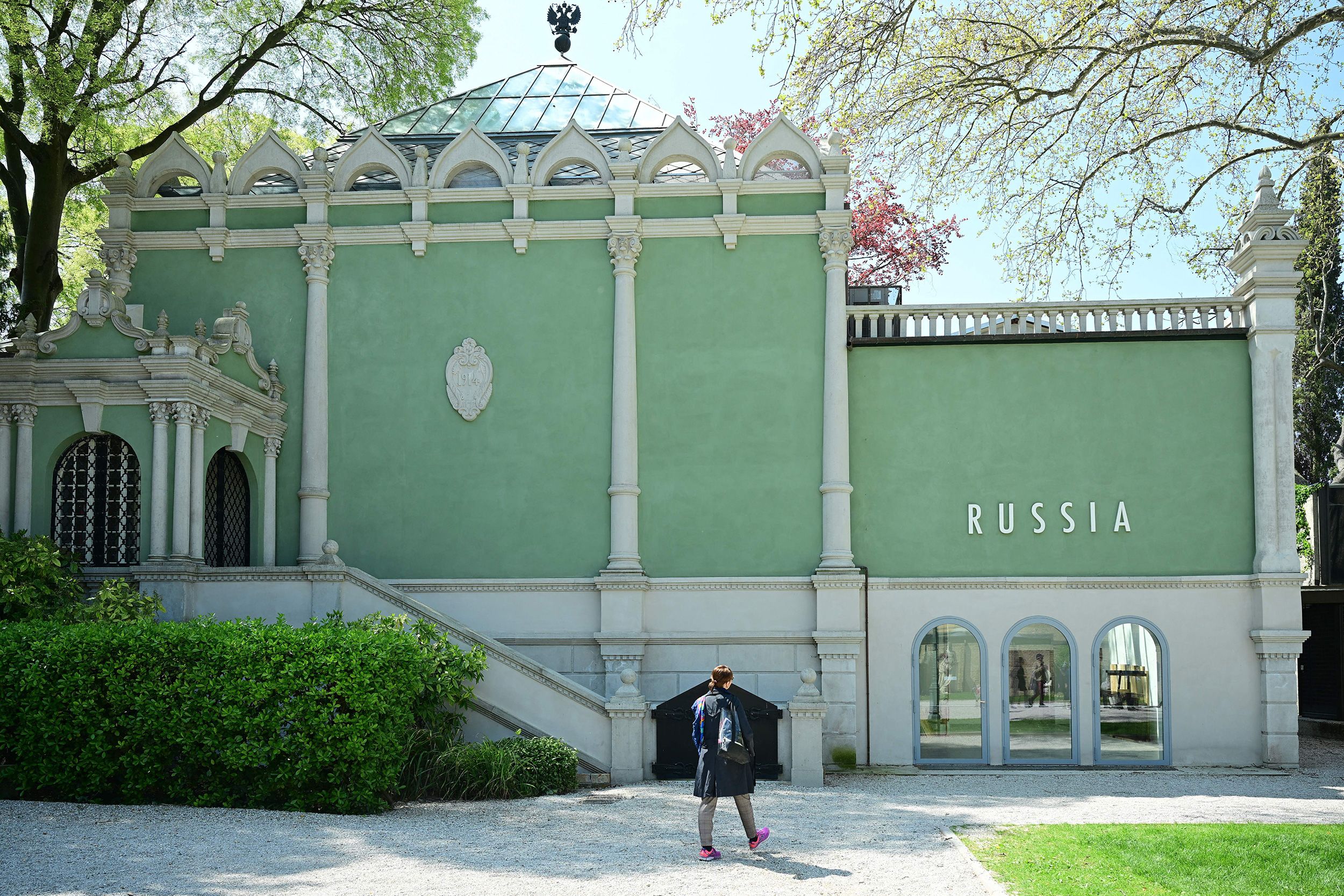
Civil society organizations across Europe have condemned the decision by the Fondazione Biennale to allow Russia’s return to the Venice Biennale in 2026, marking Russia’s first participation since launching its full-scale invasion of Ukraine.
In a joint statement signed by 14 human rights organizations, including the Center for Civil Liberties (Ukraine) and the International Partnership for Human Rights (Belgium), the groups argue that Russia’s participation cannot be viewed as merely artistic but represents a strategic effort to normalize its aggression against Ukraine and regain international legitimacy.
“Russia has consistently treated culture as an instrument of state influence,” the statement reads, emphasizing that the country uses cultural diplomacy, artistic prestige, and heritage narratives to advance its “imperialistic geopolitical objectives.”
While the Biennale has placed some restrictions on Russia’s participation—limiting access to the Russian Pavilion to selected media and guests during the vernissage—critics argue these measures are insufficient. The organizations point out that recent developments have undermined even these limited restrictions.
The controversy intensified after the international jury collectively resigned following objections and legal threats from Israel over the exclusion of artists from countries whose leaders face ICC proceedings. This resignation shifts voting power to the public, creating what the signatories describe as a “fundamentally flawed” arrangement that could be exploited for “reputational and propagandistic purposes.”
The human rights organizations argue that the Russian artists scheduled to participate are not independent creators but “active cultural ambassadors of the Kremlin” with records of amplifying state propaganda narratives. Their presence, the statement suggests, contradicts the Venice Biennale’s principles as a space for free expression, especially given Russia’s ongoing repression of artistic freedom domestically.
The statement highlights the particular irony of providing a platform to representatives of a state actively engaged in the destruction and erasure of Ukrainian cultural heritage—actions documented by UNESCO. Since 2014, Russia has been accused of theft and appropriation of Ukrainian artworks and the systematic distortion of history to claim Ukrainian cultural heritage as its own.
“This arrangement essentially undermines international legal frameworks on cultural property protection in times of conflict,” the statement notes, referencing violations of the Convention for the Protection of Cultural Property in the Event of Armed Conflict and provisions of the Geneva Conventions.
The coalition calls for decisive action from multiple stakeholders. They urge the Biennale Foundation to reconsider its position and ban Russia’s participation not only in 2026 but in future editions as long as Russia continues its war against Ukraine and violations of international law. The Italian Ministry of Culture and the Municipality of Venice are asked to ensure public cultural events aren’t used to amplify voices aligned with authoritarian regimes.
European institutions are called upon to follow through with funding cuts to the Biennale and continue pressuring the Foundation to ban Russia’s pavilion. The statement also appeals to participating states to speak out against Russia’s inclusion and urges cultural institutions across Europe to remain vigilant against attempts to “whitewash aggression through the language of art.”
The signatories include prominent human rights organizations from across Europe and Eurasia, including the Norwegian Helsinki Committee, Italian Federation for Human Rights, and Human Rights Defense Center “Memorial.”
This controversy emerges amid growing concerns about the weaponization of culture in geopolitical conflicts and raises fundamental questions about the responsibilities of international cultural institutions during times of war and human rights violations.
Fact Checker
Verify the accuracy of this article using The Disinformation Commission analysis and real-time sources.

14 Comments
This is a complex issue with valid arguments on both sides. On one hand, restricting participation could limit artistic freedom. On the other, Russia’s track record raises serious concerns.
You raise a fair point. There are no easy answers here. The organizers will need to balance these competing interests very thoughtfully.
It’s concerning to see Russia potentially using an art event to normalize its aggression in Ukraine. Allowing them to participate seems like a risky move that could backfire.
You make a good point. Cultural exchanges can be positive, but not when one side is using them for propaganda purposes. The organizers need to tread very carefully here.
While artistic expression should be free, Russia’s history of weaponizing culture is alarming. The Biennale needs to set clear boundaries to prevent its platform from being co-opted.
Agreed. Even with restrictions, Russia’s participation could still be exploited for political gain. The organizers should reconsider this decision carefully.
Russia’s use of cultural diplomacy to advance its geopolitical agenda is well-documented. Allowing them a platform at the Biennale risks undermining the event’s credibility and purpose.
I agree, the potential for propaganda is high. The Biennale organizers should carefully consider whether the benefits of Russia’s participation outweigh the risks.
This is a challenging situation that pits artistic freedom against concerns over propaganda and normalization of aggression. The organizers will need to strike a delicate balance.
Agreed, there are valid arguments on both sides. Ultimately, the Biennale must uphold its integrity and values, even if that means restricting Russia’s participation.
While artistic expression should generally be protected, Russia’s invasion of Ukraine and use of culture for political ends is deeply troubling. This decision warrants serious scrutiny.
You make a fair point. The Biennale organizers need to weigh these complex issues very carefully before allowing Russia’s participation.
This raises valid concerns about Russia exploiting cultural events for political gain. Even with restrictions, the optics of Russia’s participation could be problematic and undermine the Biennale’s integrity.
I agree – Russia has a track record of using cultural diplomacy to advance its agenda. The organizers should carefully weigh the risks and benefits before allowing Russia’s return.