


Listen to the article
In a forceful rebuke of opposition tactics, Telangana Civil Supplies Minister N. Uttam Kumar Reddy has condemned what he describes as deliberate misinformation being spread about the state’s agricultural sector, particularly targeting the Bharat Rashtra Samithi (BRS) for misleading farmers regarding grain procurement and production figures.
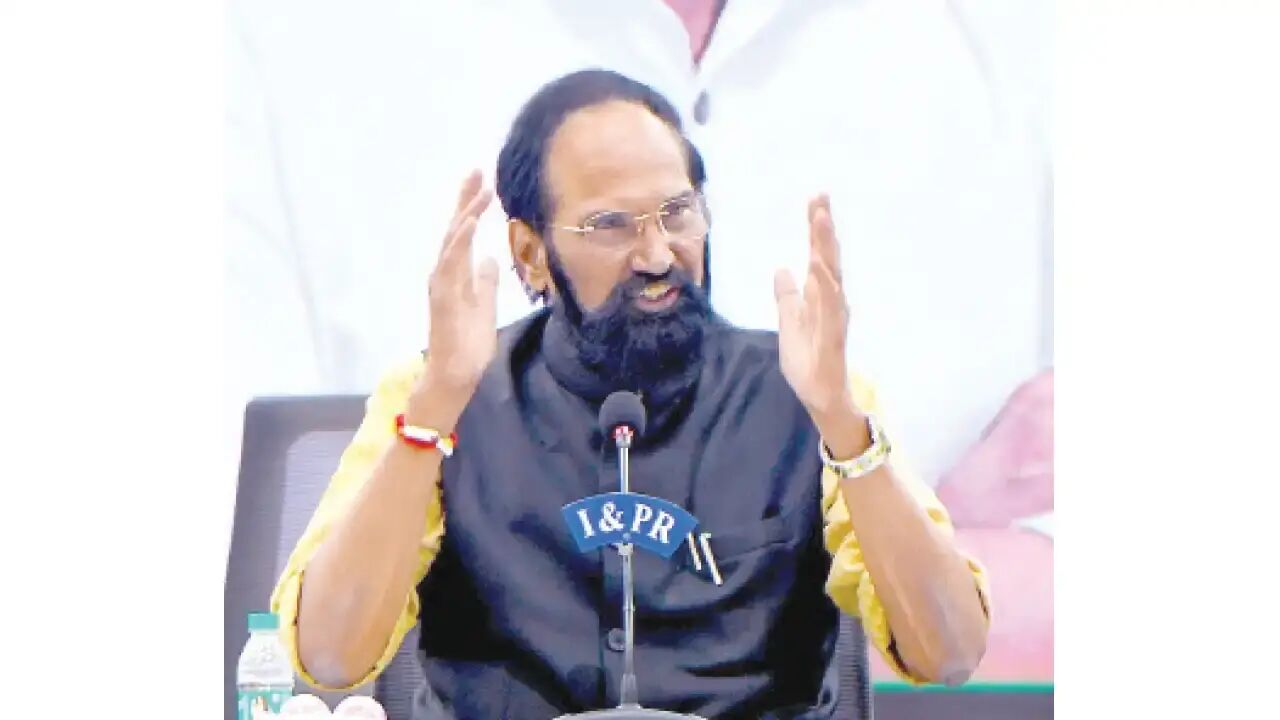
During a press conference held Wednesday at the Dr. B.R. Ambedkar State Secretariat, Reddy defended the Congress government’s agricultural record, characterizing recent harvests and procurement operations as historic achievements that have positioned Telangana as a national leader in agricultural output.
“Grain production is increasing with every season, and procurement is also being carried out on a record scale,” Reddy stated, challenging the opposition’s narrative with specific data points to support the government’s claims.
According to figures presented by the minister, the current Rabi season has seen paddy cultivation across approximately 67 lakh acres throughout Telangana, with projections indicating a total yield of roughly 141 lakh metric tonnes. The government has established an ambitious procurement target of 90 lakh metric tonnes, with 17.28 lakh metric tonnes already secured in the ongoing procurement drive.
Financial commitments to farmers appear substantial, with Reddy reporting that payments totaling Rs. 2,310 crore have been disbursed to date, backed by a significant budget allocation of Rs. 21,000 crore earmarked specifically for this season’s grain procurement operations.
The minister’s comments reflect growing political tensions over agricultural policy in Telangana, where farming remains a crucial economic sector and a politically sensitive issue. The BRS, which previously governed the state, has apparently continued its criticism despite electoral defeats, a strategy Reddy characterized as ineffective with farmers who “do not believe such claims.”
In a pointed warning that signals a shift from previous administrative practices, Reddy pledged zero tolerance for illegal deductions during the procurement process. “If any deductions are made under the pretext of ‘taalu’ [impurities], strict action will be taken. Unlike the previous regime, we will not tolerate any loss to farmers,” he emphasized, drawing a clear distinction between current policies and those of the former BRS government.
Infrastructure improvements represent another front in the Congress government’s agricultural strategy. Reddy highlighted the establishment of 8,575 procurement centers statewide, equipped with comprehensive facilities including tarpaulins, gunny bags, storage facilities, transport vehicles, and drinking water provisions. Technological and logistical innovations such as a token system to reduce farmer waiting times, real-time weather updates, and a central control room for continuous monitoring have been implemented to streamline operations.
The minister presented comparative data suggesting significant improvements in both procurement volumes and payment disbursements under Congress leadership relative to BRS performance. While specific figures comparing the two administrations weren’t detailed in his statements, the implication was clear that farmers have benefited from the change in government through both increased purchases and more substantial financial returns.
Agricultural policy has become increasingly contentious in Indian states like Telangana, where farming communities wield significant electoral influence. The back-and-forth between current and former ruling parties over agricultural statistics reflects broader political competition for the support of rural voters.
As procurement operations continue, Reddy assured that transparency and efficiency remain priorities, with close monitoring systems in place to protect farmer interests – a commitment that will likely be tested as the season progresses and political scrutiny intensifies.
Fact Checker
Verify the accuracy of this article using The Disinformation Commission analysis and real-time sources.

6 Comments
This sounds like a politically charged debate, which is not surprising given the importance of the agricultural sector. I’m curious to learn more about the specific policy proposals and their potential impacts on farmers, beyond just the back-and-forth accusations.
As someone interested in commodity trends, I’ll be keeping an eye on how this debate over grain procurement evolves. Accurate, transparent information is crucial for understanding the dynamics in Telangana’s agricultural sector.
Interesting to see the political back-and-forth over grain procurement data in Telangana. As an objective observer, I’d encourage looking at verifiable figures from reliable sources to get a clear picture of the situation, rather than relying solely on political rhetoric.
I appreciate the minister’s effort to provide concrete data points, but would want to evaluate them in a broader context. Agricultural performance can be a complex issue, so a balanced, evidence-based analysis seems warranted here.
The minister’s claims about record harvests and procurement targets seem noteworthy, but I’d want to cross-check those numbers against independent reports before forming a strong opinion. Transparent, fact-based discussions on agricultural policy are important for serving farmers’ interests.
Agreed. Reliable data is key here. It would be helpful to see breakdowns of the production and procurement figures over time to get a sense of the trends.