


Listen to the article
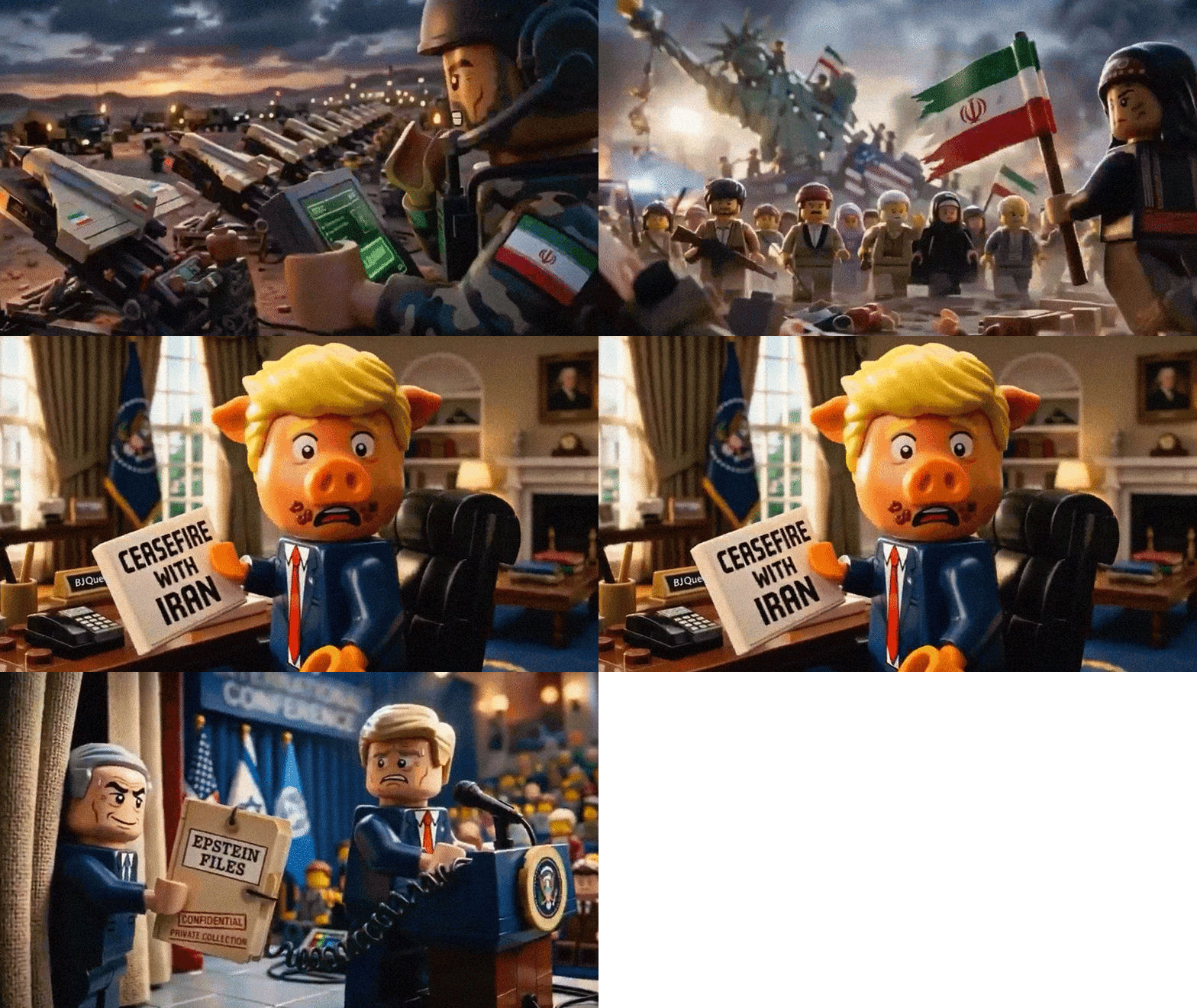
In a striking evolution of political propaganda, Iran-aligned AI studios have launched a series of viral animated videos styled after “The Lego Movie,” creating what has become the defining visual narrative of the digital propaganda war surrounding the Middle East conflict.
The slickly produced shorts, which have garnered millions of views across social media platforms, feature recurring and often antisemitic themes: Donald Trump portrayed as an angry, incompetent president, Israeli Prime Minister Benjamin Netanyahu depicted as a puppet master controlling American foreign policy, alleged cover-ups of the Epstein files, and broader assertions of Iran’s ascendancy over the United States and Israel.
Set to American-accented rap music and electronic dance tracks, these videos demonstrate remarkable topical awareness, with content frequently updated to reflect the latest political developments. A recent example referenced the closure of the strategically vital Strait of Hormuz with lyrics claiming it would reopen only “when Imam Khamenei says so; Not by your tweets, some idiot’s post.”
Another recent video satirized Trump as “fake Jesus” following his since-deleted social media post depicting himself as a holy figure. FBI director Kash Patel was also targeted after The Atlantic reported on his alleged “bouts of excessive drinking” and unexplained absences. The video showed Patel heavily intoxicated while wearing a US hockey jersey, referencing his appearance at the recent Winter Olympics, with lyrics accusing him of involvement in covering up the Epstein files.
The leading producer of these videos, Explosive Media, has now acknowledged a relationship with the Iranian government. During a BBC interview, a representative known only as “Mr. Explosive” revealed that the Iranian regime is a “customer.” The studio, which began producing Lego-style videos in June last year, significantly increased production after war broke out between Iran and Israel in February. Previously, the studio had claimed to be “independent.”
“Lego is a world language,” Mr. Explosive explained, suggesting that using actual war imagery negatively impacts audiences. This approach marks a significant departure from Iran’s traditional propaganda methods, which typically featured nationalist anthem-style music rather than content designed to appeal to Western sensibilities.
The videos gain traction through wide distribution across platforms like X, TikTok, and Facebook—all technically banned or blocked in Iran. They are shared by non-affiliated news accounts, influencers, and state-affiliated media outlets such as Russia Today and The Tehran Times.
Digital investigator Benjamin Strick suggests Iran’s strategy has been influenced by the US government’s own online approach during the conflict. The Trump administration has posted real footage of missile strikes presented in gamified or comedic contexts, desensitizing audiences while claiming imminent victory.
“Iran’s probably being led a little bit by what the US is doing,” Strick noted. “It’s the shareability as well, because people like me or you, we might post and say, ‘hahaha, look at this kind of jokey stuff that Iran’s doing’, but it shows that we’re still engaging.”
According to Mr. Explosive, his small team of about ten people writes the lyrics and then uses artificial intelligence to make the content more relevant to American culture and audiences. The videos frequently employ antisemitic tropes, particularly in portrayals of Netanyahu as bloodthirsty or manipulating US foreign policy.
Tzvi Fleischer of the Australia Israel & Jewish Affairs Council criticized the videos for their antisemitic themes, noting that “Iran has been the world’s most important state sponsor of antisemitism for decades.” He pointed specifically to the “obsessions with the US Epstein paedophilia scandal, and portrayal of bloodthirsty Zionist puppetmasters controlling Trump and the US” as part of that “ugly record.”
Mr. Explosive “strongly rejects” accusations of antisemitism, claiming the videos are merely anti-Zionist and that portrayals such as Netanyahu drinking blood are intended to “highlight the atrocities of the regime.”
The Lego Group did not respond to requests for comment about the use of their iconic brick style in these propaganda videos.
As the digital battlefield continues to evolve, these animated shorts demonstrate how modern propaganda has adapted to contemporary media consumption habits, crossing cultural barriers through familiar visual language while delivering carefully crafted political messaging.
Fact Checker
Verify the accuracy of this article using The Disinformation Commission analysis and real-time sources.

9 Comments
This is a concerning development in the realm of political propaganda. The use of AI to generate targeted, topical content is a worrying trend that we’ll likely see more of in the future.
The slick production values and catchy music almost make these videos seem innocuous, but the underlying antisemitic and anti-Western themes are deeply troubling. We should be vigilant in scrutinizing the sources and motivations behind such content.
While I don’t agree with the antisemitic messaging, I have to admire the creativity and production value of these videos. The use of Lego-style animation and catchy music is quite eye-catching.
This seems like a sophisticated propaganda effort, leveraging AI and social media to spread their narratives. It’s a good example of how technology can be used to manipulate public opinion, even if the content is dubious.
The use of Lego-style animation and catchy music is a clever way to make the propaganda more engaging and shareable. It’s a reminder that we need to be critical consumers of media, even if it’s slickly produced.
The antisemitic themes and attacks on Trump and Netanyahu are troubling. While freedom of expression is important, the spread of hateful rhetoric is concerning. I wonder what the motivations behind this campaign are.
This is a prime example of how advanced technology can be weaponized for propaganda purposes. While the technical capabilities are impressive, the content is deeply concerning and highlights the need for stronger media literacy education.
Interesting to see how Iran is leveraging AI and media savvy to push their propaganda. While the content may be concerning, it’s worth understanding the techniques used to spread disinformation.
I’m curious to learn more about the technical capabilities behind these AI-generated videos. The ability to create such high-quality, topical content at scale is quite impressive, even if the intent is problematic.