


Listen to the article
In what experts call the most profound crisis since the signing of the 1949 Geneva Conventions, international humanitarian law (IHL) faces widespread violations by parties in nearly all armed conflicts. The gravity extends beyond the violations themselves to how parties respond to accusations—often through denial, misrepresentation, or even glorification of their actions.
This propaganda problem, while not new in warfare, has gained unprecedented reach and impact through modern technology, including artificial intelligence. As false denials spread more widely and rapidly, they create a dangerous cycle: accountability diminishes, leading to more violations and further denials.
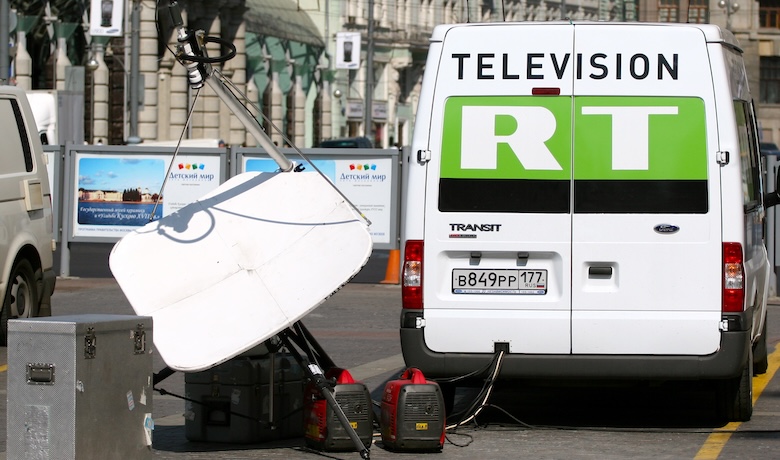
The ongoing Russia-Ukraine conflict provides a stark illustration of how propaganda intersects with international law. While international law doesn’t prohibit propaganda outright, it establishes clear boundaries through IHL, international human rights law (IHRL), and international criminal law (ICL).
Under Common Article 1 of the Geneva Conventions, all parties must “respect and ensure respect” for IHL. Propaganda undermining these protections violates this fundamental obligation. Both Ukrainian and Russian forces have been criticized for breaching specific provisions, such as when both sides distributed images and interviews of prisoners of war—a violation of the protection against “insults and public curiosity” guaranteed under Article 13 of the Third Geneva Convention.
Certain forms of propaganda face explicit prohibition. The International Covenant on Civil and Political Rights (ICCPR) prohibits “propaganda for war” in Article 20. Russia’s false allegations of genocide in Ukraine before its February 2022 invasion exemplify this prohibited conduct, forming part of Ukraine’s case against Russia at the International Court of Justice.
In more severe cases, propaganda can trigger individual criminal responsibility. Direct incitement to genocide, as outlined in Article III(c) of the 1948 Genocide Convention, represents one such threshold. Propaganda has also been used as evidence in war crimes investigations, as seen in the arrest warrant against the Russian President and Commissioner for Children’s Rights regarding the forced transfer of Ukrainian children.
False denials and accusations represent particularly problematic forms of propaganda. When parties falsely deny violations or falsely accuse opponents, they undermine the obligation to act in good faith—a cornerstone principle in international law. Russia’s characterization of its invasion as “de-nazifying” Ukraine, accompanied by dehumanizing rhetoric equating “Ukrainian” with “Nazi” in state media, exemplifies such harmful propaganda.
Despite extensive documentation of civilian harm by international bodies including the UN Commission of Inquiry and the European Court of Human Rights, Russian authorities have conducted few investigations into potential IHL violations. This failure to ensure accountability contributes to impunity and may constitute indirect approval of violations.
Freedom of expression plays a critical role in countering harmful propaganda. The right to seek, receive, and share information—described by the UN Special Rapporteur as a “survival right”—becomes especially vital during armed conflict. Enabling an environment where journalists and citizens can freely document and share information helps societies assess whether parties are upholding their IHL obligations.
Yet journalists face increasing danger in conflict zones, with rising fatalities reported since 2023. This trend reflects the broader crisis of compliance with IHL’s core protection obligations. Journalists serve an essential function by providing information that allows the public, other states, and international organizations to evaluate compliance with humanitarian law.
Addressing harmful propaganda requires careful balance. Measures against disinformation must avoid violating the very international norms they aim to protect. Excessive restrictions on information flow can perpetuate problems and risk further escalation, as seen in propaganda regarding weapons of mass destruction.
As the Russia-Ukraine conflict continues, understanding the legal framework governing propaganda becomes increasingly important to address its harmful effects and reinforce respect for international humanitarian law during armed conflicts.
Fact Checker
Verify the accuracy of this article using The Disinformation Commission analysis and real-time sources.

10 Comments
This is a timely and important discussion. The ability of parties to spread misinformation and distort the truth is a major challenge to international humanitarian law. Strengthening legal frameworks and ensuring compliance will be critical going forward.
The intersection of propaganda and international law is a complex and concerning issue. While the legal boundaries may not be absolute, the principles of the Geneva Conventions and other frameworks must be upheld to protect civilian populations and maintain accountability.
Absolutely. The erosion of these standards through the spread of false narratives is deeply troubling. Robust enforcement and a renewed commitment to international humanitarian law will be essential to address this challenge.
The Russia-Ukraine conflict is a prime example of how propaganda can intersect with international law. It’s troubling to see the denial and glorification of actions that violate established protocols.
Absolutely. The erosion of accountability through the spread of false narratives is deeply worrying. Reaffirming and upholding the Geneva Conventions is crucial in these situations.
Propaganda has been a weapon of war for centuries, but the digital age has given it unprecedented reach and impact. The legal obligations outlined in this article are essential to protecting civilian populations and upholding humanitarian principles.
Agreed. The cycle of denial and diminishing accountability is deeply troubling. Rigorous enforcement of international law is crucial to break this pattern and ensure that all parties adhere to their obligations.
This is a complex issue with far-reaching implications. While international law doesn’t prohibit propaganda outright, the boundaries it establishes through various legal frameworks must be respected. Maintaining these standards is critical, even in the face of modern technological challenges.
This is a concerning issue. Propaganda has long been a tactic in armed conflicts, but the speed and reach of modern technology has amplified its impact. It’s critical that all parties uphold international law and ensure accountability for violations.
Agreed. Propaganda that undermines humanitarian protections is a grave violation. Enforcing existing legal frameworks will be key to countering this dangerous trend.