


Listen to the article
Iran’s Consul General Dismisses Economic Concerns Amid US Blockade Threats
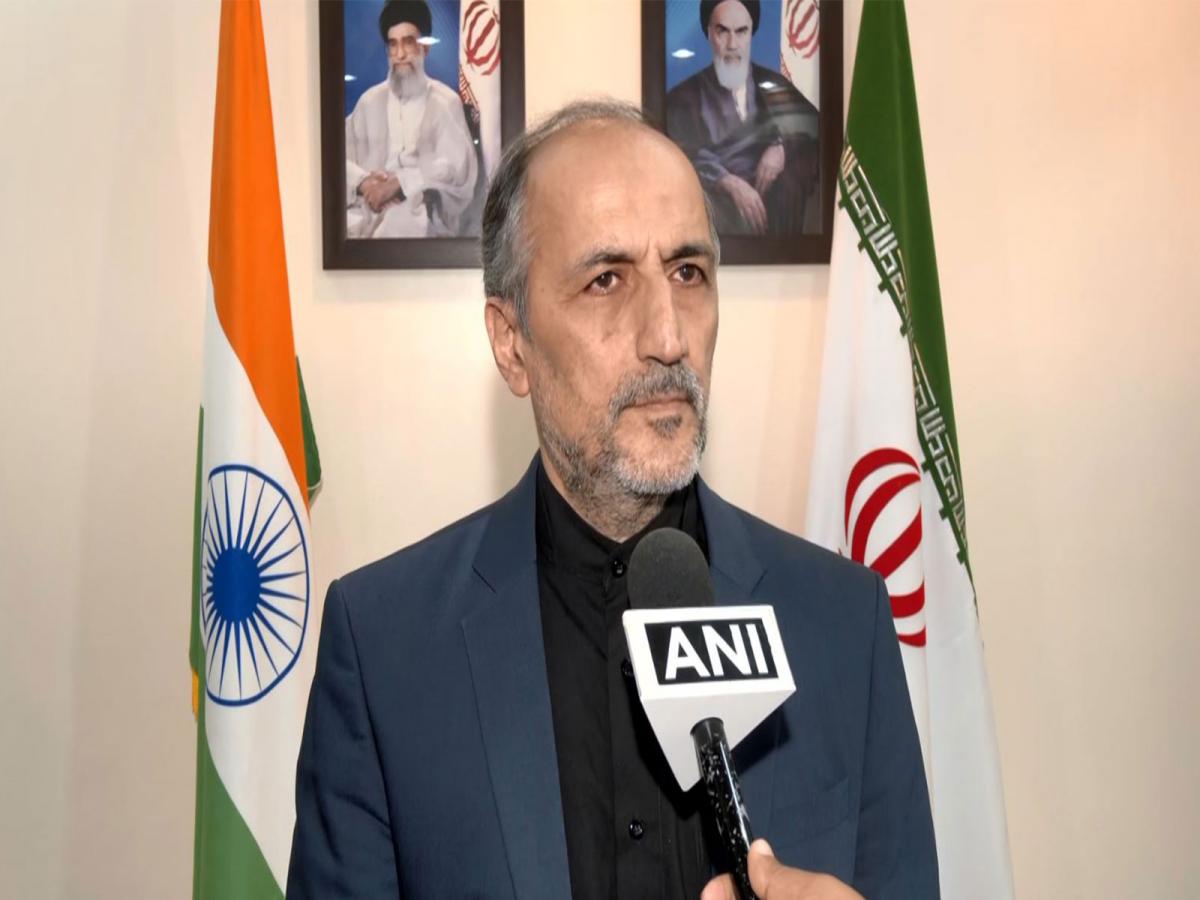
Iran’s Consul General in Mumbai, Saeid Reza Mosayeb Motlagh, has firmly rejected claims about Tehran’s economic and political instability, characterizing statements made by US President Donald Trump as arising “either from misperceptions or from propaganda considerations.”
In an exclusive interview, Motlagh addressed allegations regarding financial losses and diplomatic pressure facing the Islamic Republic. “I have not encountered any credible source supporting the assertion that Iran is incurring daily losses of such magnitude,” he stated, directly challenging the narrative of economic collapse.
The diplomat’s comments come at a time of heightened tension, with President Trump expressing significant dissatisfaction with Tehran’s recent diplomatic initiatives. Trump has insisted that Washington will not proceed with negotiations unless Iran addresses nuclear concerns directly, claiming that Iran had indicated it was in a “state of collapse” and consequently pushing for the reopening of the strategic Strait of Hormuz.
Trump has emphasized the global security implications, warning that if Iran were to acquire nuclear capabilities, “the whole world would be held hostage.”
Responding to the prospect of an economic blockade, Motlagh cautioned that such measures would prove counterproductive. “Even if such a scenario were hypothetically true, it would not be a constructive course of action, as it would lead to widespread negative consequences not only for Iran but for the global economy, including the United States itself,” he explained.
The Consul General pointed to economic indicators in Western nations as evidence of this interconnected impact. “We are already witnessing increases in fuel prices, energy costs, and general consumer expenses in the United States,” he noted, suggesting that such punitive economic measures represent an attempt to “navigate domestic challenges” but will “ultimately prove ineffective and unfavourable.”
Meanwhile, reports from The Wall Street Journal indicate the US administration is preparing for an extended period of economic confrontation. According to these reports, Trump has directed his team to develop plans for a sustained naval blockade of Iran—a strategy designed to cripple the Iranian economy and oil exports by strictly controlling maritime access to its ports. The publication suggests that the President views this blockade as a more effective and lower-risk alternative to renewed military strikes or complete disengagement.
Addressing diplomatic developments, Motlagh clarified the nature of Iranian Foreign Minister Abbas Araghchi’s recent international engagements. He denied that a specific negotiation team had been dispatched for talks, explaining that the Minister conducted a “regional tour that included visits to Pakistan, Oman, and Russia” as part of normal diplomatic relations.
These diplomatic moves follow Iran’s proposal for an immediate ceasefire in West Asia and the reopening of the Strait of Hormuz—a waterway critical to global oil shipments. Notably, Iran’s proposal attempted to defer discussions on its nuclear program, missile technology, and existing sanctions regimes.
Regional responses to Iran’s actions have remained firm. In a recent meeting in Saudi Arabia, Gulf Cooperation Council (GCC) leaders formally rejected what they termed Iran’s “illegal actions” regarding the closure of the strait and threats to maritime passage. The bloc advocated for stronger military integration, specifically calling for the development of a ballistic missile early warning system.
When questioned about regional security and ceasefire violations in Lebanon, the Consul General criticized Israel, asserting that it “has repeatedly failed to adhere to its commitments.” On the subject of reported oil-related tensions between the UAE and Saudi Arabia, Motlagh maintained that the matter was “primarily concerning the countries involved” and that Tehran has “neither been involved in nor interfered in this matter.”
Sharing personal observations from a recent visit to Iran, the diplomat described witnessing a “combination of an ordinary way of life with a sense of epic resilience.” He affirmed that the country’s Supreme Leader is “alive, in good health, and fully in control of affairs,” dismissing contrary reports as attempts to “undermine public morale.”
Fact Checker
Verify the accuracy of this article using The Disinformation Commission analysis and real-time sources.

20 Comments
This seems like a classic case of conflicting narratives and propaganda. I’d encourage looking beyond the political posturing to understand the real economic and diplomatic dynamics at play.
Ultimately, de-escalating tensions and finding a diplomatic solution should be the priority here. Continued confrontation could have serious consequences for the region and the global economy.
The Consul General’s rejection of the ‘collapse’ narrative is noteworthy. I’d be interested in seeing more data and analysis on Iran’s actual economic performance, beyond the political rhetoric.
The global security implications of the Strait of Hormuz situation are significant. It’s crucial that all sides approach this dispute with prudence and restraint.
The Consul General’s comments provide an important counterpoint to the Trump administration’s rhetoric. I’m curious to see how this dispute evolves and what the actual economic data shows.
Maintaining open lines of communication and finding common ground will be crucial in resolving this complex geopolitical issue. Both sides need to approach the negotiations with good faith and pragmatism.
This dispute highlights the need for more objective, fact-based analysis of the economic and political situation in Iran. It’s important to move beyond the rhetoric and understand the nuances of the situation.
The security implications of the Strait of Hormuz situation are significant. All parties involved should approach this issue with the utmost care and responsibility, prioritizing de-escalation and diplomacy.
As an outside observer, I’m curious to see how this diplomatic dispute plays out. It’s important to get accurate information from both sides to fully comprehend the economic and security implications.
Resolving the nuclear concerns and reopening negotiations seem like critical steps to de-escalate the situation. Hopefully the parties can find a diplomatic solution that addresses the underlying issues.
It’s interesting to see the Iranian Consul General challenge the narrative of economic collapse in Iran. I’d like to hear more details on their perspective and the actual economic situation on the ground.
The Consul General’s comments suggest there may be more to the story than what we’re hearing from the Trump administration. I wonder what other factors are at play here.
Dismissing the US president’s claims as propaganda is a bold move. I’d like to understand Iran’s side of the story better and get a more balanced view of the economic and political situation.
The Strait of Hormuz is a strategic chokepoint, so tensions in that region are certainly worth following closely. This seems like a complex geopolitical issue with multiple perspectives to consider.
It’s refreshing to see the Iranian government directly challenging the US narrative on the economic situation. I’d be interested in learning more about Iran’s perspective and the nuances of their economic reality.
The potential security implications of this dispute, particularly around the Strait of Hormuz, are deeply concerning. All parties involved should work towards a peaceful resolution that addresses the underlying issues.
The Consul General’s rejection of the ‘collapse’ claims is a bold move. I’m curious to see how this diplomatic back-and-forth plays out and what the actual data shows about Iran’s economic performance.
Navigating the complex dynamics between the US and Iran will require great skill and diplomacy. Finding common ground and a path forward that addresses the concerns of both sides should be the ultimate goal.
The Consul General’s comments provide an interesting counterpoint to the Trump administration’s narrative. I’d be curious to see more data and analysis on Iran’s economic performance, beyond the political posturing.
Resolving the nuclear concerns and re-establishing diplomatic channels will be crucial in finding a peaceful solution to this complex geopolitical issue. Both sides need to be willing to compromise and find common ground.