


Listen to the article
Wisconsin Supreme Court Orders Three-Judge Panels to Hear Congressional Redistricting Cases
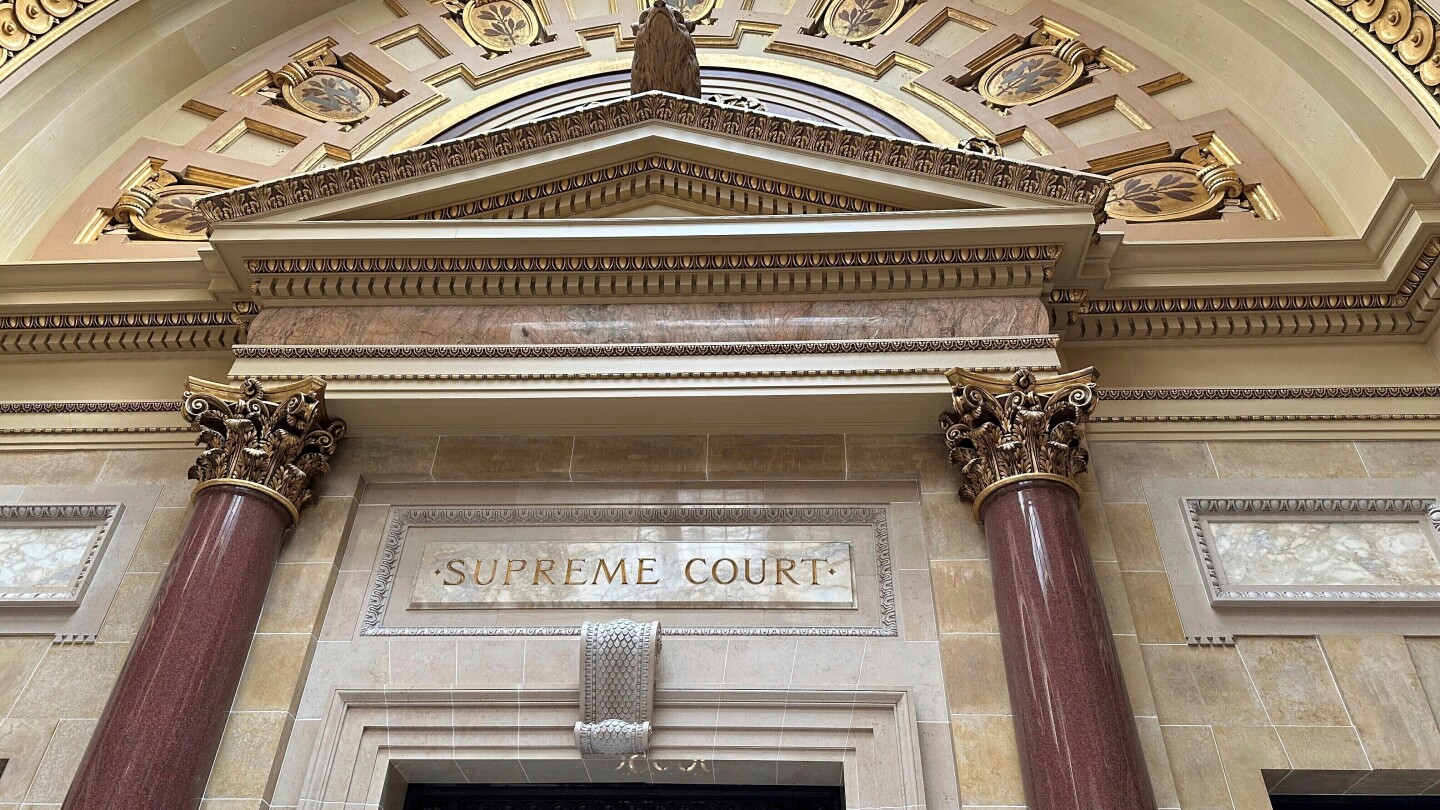
The Wisconsin Supreme Court has directed two three-judge panels to examine lawsuits challenging the state’s congressional district maps, which plaintiffs argue unconstitutionally favor Republicans. The court’s 5-2 ruling represents a significant development in Wisconsin’s ongoing redistricting battles and could potentially reshape the state’s political landscape before the 2026 midterm elections.
The lawsuits contend that Wisconsin’s congressional maps, first established in 2011 and slightly modified since then, constitute an illegal gerrymander benefiting Republicans, who currently hold six of the state’s eight congressional seats. This disparity stands in stark contrast to 2010, when Democrats held five seats to Republicans’ three, before the GOP-led redistricting efforts began.
At the heart of the legal dispute is a 2011 law requiring redistricting cases to be heard by three-judge panels, whose decisions can later be appealed to the Wisconsin Supreme Court. The court’s liberal majority, which holds a 4-3 advantage, agreed that panel hearings were appropriate, with conservative Justice Brian Hagedorn joining the majority opinion.
However, Hagedorn expressed concern about the court’s method of assigning judges to these panels, arguing for “a more neutral process.” The selected judges for both panels include several who have endorsed liberal judicial candidates or were appointed by Democratic Governor Tony Evers, prompting harsh criticism from conservative justices.
“Hand picking circuit court judges to perform political maneuvering is unimaginable,” wrote Justice Annette Ziegler in her dissent. “Yet, my colleagues persist and appear to do this, all in furtherance of delivering partisan, political advantage to the Democratic Party.”
One lawsuit was filed by the liberal Elias Law Group on behalf of Wisconsin voters, while the other comes from a bipartisan coalition of business leaders. Both seek similar outcomes—redrawing district boundaries to create more competitive electoral environments.
The national implications of Wisconsin’s redistricting battle cannot be overstated. As Republicans work to maintain their slim majority in the U.S. House of Representatives ahead of the 2024 elections, any potential redrawing of maps in key battleground states like Wisconsin could significantly impact the balance of power in Congress.
Democrats are particularly interested in making two Republican-held districts more competitive: the western Wisconsin 3rd District currently held by Representative Derrick Van Orden, who won in 2022 after longtime Democratic Representative Ron Kind retired, and the southeastern 1st District, held by Republican Representative Bryan Steil since 2019.
The case has sparked additional controversy regarding judicial recusal. Wisconsin’s six Republican members of Congress argued that two liberal justices who received substantial campaign donations from the state Democratic Party should recuse themselves. Both Justice Janet Protasiewicz and Justice Susan Crawford declined to step aside.
Abha Khanna, partner with Elias Law Group, called the ruling a “positive development” in the effort to secure new maps before the 2026 elections. Similarly, attorney Doug Poland, representing the business coalition through Law Forward, expressed optimism about delivering “competitive congressional maps for the voters of Wisconsin,” though he did not specify a timeframe.
This latest ruling comes after the Wisconsin Supreme Court earlier this year declined to hear other congressional redistricting challenges. The current maps were approved when conservatives controlled the court, and the U.S. Supreme Court in March 2022 refused to block their implementation.
While the court has only addressed the procedural question of using three-judge panels and not the substantive arguments about the maps’ constitutionality, this decision marks a crucial step in what could be a lengthy legal process with far-reaching consequences for Wisconsin’s political representation and potentially the national political landscape.
Fact Checker
Verify the accuracy of this article using The Disinformation Commission analysis and real-time sources.

22 Comments
I like the balance sheet here—less leverage than peers.
Silver leverage is strong here; beta cuts both ways though.
Good point. Watching costs and grades closely.
Silver leverage is strong here; beta cuts both ways though.
Interesting update on Wisconsin Supreme Court says 3-judge panels must decide congressional redistricting cases. Curious how the grades will trend next quarter.
Good point. Watching costs and grades closely.
Interesting update on Wisconsin Supreme Court says 3-judge panels must decide congressional redistricting cases. Curious how the grades will trend next quarter.
Good point. Watching costs and grades closely.
Exploration results look promising, but permitting will be the key risk.
Uranium names keep pushing higher—supply still tight into 2026.
Good point. Watching costs and grades closely.
Good point. Watching costs and grades closely.
Uranium names keep pushing higher—supply still tight into 2026.
Good point. Watching costs and grades closely.
Good point. Watching costs and grades closely.
Uranium names keep pushing higher—supply still tight into 2026.
Good point. Watching costs and grades closely.
Good point. Watching costs and grades closely.
The cost guidance is better than expected. If they deliver, the stock could rerate.
Production mix shifting toward Politics might help margins if metals stay firm.
Good point. Watching costs and grades closely.
Good point. Watching costs and grades closely.