


Listen to the article
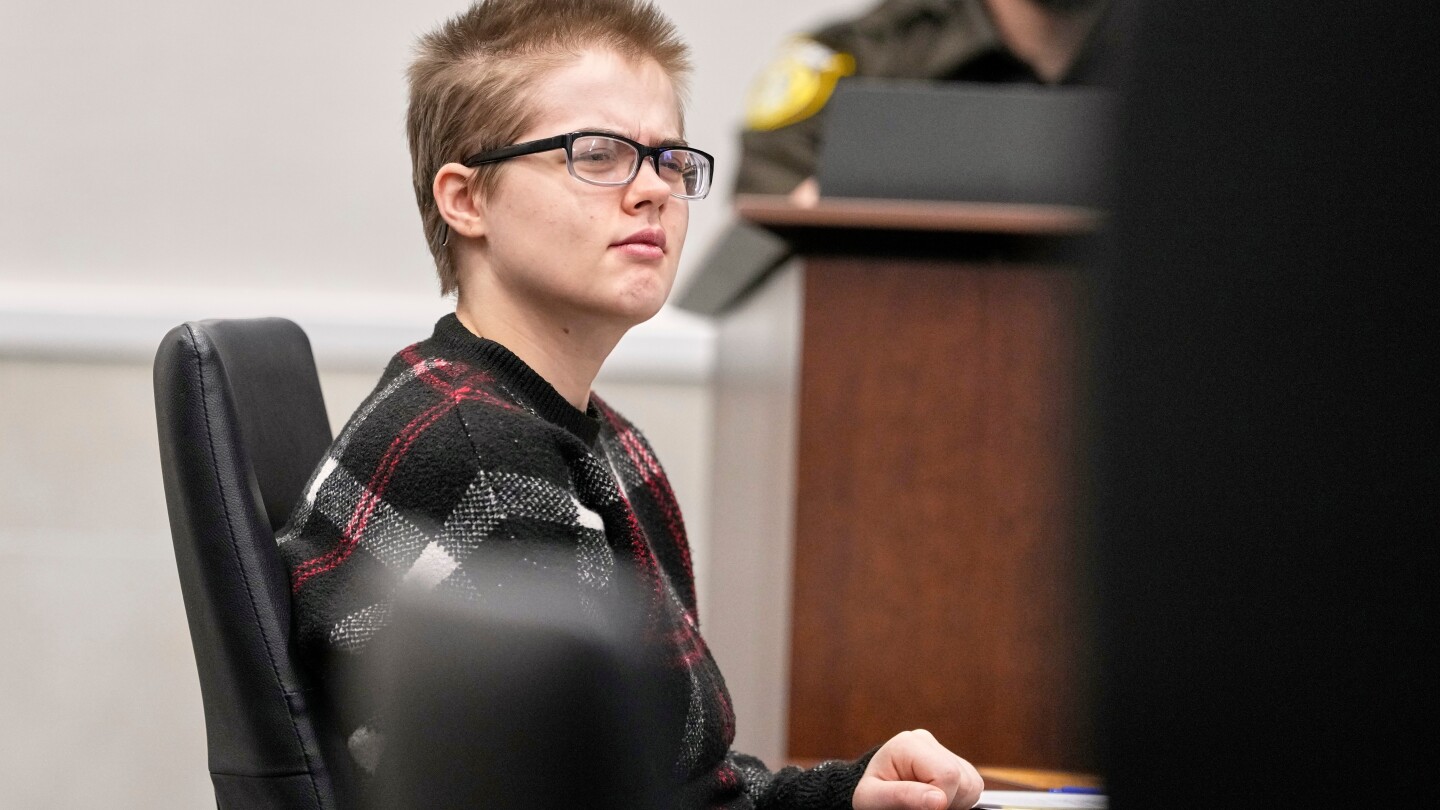
Wisconsin authorities have petitioned a state court to revoke the conditional release of Morgan Geyser, who escaped from her group home last weekend, nearly a decade after her involvement in the notorious “Slender Man” stabbing case.
Geyser, now 23, fled her Madison-based group home on Saturday night after cutting off her GPS monitoring bracelet. She was located by police outside Chicago on Sunday, approximately 170 miles from the facility. The Department of Corrections filed the petition late Tuesday, which a Waukesha County Circuit Court judge agreed to seal on Wednesday.
If the court approves the petition, Geyser could be returned to the mental institution where she spent most of the past eight years. She might also face additional charges related to her escape. Geyser did not contest her extradition to Wisconsin during a court appearance in Chicago on Tuesday, and Wisconsin authorities have 30 days to retrieve her.
The case dates back to 2014 when Geyser and her friend Anissa Weier, both 12 at the time, lured their classmate Payton Leutner to a Waukesha park. In what became known as the “Slender Man stabbing,” Geyser stabbed Leutner 19 times while Weier encouraged her. Leutner barely survived the attack.
The perpetrators later told investigators they attacked Leutner to impress Slender Man, a fictional internet horror character created by Eric Knudson in 2009. The tall, faceless figure had become a popular online boogeyman, appearing in various media including a 2018 movie. The girls claimed they feared Slender Man would harm their families if they didn’t commit the attack.
Both Geyser and Weier were ultimately committed to a state mental institution—Geyser for 40 years and Weier for 25. Under Wisconsin law, individuals committed to state institutions may petition for release. Weier gained conditional release in 2021, while Geyser, after four requests, was granted conditional release in September of this year.
According to a 43-year-old companion who was with Geyser during her escape, the two became friends at church and had been seeing each other daily for the past month. The companion, who spoke to local television station WKOW-TV, claimed Geyser fled because she feared the group home would prevent them from continuing their relationship.
“She ran because of me,” the companion told the station.
The pair reportedly took an overnight bus into Illinois. Geyser’s companion has been charged with trespassing and obstruction but has not been charged with aiding her escape.
Geyser’s release earlier this year came despite objections from state health officials, who raised concerns about her behavior. They told the judge that Geyser hadn’t voluntarily disclosed to her therapy team that she had read “Rent Boy,” a novel involving murder and black market organ sales. Officials also alleged she had been communicating with a man who collects murder memorabilia, sending him her sketch of a decapitated body and a postcard expressing intimate desires.
Despite these concerns, the judge determined that Geyser wasn’t attempting to hide anything and proceeded with her release, which was finalized in September—just weeks before her escape.
Geyser’s attorney, Tony Cotton, has not responded to requests for comment on the state’s petition to revoke his client’s release.
The case continues to draw attention as one of the most disturbing examples of how internet fiction can influence vulnerable young minds, and raises questions about rehabilitation, mental health treatment, and the appropriate supervision of individuals convicted of violent crimes at young ages.
Fact Checker
Verify the accuracy of this article using The Disinformation Commission analysis and real-time sources.

5 Comments
Escaping from a group home is a serious violation, but re-institutionalizing Geyser may not be the best approach. Perhaps a more intensive supervision and treatment program could help address the root causes and prevent future incidents.
It’s understandable the authorities want to prevent another escape attempt. However, we should be careful not to punish someone indefinitely for a crime committed as a child. Proper mental health treatment and a phased release plan may be a better solution.
The ‘Slender Man’ case was truly horrific. Allowing Geyser’s conditional release after such a violent crime raises a lot of questions. I hope the courts carefully weigh the risks and ensure adequate safeguards are in place before making a decision.
This is a very complex case with a lot of history. Balancing public safety, rehabilitation, and human rights is always challenging. I’ll be interested to see how the courts handle this and whether a thoughtful compromise can be reached.
This is a deeply concerning case. While rehabilitation should be the goal, public safety has to come first. I hope the authorities can find a way to keep Morgan Geyser securely confined until she is truly ready to reintegrate into society.