


Listen to the article
Americans Brace for Health Insurance Cost Spike as COVID-Era Tax Credits Set to Expire
Dinam Bigny, a 52-year-old program manager from Aldie, Virginia, has already depleted his savings paying for health insurance premiums that cost him nearly $900 per month. Next year, those costs will jump by another $200 monthly – forcing him to seek cheaper coverage as his emergency fund continues to dwindle.
“I won’t be able to pay it, because I really drained out any savings that I have right now,” Bigny said. “Emergency fund is still draining out — that’s the scary part.”
Bigny’s situation exemplifies the growing financial strain faced by millions of Americans who rely on the Affordable Care Act (ACA) marketplace for health insurance, according to a comprehensive new survey from health care research nonprofit KFF. The study, which surveyed over 1,300 ACA enrollees in early November, reveals widespread concern about the impending expiration of COVID-era tax credits that currently help more than 90% of enrollees afford their premiums.
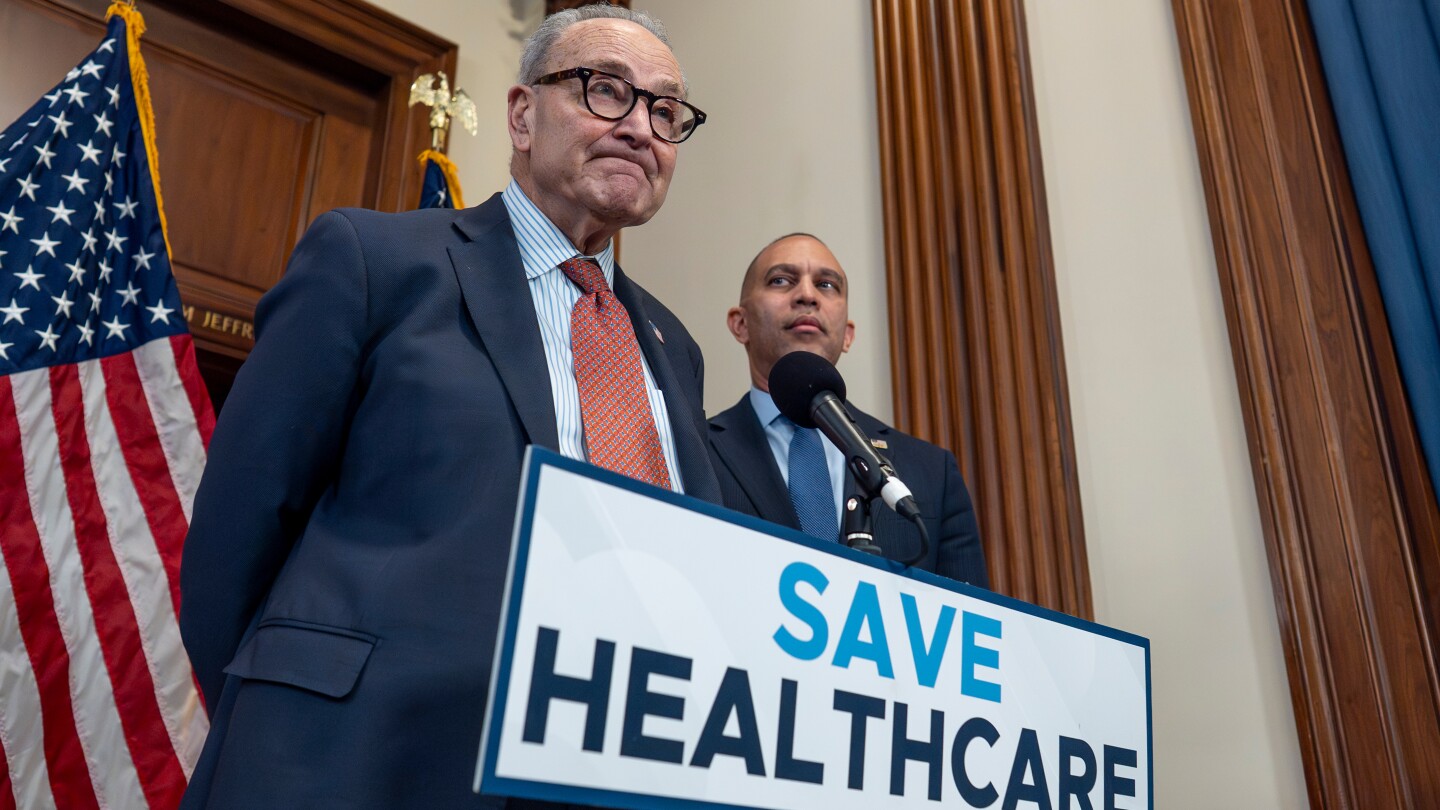
These enhanced premium tax credits are scheduled to expire December 31, with political deadlock in Washington making an extension increasingly unlikely. The subsidies became a flashpoint during recent congressional negotiations, with Democrats pushing for a straightforward extension while many Republicans opposed the measure – tensions that contributed to the record 43-day government shutdown earlier this fall.
While President Donald Trump and some congressional Republicans have recently proposed short-term extensions or ACA reforms, no consensus plan has emerged with less than a month until the subsidies expire. If allowed to lapse, a separate KFF analysis projects the average subsidized enrollee’s monthly payments will more than double.
The timing couldn’t be worse for Americans already struggling with health care costs. According to the KFF survey, about 60% of ACA enrollees already find it “somewhat” or “very” difficult to afford out-of-pocket costs like deductibles and copays, while roughly half struggle to pay their current premiums. Most respondents indicated they couldn’t absorb even a modest $300 annual increase without significant financial disruption.
“These are often going to be people who are living paycheck to paycheck, who have volatile or unpredictable incomes as well,” explained Cynthia Cox, a KFF vice president who leads the organization’s ACA research. “Increases that many of them are facing are going to be some sort of financial hardship for them.”
The anticipated cost increases are substantial. Larry Griffin, a 56-year-old investment banker and financial adviser in Paso Robles, California, already pays $920 monthly for his gold-level health plan. Next year, that figure will jump to approximately $1,400 monthly, accompanied by higher copays and out-of-pocket maximums.
Griffin, who recently underwent amputation of his left leg below the knee, can’t risk downgrading his coverage despite concerns about the impact on his retirement savings. “I’m not going to say that I can’t manage it, I can, but it’s just another one of those things,” he said. “Here’s, you know, knock number 5,000 against me after all of the other things I’ve had to deal with.”
The situation appears even more dire for Patricia Roberts, a 52-year-old full-time caregiver in Auburn, Alabama. Initially notified that her $800 monthly premium would increase to $1,100, she later learned the actual cost would exceed $1,400 – forcing her to consider a lower-tier plan. Roberts noted that friends in neighboring Georgia face even steeper increases, with some premiums set to double.
“I don’t know how people are going to live, with it already being a struggle just to pay for food and all the other things,” Roberts said.
The KFF poll reveals overwhelming support for extending the enhanced tax credits across party lines. Nearly all Democratic enrollees favor an extension, as do about 80% of independents and 70% of Republicans – including similar levels of support among both MAGA-aligned and non-MAGA Republicans.
If the credits expire, enrollees are more likely to blame Republicans than Democrats. Among those supporting an extension, roughly 40% would place “most of the blame” on Trump if the subsidies lapse, with about one-third blaming congressional Republicans. Only 23% would primarily fault Democrats in Congress.
Yvette Laugier, a 56-year-old Republican in Chicago whose income exceeds the subsidy threshold, nevertheless supports a temporary extension with additional fraud protections to give lower-income enrollees more time to consider their options.
Bigny, the Virginia program manager, believes both parties share responsibility for the current impasse but remains cautiously optimistic about a potential compromise in the coming weeks.
“They should just sit and really look for what’s best for American people overall,” he said.
Fact Checker
Verify the accuracy of this article using The Disinformation Commission analysis and real-time sources.

14 Comments
The cost guidance is better than expected. If they deliver, the stock could rerate.
Good point. Watching costs and grades closely.
Good point. Watching costs and grades closely.
Exploration results look promising, but permitting will be the key risk.
Good point. Watching costs and grades closely.
Good point. Watching costs and grades closely.
Nice to see insider buying—usually a good signal in this space.
Good point. Watching costs and grades closely.
Good point. Watching costs and grades closely.
Silver leverage is strong here; beta cuts both ways though.
Good point. Watching costs and grades closely.
Silver leverage is strong here; beta cuts both ways though.
I like the balance sheet here—less leverage than peers.
Good point. Watching costs and grades closely.