


Listen to the article
Former Treasury Secretary Larry Summers Takes Leave from Harvard Amid Epstein Connection Fallout
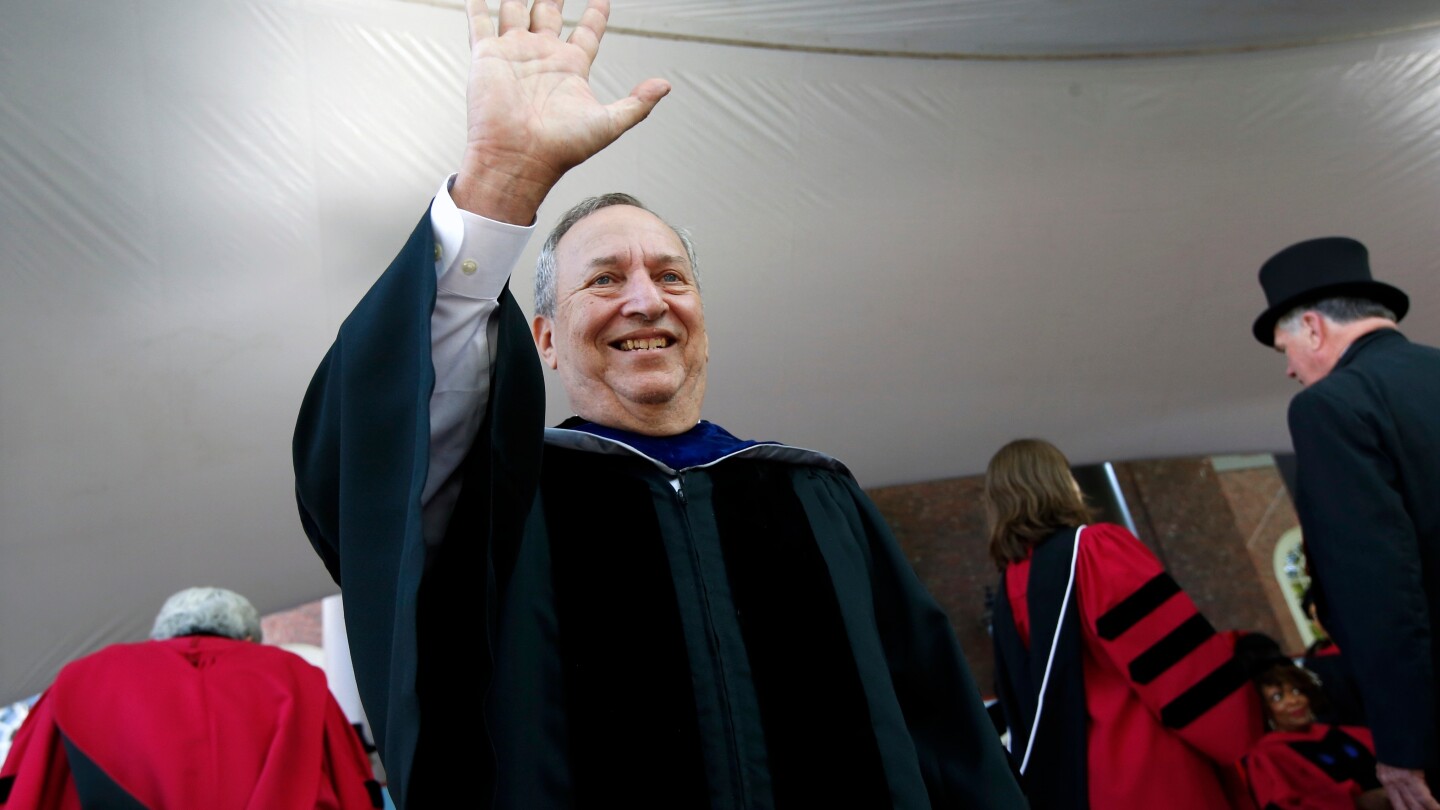
Larry Summers, once one of America’s most influential economic policymakers, has taken leave from his teaching position at Harvard University following revelations about his continued relationship with convicted sex offender Jeffrey Epstein. The 70-year-old economist’s withdrawal from his academic post marks a stunning setback for a figure who once graced the cover of Time magazine as part of the “Committee to Save the World.”
The controversy erupted last week when newly released emails showed Summers maintained friendly communications with Epstein long after the financier’s 2008 guilty plea for soliciting prostitution from an underage girl. In one 2019 exchange, Summers discussed interactions with a woman, writing to Epstein: “I said what are you up to. She said ‘I’m busy’. I said awfully coy u are.” Epstein responded with encouragement about Summers’ approach.
When questioned about these communications, Summers acknowledged his “great regrets” and called his association with Epstein “a major error in judgment.” The fallout has been swift and comprehensive. Beyond stepping away from Harvard, Summers has resigned from the board of artificial intelligence company OpenAI, which develops ChatGPT. He has also severed ties with the Center for American Progress, a prominent progressive think tank, and Yale’s Budget Lab.
The controversy has drawn political attention at the highest levels. President Donald Trump has called for the Justice Department and FBI to investigate Summers’ Epstein connections, along with those of other prominent Democrats including former President Bill Clinton and tech donor Reid Hoffman. Attorney General Pam Bondi has assigned a top federal prosecutor to lead this investigation.
Summers’ descent from the pinnacles of economic policymaking represents a dramatic reversal for someone who once wielded enormous influence in Washington. His rise began early, becoming one of Harvard’s youngest tenured professors at age 28 before joining the World Bank in a senior role.
During the Clinton administration, Summers emerged as a central figure in U.S. economic policy. As Deputy Treasury Secretary, he played a crucial role in addressing the Asian financial crisis of the late 1990s, which led to the famous Time magazine cover featuring Summers alongside Treasury Secretary Robert Rubin and Federal Reserve Chair Alan Greenspan.
Summers ultimately became Clinton’s final Treasury Secretary during an era characterized by financial deregulation. He supported legislation that dismantled many Depression-era financial safeguards, a position that would later damage his standing among progressives when these policies were blamed for contributing to the 2008 financial crisis.
After Democrats lost the White House in 2000, Summers returned to Harvard as its president in 2001. His tenure there was marked by controversy, particularly after a 2005 speech in which he suggested that women were underrepresented in science and engineering fields due to “intrinsic aptitude.” These comments were widely condemned as sexist and contributed to his departure from the university presidency in 2006.
When the global financial crisis hit, President Barack Obama brought Summers back to Washington as director of the National Economic Council. Despite maintaining Obama’s trust, Summers faced growing skepticism from progressive Democrats who viewed him as partially responsible for the deregulation that contributed to the economic collapse.
Even former President Clinton distanced himself from some of Summers’ past advice, telling ABC News in 2010 that Summers and Rubin had been wrong in urging him not to regulate derivatives – complex financial instruments that played a significant role in the financial crisis.
Though Obama later considered Summers to succeed Ben Bernanke as Federal Reserve Chair, the combination of his controversial comments about women and his role in financial deregulation proved insurmountable obstacles to Senate confirmation. Summers ultimately withdrew from consideration, and Obama nominated Janet Yellen, who became the first woman to lead the central bank.
The current controversy surrounding his Epstein connections represents yet another setback for Summers, whose decades-long career has been marked by both remarkable achievements and significant controversies.
Fact Checker
Verify the accuracy of this article using The Disinformation Commission analysis and real-time sources.

22 Comments
Production mix shifting toward Politics might help margins if metals stay firm.
If AISC keeps dropping, this becomes investable for me.
The cost guidance is better than expected. If they deliver, the stock could rerate.
If AISC keeps dropping, this becomes investable for me.
Good point. Watching costs and grades closely.
Exploration results look promising, but permitting will be the key risk.
I like the balance sheet here—less leverage than peers.
Good point. Watching costs and grades closely.
Good point. Watching costs and grades closely.
The cost guidance is better than expected. If they deliver, the stock could rerate.
If AISC keeps dropping, this becomes investable for me.
Good point. Watching costs and grades closely.
Good point. Watching costs and grades closely.
I like the balance sheet here—less leverage than peers.
Good point. Watching costs and grades closely.
Good point. Watching costs and grades closely.
Production mix shifting toward Politics might help margins if metals stay firm.
Nice to see insider buying—usually a good signal in this space.
Good point. Watching costs and grades closely.
Good point. Watching costs and grades closely.
Nice to see insider buying—usually a good signal in this space.
Good point. Watching costs and grades closely.