


Listen to the article
Washington’s Police Chief Steps Down Amid Federal Control Dispute and Crime Reduction Efforts
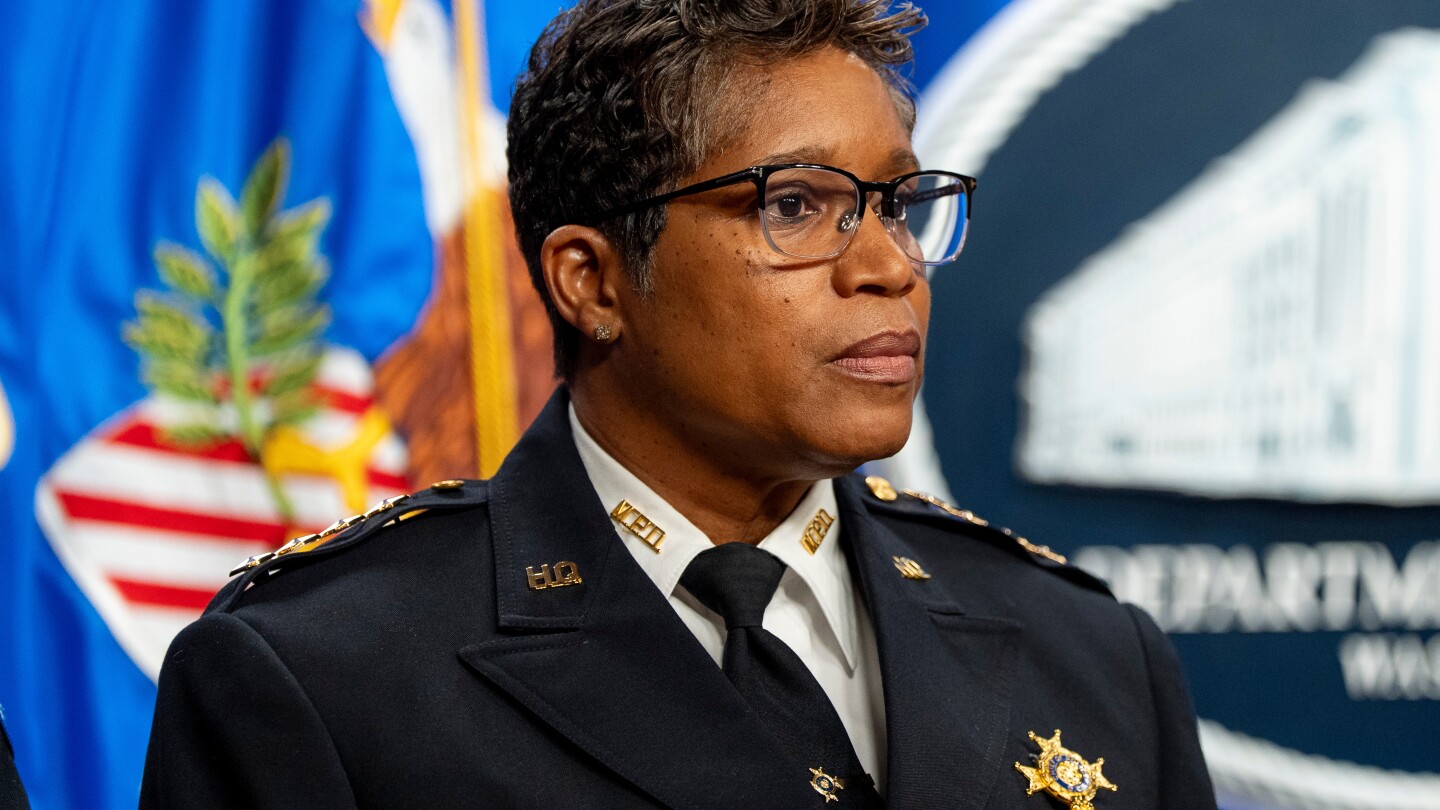
Pamela Smith, who led Washington D.C.’s police department through a period of federal intervention and declining crime rates, has resigned as the city’s police chief, Mayor Muriel Bowser announced Monday.
Smith’s departure comes during a tumultuous period for the capital city’s law enforcement, as her tenure was marked by President Donald Trump’s controversial decision to federalize the Metropolitan Police Department, deploying National Guard troops and federal agents to work alongside local officers.
Appointed in 2023, Smith had been recruited to stabilize a department struggling with staffing shortages while addressing a post-pandemic surge in violent crime. Mayor Bowser praised Smith’s leadership during the announcement, crediting her with helping to reduce homicides to an eight-year low and implementing significant technological improvements, including a Real-Time Crime Center.
“Chief Smith got all of this done while navigating unprecedented challenges and attacks on our city’s autonomy,” Bowser said in her statement.
The mayor did not disclose the reasons behind Smith’s resignation, nor did she name a successor or indicate whether this leadership change would affect Washington’s broader public safety strategy as the city continues to recover from historic levels of violence.
Smith, a veteran federal law enforcement official who previously headed the U.S. Park Police, assumed command of the department during one of Washington’s most violent periods in nearly two decades. When she took office, the city was grappling with surging homicides, record-high carjackings, and mounting frustration among residents and lawmakers.
In her own statement, Smith expressed confidence in the department’s future, describing her time as chief as both challenging and rewarding. “I am proud of the accomplishments we achieved together, and I thank the residents of this city for their trust and partnership,” she said. “While my aspiration has always been to see zero percent crime, we are not there yet. Nonetheless, we have made tremendous progress, and there remains important work ahead.”
The spike in violence during 2023 had prompted congressional hearings and led city officials to implement stronger policing measures, including authorizing drug-free zones in high-crime areas. The D.C. Council also revised portions of the city’s criminal code specifically to address the rise in violent offenses.
These efforts began showing results in early 2024, with overall crime dropping approximately 17 percent during the first ten weeks of the year. Smith had attributed this improvement to the new legislation and strategic police deployments in troubled neighborhoods. Her administration also implemented temporary youth curfew zones in several parts of the district.
Smith’s departure comes at a critical juncture for Washington’s law enforcement strategy. The unusual federal intervention in local policing created tensions between municipal and federal authorities, raising questions about local autonomy in the nation’s capital, which has long struggled with its unique governance structure.
The Metropolitan Police Department, with approximately 3,400 officers, has faced recruiting challenges similar to other major urban police forces nationwide in the aftermath of nationwide protests against police brutality and the COVID-19 pandemic.
Law enforcement experts suggest Smith’s successor will face the dual challenges of maintaining the recent crime reduction momentum while navigating the complex relationship between local and federal authorities in Washington’s unique jurisdictional landscape.
As the search for a new police chief begins, city officials must balance immediate public safety concerns with longer-term questions about police reform, community relations, and the appropriate boundaries between federal oversight and local governance in the District of Columbia.
Fact Checker
Verify the accuracy of this article using The Disinformation Commission analysis and real-time sources.

6 Comments
The departure of D.C. Police Chief Pamela Smith during a period of federal intervention and declining crime rates is certainly an interesting development. It will be important to understand the underlying reasons behind her resignation and how it may impact the city’s law enforcement efforts going forward.
Mayor Bowser’s praise for Chief Smith’s leadership during a tumultuous period is understandable, but the lack of clarity around the reasons for her resignation is intriguing. I’m interested to see how this transition in command will be navigated and how it may impact the city’s ongoing efforts to address public safety concerns.
The resignation of the police chief during a time of federal control and crime reduction efforts raises a lot of questions. It will be important to closely follow the developments and understand the underlying factors that led to this transition in leadership for the D.C. police department.
The reduction in homicides to an eight-year low under Chief Smith’s tenure is certainly an impressive achievement. However, the broader context of federal intervention and the city’s autonomy challenges suggest that her departure may signal deeper complexities within the city’s law enforcement landscape.
Chief Smith’s leadership in stabilizing the police department and implementing technological improvements is certainly commendable. However, the challenges posed by federal control and the post-pandemic crime surge must have been significant. I’m curious to learn more about the factors that led to her decision to step down.
Agreed, it will be important to get a clear picture of the dynamics at play and how this transition in leadership may affect the ongoing efforts to address crime and maintain public safety in the nation’s capital.