


Listen to the article
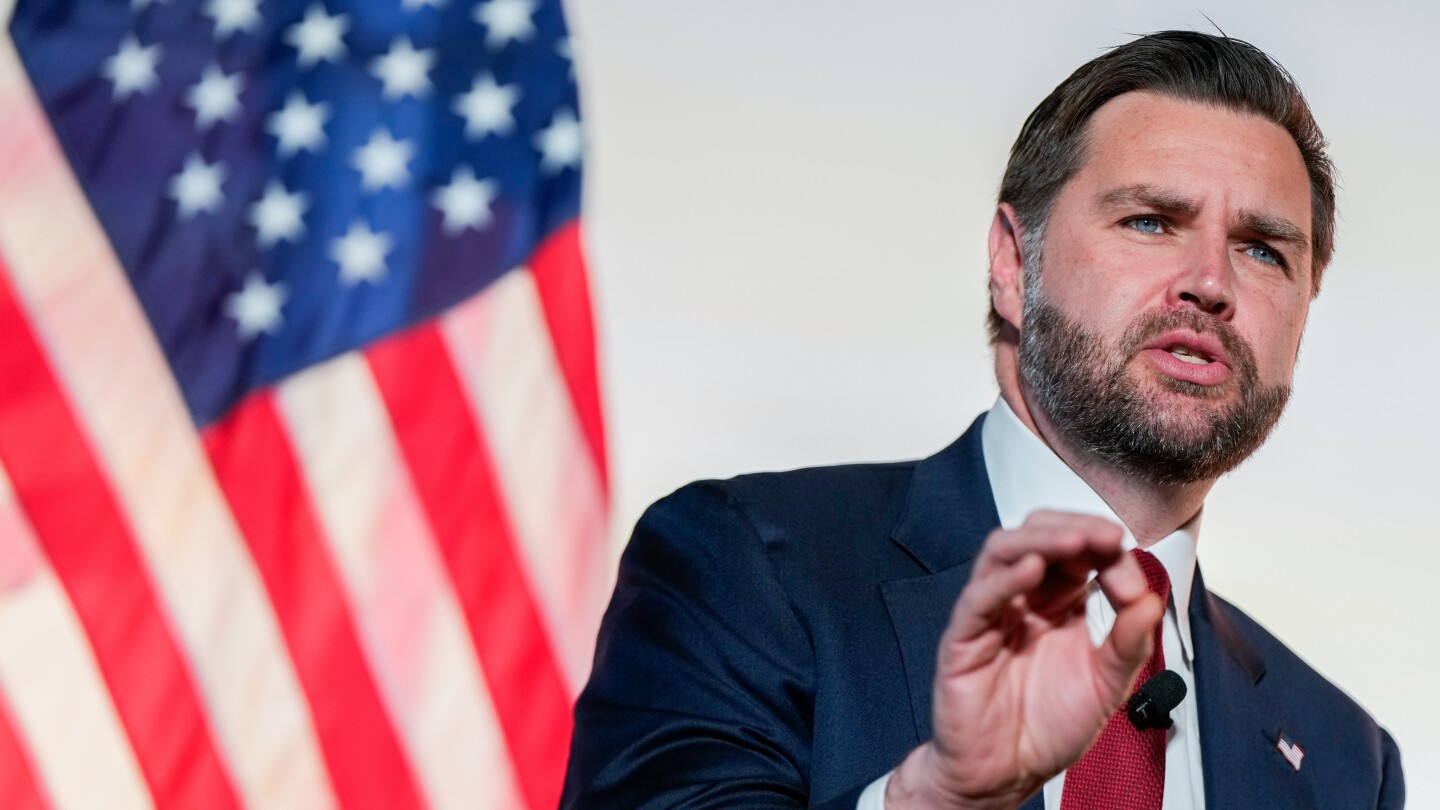
In a shift from President Donald Trump’s messaging on economic concerns, Vice President JD Vance struck a more empathetic tone Thursday while addressing Americans’ anxieties about high costs, acknowledging that “there’s a lot more work to do” despite claiming progress made by the administration.
“We hear you,” Vance said during an event hosted by Breitbart News, though he also called for “a little bit of patience” from the American public as the administration works to implement its economic agenda.
The vice president’s remarks highlight the ongoing challenge the White House faces in addressing cost-of-living concerns, an issue that proved problematic for Republicans in the recent gubernatorial races in New Jersey and Virginia. Economic anxieties among middle-class voters emerged as a significant vulnerability in those contests, forcing the administration to recalibrate its messaging.
Vance portrayed the administration as making “incredible progress” in tackling affordability issues by reversing policies from the Biden era, suggesting that economic improvements are on the horizon but not yet fully realized by all Americans.
“As much progress as we’ve made, it’s going to take a little bit of time for every American to feel that economic boom, which we really do believe is coming. We believe that we’re on the front end of it,” Vance explained.
His approach contrasts with President Trump’s more dismissive stance on affordability concerns. Trump has repeatedly insisted that prices are down, specifically mentioning gas and eggs as examples, despite data showing that overall inflation remains a significant concern for many households. The president previously characterized Democrats’ campaign messaging about affordability as “a con job,” though he has recently softened his rhetoric and acknowledged room for further improvement in consumer prices.
Economic experts have noted that Trump’s tariff policies have contributed to higher prices for many consumer goods, creating a challenging narrative for the administration as they attempt to address public concerns about inflation. The administration’s evolving messaging strategy reflects recognition that economic anxiety remains a potent political issue.
During the Breitbart event, Vance also addressed the recent internal divisions within Trump’s Make America Great Again coalition. The president has experienced high-profile rifts with some of his most loyal supporters, including Georgia Representative Marjorie Taylor Greene, who criticized Trump for focusing too heavily on foreign policy and allegedly delaying the release of files related to Jeffrey Epstein.
Without directly addressing specific conflicts, Vance characterized the debates within the party as “healthy” and “totally reasonable,” suggesting they reflect the diverse perspectives within the MAGA movement. However, he emphasized the importance of maintaining unity, particularly as the party approaches the 2024 midterm elections.
“We have a lot more in common than we do not in common,” Vance said, encouraging supporters to “have our debates — but focus on the enemy, so that we can win victories that matter for the American people.”
The vice president specifically highlighted the challenge Republicans face in mobilizing working-class voters during midterm elections when Trump is not on the ballot. He pointed to the recent election results in Virginia and New Jersey as evidence that Republicans need to offer compelling reasons for voters to support them.
“When Donald Trump is not on the ballot, you’ve got to give people something to actually believe in, something to be inspired by, to get out there and vote,” Vance said. “They’re not going to vote just because you have an ‘R’ next to your name.”
As the administration continues to refine its economic messaging, Vance’s more empathetic approach signals a potential shift in strategy to reconnect with voters concerned about their financial well-being, even as the White House maintains its broader policy direction.
Fact Checker
Verify the accuracy of this article using The Disinformation Commission analysis and real-time sources.

10 Comments
Addressing affordability challenges in a complex, global economic environment is undoubtedly a significant challenge. I’m curious to hear more specifics on the administration’s plans to drive durable improvements for middle-class Americans facing rising costs.
Agreed. The path forward will require a nuanced, multi-pronged approach. Balancing short-term relief with longer-term structural changes will be crucial. Open dialogue and collaborative problem-solving with diverse stakeholders could yield the most impactful solutions.
While I appreciate the administration’s acknowledgment of public concerns, the proof will be in the pudding. Concrete, measurable progress on affordability and cost-of-living issues needs to be the ultimate goal, not just empathetic messaging.
Well said. Tangible results that meaningfully improve the financial circumstances of struggling households should be the true test. Consistent, transparent tracking of key metrics will be important to build and maintain public trust.
It’s good to see the administration acknowledging the public’s economic concerns. While progress has been made, more work is still needed to address affordability issues for many Americans. Patience and empathy from policymakers will be crucial going forward.
Agreed. Striking the right tone and balancing short-term relief with longer-term solutions is a delicate challenge. Transparent communication and a willingness to listen to citizens’ experiences will be key.
The political realities highlighted by recent elections underscore the importance of prioritizing cost-of-living concerns. I’m curious to see how the administration plans to build on recent progress and accelerate meaningful improvements for struggling households.
A balanced, empathetic approach that acknowledges both the administration’s efforts and the public’s ongoing difficulties seems prudent. Clear, actionable steps to address affordability will be crucial to maintaining public trust.
Volatility in commodity and energy markets has undoubtedly contributed to the affordability challenges many Americans face. Leveraging domestic resources while promoting energy security and efficiency could help provide some relief, but broader economic policies will be key.
Absolutely. A multi-faceted strategy targeting both short-term cost pressures and longer-term structural issues will be necessary. Maintaining open dialogue with the public and key stakeholders will be critical to developing effective solutions.