


Listen to the article
U.S. Military Escalation Halts Migrant Deportation Flights to Venezuela
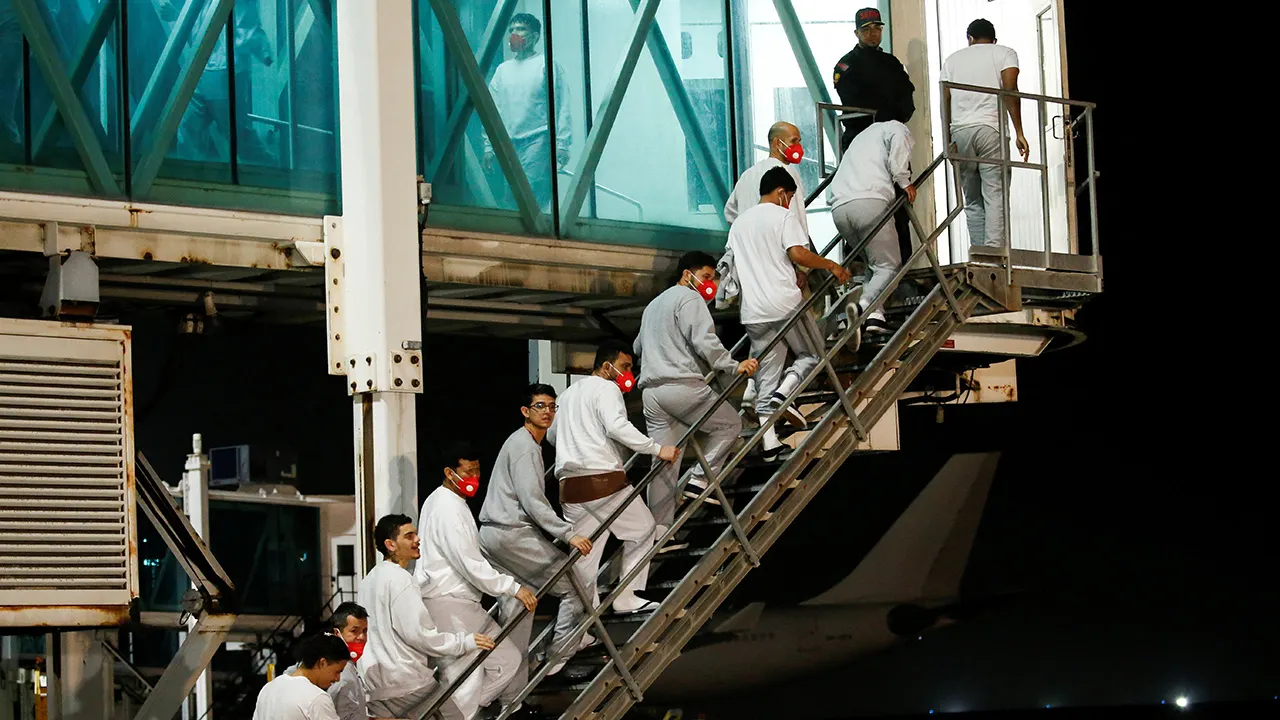
Venezuela’s foreign ministry announced that U.S. military escalations have suspended deportation flights returning migrants from the United States to the South American nation, highlighting a growing tension between the two countries amid threats of potential military action.
The suspension comes after President Donald Trump warned pilots that airspace “above and surrounding” Venezuela should be “closed in its entirety,” signaling his administration’s consideration of strikes on targets in and around Caracas.
“Through this action, the United States government has unilaterally suspended the Venezuelan migrant flights that were being carried out regularly and weekly as part of the repatriation of Venezuelans through the Plan Vuelta a la Patria (Return to the Homeland Plan),” Venezuela’s foreign ministry stated.
These deportation flights had represented one of the few areas of cooperation between Washington and President Nicolás Maduro’s government. Venezuelan officials report that nearly 14,000 nationals have been returned on twice-weekly charter flights in recent months.
The development creates a contradictory situation as the Trump administration simultaneously moves forward with plans to end temporary protected status for approximately 600,000 Venezuelans currently residing in the United States.
Critics have been quick to point out the inconsistency in the administration’s approach. Curt Mills, executive editor of The American Conservative, sarcastically remarked: “Genius. Enough with this immigration enforcement nonsense. Let’s get back to True MAGA — neocon wars that exacerbate and cause migration crises. About darn time.”
The U.S. has already conducted strikes targeting alleged narco-traffickers operating in the Caribbean near Venezuela. Officials have indicated that operations could expand to land-based targets as Washington intensifies pressure on Maduro to relinquish power.
The military buildup in the region is substantial, with dozens of U.S. bombers deployed alongside the USS Gerald R. Ford, the world’s largest aircraft carrier. The international community is watching closely to see if Trump will authorize the next phase of strikes against Venezuelan targets.
In a recent development, Trump confirmed speaking with Maduro by phone, though he characterized the call neutrally: “I wouldn’t say it went well or badly. It was a phone call.” According to the Miami Herald, Trump presented Maduro with an ultimatum — step down or face potential U.S. military action. Maduro reportedly sought global amnesty for himself, demanded to retain control of the military, and resisted an immediate exit from power.
Foreign policy analysts focused on restraint have expressed significant concerns about potential regime-change operations in Venezuela, warning such actions could worsen migration patterns rather than improve them.
A report from Stimson Center analysts Evan Cooper and Alessandro Perri cautioned: “Escalatory dynamics could trigger regional instability and hostility, with migration flows among the most predictable consequences. Absent a credible transition structure inside Venezuela, external pressure is far more likely to deepen chaos — driving more Venezuelans to flee — than to produce political change.”
Similar warnings have emerged from libertarian foreign-policy circles. Doug Bandow, a senior fellow at the Cato Institute, argued that “U.S. militarized pressure on Venezuela is far more likely to worsen instability than to produce meaningful political change,” adding that historical evidence shows “coercion in Venezuela leads to unpredictable outcomes and episodes of mass flight.”
George A. López from the Quincy Institute echoed these concerns, stating: “Escalation without a stable political alternative inside Venezuela risks accelerating the very migration pressures Washington is trying to contain.”
The situation highlights the complex intersection of immigration policy, military strategy, and regional politics that the Trump administration is navigating in its approach to Venezuela, with potentially far-reaching consequences for both countries and the broader region.
Fact Checker
Verify the accuracy of this article using The Disinformation Commission analysis and real-time sources.

7 Comments
The Trump administration’s threats to close Venezuelan airspace are quite worrying. Any potential military escalation could have serious consequences for the region. It’s crucial that both sides exercise restraint and seek diplomatic solutions to resolve this dispute.
I agree, a military confrontation would be disastrous. Diplomacy and de-escalation should be the priority here to avoid further deterioration of relations.
This is an interesting development in the ongoing tensions between the US and Venezuela. It’s concerning to see the suspension of the migrant repatriation flights, which had been a rare area of cooperation. I wonder what the implications will be for Venezuelans seeking to return home from the US.
This is a complex situation with no easy solutions. The US and Venezuela clearly have deep tensions, but cutting off cooperation on issues like migrant repatriation doesn’t seem productive. Hopefully calmer heads can prevail and they can find a way to address this dispute through diplomacy.
I’m curious to learn more about the reasons behind the US administration’s decision to potentially restrict Venezuelan airspace. What strategic or security concerns are driving this move? It seems like a risky escalation that could backfire and further inflame the situation.
Yes, the US would need to have a very compelling justification for such a dramatic step. Restricting airspace could have serious humanitarian and economic consequences for Venezuela. Diplomacy and de-escalation should be the priority.
The suspension of the repatriation flights is a setback for Venezuelans who were relying on those services to return home. I hope the two governments can find a way to resume this program, as it provided an important lifeline for many migrants.