


Listen to the article
Deadly Attack in Syria Raises Questions About US-Syrian Partnership
A deadly insider attack that killed two U.S. service members in Syria has ignited fresh scrutiny of the Trump administration’s counter-ISIS strategy and its swift embrace of Syria’s new leader, Ahmed al-Sharaa.
The shooting, carried out by a member of Syria’s own security forces, has exposed significant vulnerabilities within the country’s fledgling security institutions. It also raises critical questions about whether the U.S. can rely on these Syrian forces as the administration seeks to stabilize the war-torn nation.
Syrian officials reported that the gunman was part of the new post-Assad security apparatus and had been flagged internally for extremist leanings. He was reportedly in the process of being reassigned when he opened fire on American personnel, killing two service members and injuring an American civilian before being shot dead.
Syria’s Interior Ministry spokesman, Noureddine al-Baba, told The Associated Press that the attacker had been scheduled to be relieved of duty after authorities identified his “extremist” views. Al-Baba acknowledged that the government had been forced to recruit quickly amid severe security shortages following Bashar al-Assad’s downfall.
The incident has become a flashpoint in a broader debate over the administration’s approach to Syria: whether it is underestimating ISIS’s resilience while overestimating the reliability of Syria’s emerging institutions, potentially risking a withdrawal that could give the terror group room to rebound.
Republican lawmakers are largely calling for a stronger campaign to contain ISIS, while the administration has indicated it intends to strengthen ties with al-Sharaa’s government despite the incident. Tom Barrack, Trump’s envoy to Syria, said the killings “underscore the need for continued cooperation” with al-Sharaa’s government.
President Trump himself reported that al-Sharaa was “devastated” by the attack and vowed “very serious retaliation.” When asked about the U.S. response, Trump later told reporters that “they’ll be hit hard” while voicing continued support for Syria’s new leader.
However, national security specialists caution that the administration may be moving too quickly to normalize ties with Syria’s new leadership. Michael Makovsky, CEO of the Jewish Institute for National Security of America, expressed concern that Washington appears reluctant to confront the fact that the shooter came from within al-Sharaa’s own security forces.
“The administration is very invested right now in Shaara, and seems to want to minimize that the killer was from Shaara’s security forces,” Makovsky said. He warned that “a lot of bad people” remain embedded in the new Syrian institutions and that early cooperation should not come with premature sanctions relief.
The attack has also renewed debate about the U.S. military presence in Syria. Senator Jim Banks (R-Indiana) defended Trump’s approach, noting that the president “rooted out and took out the ISIS caliphate in his first term” and “is going to do that again” in his second. But Senator Jack Reed (D-Rhode Island), the top Democrat on the Senate Armed Services Committee, pushed back strongly.
“There’s been some discussion, the president has claimed repeatedly he defeated the caliphate, ISIS etc., and that’s not the case at all,” Reed said on “Fox News Sunday.” “Our intelligence agencies tell us that ISIS is still the most capable and dangerous Islamic terrorist group.”
Some Republicans, like Senator Rand Paul of Kentucky, question whether U.S. troops should remain in Syria at all. “A couple hundred troops in Syria are more of a trip wire than a strategic asset. I don’t think they deter war,” Paul said on NBC’s “Meet the Press.”
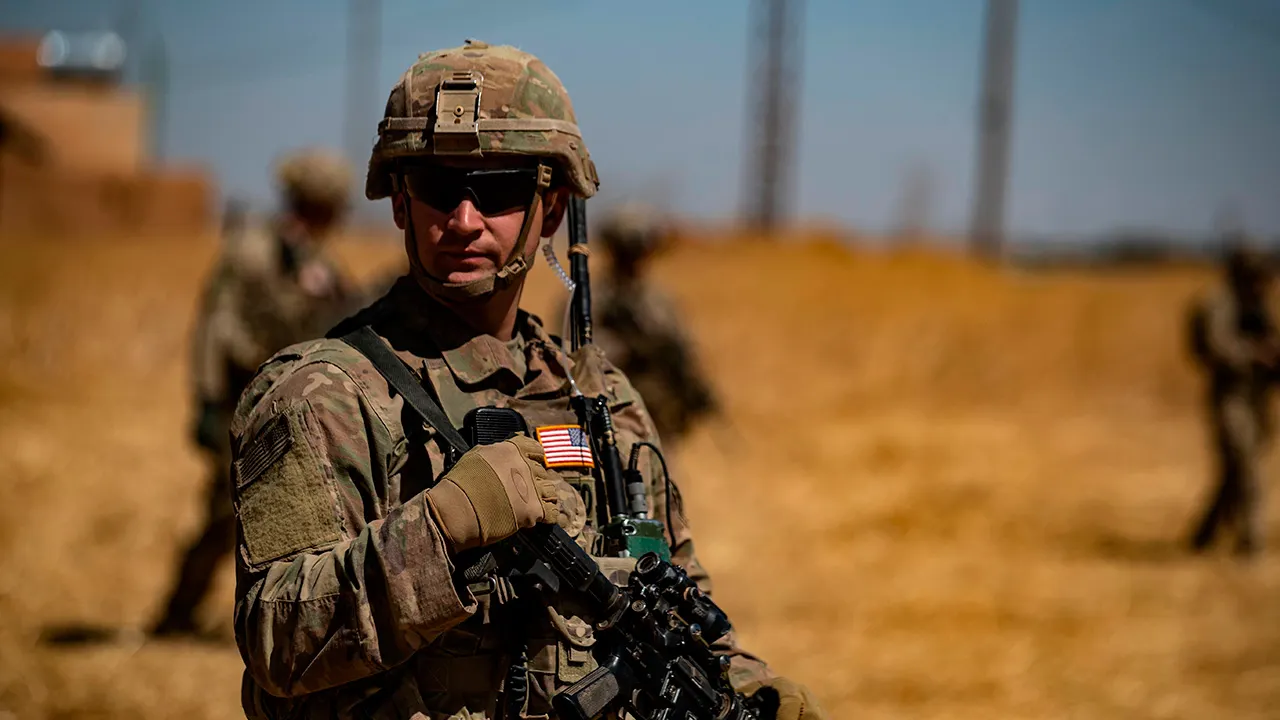
The U.S. currently has approximately 900 troops stationed in Syria — down from roughly 2,000 that were deployed following Hamas’ October 7, 2023, attack against Israel. These forces work with both Syrian national forces and the Kurdish Syrian Democratic Forces (SDF) to counter ISIS.
Dan Shapiro, former deputy assistant secretary of Defense for the Middle East, warned that Trump must resist growing pressure to withdraw U.S. troops from Syria. “Leaving Syria when Syrian national forces are still finding their footing against ISIS and need support would almost certainly give ISIS more room to breathe,” Shapiro said.
As investigations continue, the administration’s response will likely depend on what is determined about the attacker’s affiliations. The incident has already prompted calls for dramatically increased vetting of Syrian security forces as the U.S. continues its partnership with the new government.
“Trump is both going to need and expect more from Ahmed al-Sharaa, and shorten the leash at the same time,” Shapiro added. “Syria should understand that continued sanctions relief could be jeopardized unless they demonstrate clear commitment and capability to root out ISIS infiltrators.”
Fact Checker
Verify the accuracy of this article using The Disinformation Commission analysis and real-time sources.

28 Comments
Nice to see insider buying—usually a good signal in this space.
Good point. Watching costs and grades closely.
Good point. Watching costs and grades closely.
Exploration results look promising, but permitting will be the key risk.
The cost guidance is better than expected. If they deliver, the stock could rerate.
Exploration results look promising, but permitting will be the key risk.
Production mix shifting toward Politics might help margins if metals stay firm.
I like the balance sheet here—less leverage than peers.
Good point. Watching costs and grades closely.
Good point. Watching costs and grades closely.
Interesting update on US Troops Killed in Deadly Attack, Challenging Trump’s ISIS Strategy and Syria Diplomacy. Curious how the grades will trend next quarter.
Good point. Watching costs and grades closely.
Silver leverage is strong here; beta cuts both ways though.
Good point. Watching costs and grades closely.
Interesting update on US Troops Killed in Deadly Attack, Challenging Trump’s ISIS Strategy and Syria Diplomacy. Curious how the grades will trend next quarter.
Good point. Watching costs and grades closely.
Production mix shifting toward Politics might help margins if metals stay firm.
Good point. Watching costs and grades closely.
Good point. Watching costs and grades closely.
The cost guidance is better than expected. If they deliver, the stock could rerate.
Good point. Watching costs and grades closely.
Good point. Watching costs and grades closely.
Nice to see insider buying—usually a good signal in this space.
Good point. Watching costs and grades closely.
I like the balance sheet here—less leverage than peers.
Nice to see insider buying—usually a good signal in this space.
Good point. Watching costs and grades closely.
Good point. Watching costs and grades closely.