


Listen to the article
U.S. Set to Designate Venezuela’s “Cartel de los Soles” as Foreign Terrorist Organization
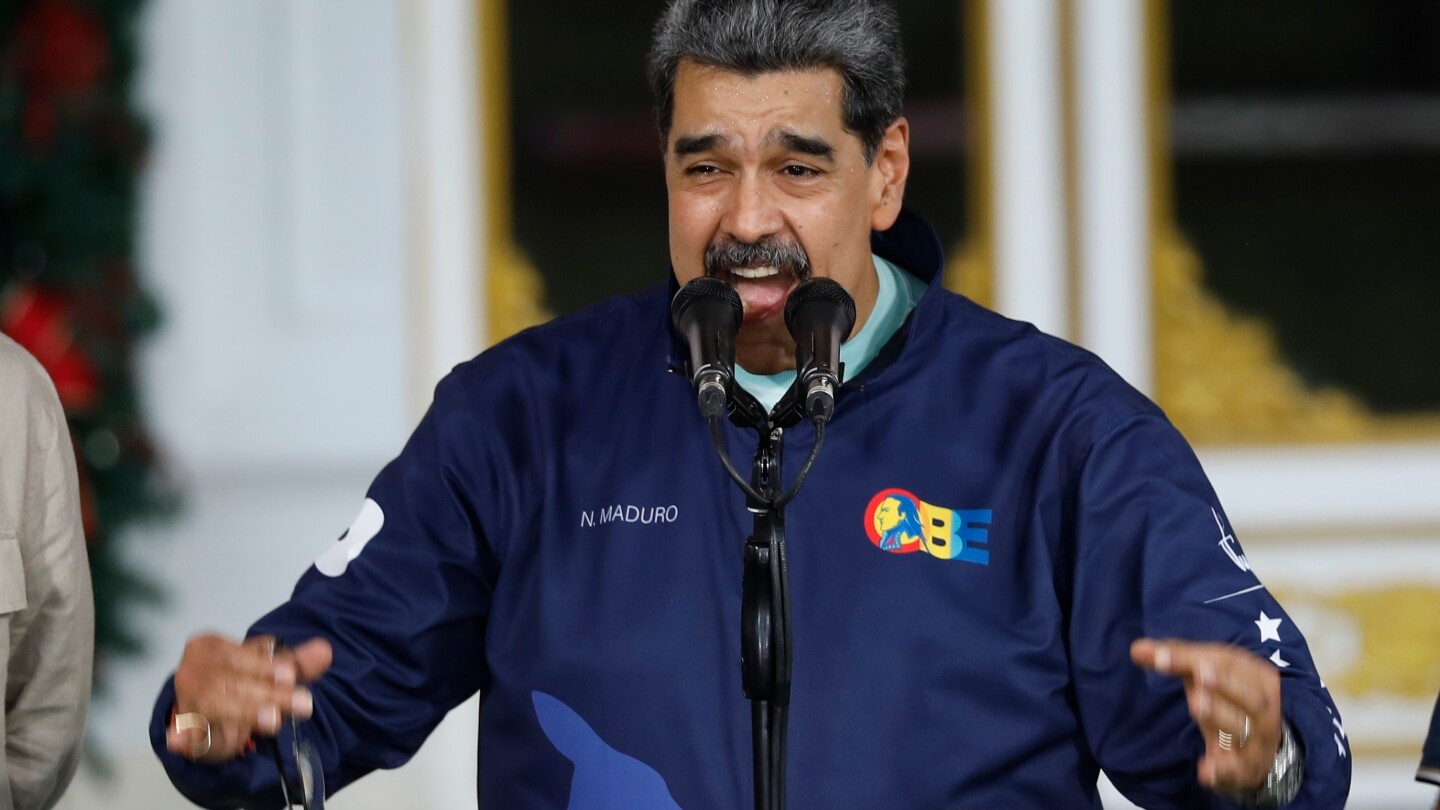
The Trump administration is poised to intensify pressure on Venezuelan President Nicolás Maduro by designating the so-called Cartel de los Soles (Cartel of the Suns) as a foreign terrorist organization. The move, expected to take effect Monday, represents the latest escalation in the administration’s campaign against drug trafficking into the United States.
Secretary of State Marco Rubio recently accused the entity of being “responsible for terrorist violence” in the Western Hemisphere, despite experts noting that it lacks the formal structure typically associated with drug cartels.
Unlike traditional criminal organizations, the Cartel de los Soles is not a clearly defined group with formal membership or hierarchy. The term originated in the 1990s as a reference to corrupt high-ranking military officers in Venezuela whose uniforms bear sun-shaped insignia on their epaulettes. Over time, its usage expanded to encompass various government officials allegedly involved in illicit activities including drug trafficking, illegal mining, and fuel smuggling.
“It is not a group,” explained Adam Isaacson, director for defense oversight at the Washington Office on Latin America. “It’s not like a group that people would ever identify themselves as members. They don’t have regular meetings. They don’t have a hierarchy.”
The designation comes amid a significant U.S. military buildup in the Caribbean and as President Trump considers potential military action against Venezuela. Trump has not ruled out armed intervention despite occasional mentions of possible dialogue with Maduro. For months, U.S. forces have conducted operations in waters near Venezuela, striking vessels allegedly involved in drug trafficking, with operations later expanding to the eastern Pacific Ocean. These actions have reportedly resulted in over 80 casualties.
This development follows the Justice Department’s 2020 indictment of Maduro and members of his inner circle on narcoterrorism charges. That indictment accused Maduro, Interior Minister Diosdado Cabello, Defense Minister Vladimir Padrino López, and others of conspiring with Colombian rebels and Venezuelan military personnel “to flood the United States with cocaine” and weaponize drug trafficking against America.
The Trump administration has been expanding the application of the “foreign terrorist organization” label, which historically was reserved for ideologically motivated groups like the Islamic State or al-Qaida. In February, the administration applied the designation to eight Latin American criminal organizations involved in drug trafficking and human smuggling.
Defense Secretary Pete Hegseth has suggested the designation will provide “a whole bunch of new options” for dealing with Maduro, though he declined to elaborate on specific measures or confirm whether the U.S. is considering strikes against land targets inside Venezuela.
A senior administration official, speaking on condition of anonymity, indicated that Trump administration officials find it difficult to envision a scenario where Maduro remains in power. The official noted growing anxiety among Venezuelan leadership as maritime strikes continue, with Maduro reportedly making increasingly desperate attempts to establish direct communication with the U.S. government through various intermediaries.
Maduro, who is serving his third term after a disputed 2023 election that opposition leaders and international observers claim was fraudulent, has consistently denied the drug trafficking allegations. He maintains that the U.S. is fabricating a narcotics narrative as pretext for regime change, citing UN reports that suggest only about 5% of Colombian cocaine passes through Venezuela.
In July, the U.S. Treasury Department imposed sanctions on the Cartel de los Soles, alleging that Maduro and his allies had leveraged Venezuelan government, military, and intelligence resources to facilitate drug trafficking to the United States. U.S. authorities also claimed the cartel provided material support to the Venezuelan gang Tren de Aragua and Mexico’s Sinaloa cartel, both of which were designated as foreign terrorist organizations earlier this year.
The U.S. Justice Department has doubled the reward for information leading to Maduro’s arrest to $50 million, further highlighting the administration’s determination to increase pressure on the Venezuelan leader.
Fact Checker
Verify the accuracy of this article using The Disinformation Commission analysis and real-time sources.

12 Comments
Designating the Cartel de los Soles as a terrorist organization is a bold move by the US. While it may not fit the traditional cartel structure, the corruption and criminal activities of Venezuelan officials are certainly concerning and deserve attention.
Agreed, this highlights the complex web of illicit activities tied to the Maduro regime. Cracking down on the individuals and entities involved is important, even if the organizational structure is less clear-cut.
The Cartel de los Soles seems to be more of a concept than a defined criminal organization. But the underlying issues of drug trafficking, illegal mining, and fuel smuggling are very real and have destabilizing effects in the region.
Agreed, the US is right to focus on these activities, even if the organizational structure is fluid. Disrupting the corrupt networks of Venezuelan officials is critical.
The Cartel de los Soles is a complex and evolving entity, making it a challenging target. But the US is right to focus on disrupting the corrupt networks and criminal activities tied to the Maduro regime, even if the organizational structure is fluid.
Agreed, this is a bold and necessary step to address the destabilizing influence of these illicit activities in Venezuela and the broader region.
It’s interesting that the Cartel de los Soles lacks the formal hierarchy typically associated with drug cartels. This makes it a more nebulous target, but the US is clearly intent on disrupting the corrupt networks within the Venezuelan government.
Designating them as a terrorist organization is a strong statement. It will be important to see how this plays out and what practical impact it has on restricting their activities.
Labeling the Cartel de los Soles as a terrorist organization is a bold move, but it speaks to the severity of the situation in Venezuela. The lack of a clear hierarchy makes it a tricky target, but the US is clearly intent on applying pressure.
This designation could have significant implications, both within Venezuela and in the region. It will be important to monitor how it impacts the dynamics of power and illicit activities.
Designating the Cartel de los Soles as a terrorist organization is a strong move, reflecting the gravity of the situation in Venezuela. While the group may lack a traditional cartel structure, the corruption and criminal activities it encompasses are clearly a threat that needs to be addressed.
This action by the US underscores the importance of tackling the complex web of illicit activities tied to the Maduro regime. It will be interesting to see how it impacts the dynamics on the ground.