


Listen to the article
In a significant revelation, a final report from the Special Inspector General for Afghanistan Reconstruction (SIGAR) has determined that billions of dollars worth of U.S. military equipment abandoned during the 2021 withdrawal now forms “the core of the Taliban security apparatus.”
The comprehensive 137-page report released this week delivers a stark assessment of America’s 19-year reconstruction effort in Afghanistan, concluding that despite Congress providing approximately $144.7 billion between 2002 and 2021, the mission “promised to bring stability and democracy to the country, yet ultimately delivered neither.”
According to the Department of Defense, approximately $7.1 billion in material and equipment provided to the Afghan National Defense and Security Forces (ANDSF) was left behind following the collapse of the Afghan government. The report notes that SIGAR was unable to inspect any of this equipment or the facilities constructed for Afghan forces after the Taliban takeover.
“These U.S. taxpayer-funded equipment, weapons, and facilities have formed the core of the Taliban security apparatus,” the report states bluntly.
A Pentagon watchdog previously reported that Afghan forces possessed 316,260 weapons worth $511.8 million, along with ammunition and other equipment when the government fell in 2021, though their operational condition remained unknown. The Department of Defense has maintained that “the U.S. military removed or destroyed nearly all major equipment used by U.S. troops in Afghanistan throughout the drawdown period in 2021.”
Gene Aloise, the Acting Inspector General for Afghanistan Reconstruction, identified multiple factors that contributed to the failure of America’s nation-building efforts. “Early and ongoing U.S. decisions to ally with corrupt, human-rights-abusing powerbrokers bolstered the insurgency and undermined the mission, including U.S. goals for bringing democracy and good governance to Afghanistan,” Aloise wrote in the report.
The SIGAR assessment also highlighted critical structural problems with the U.S. approach to building Afghan security forces. “The United States designed the ANDSF as a mirror image of U.S. forces, which required a high degree of professional military sophistication and leadership,” the report explains. This created long-term dependencies that proved fatal once American support was withdrawn.
“The decision to withdraw all U.S. military personnel and dramatically reduce U.S. support to the ANDSF destroyed the morale of Afghan soldiers and police,” according to the watchdog.
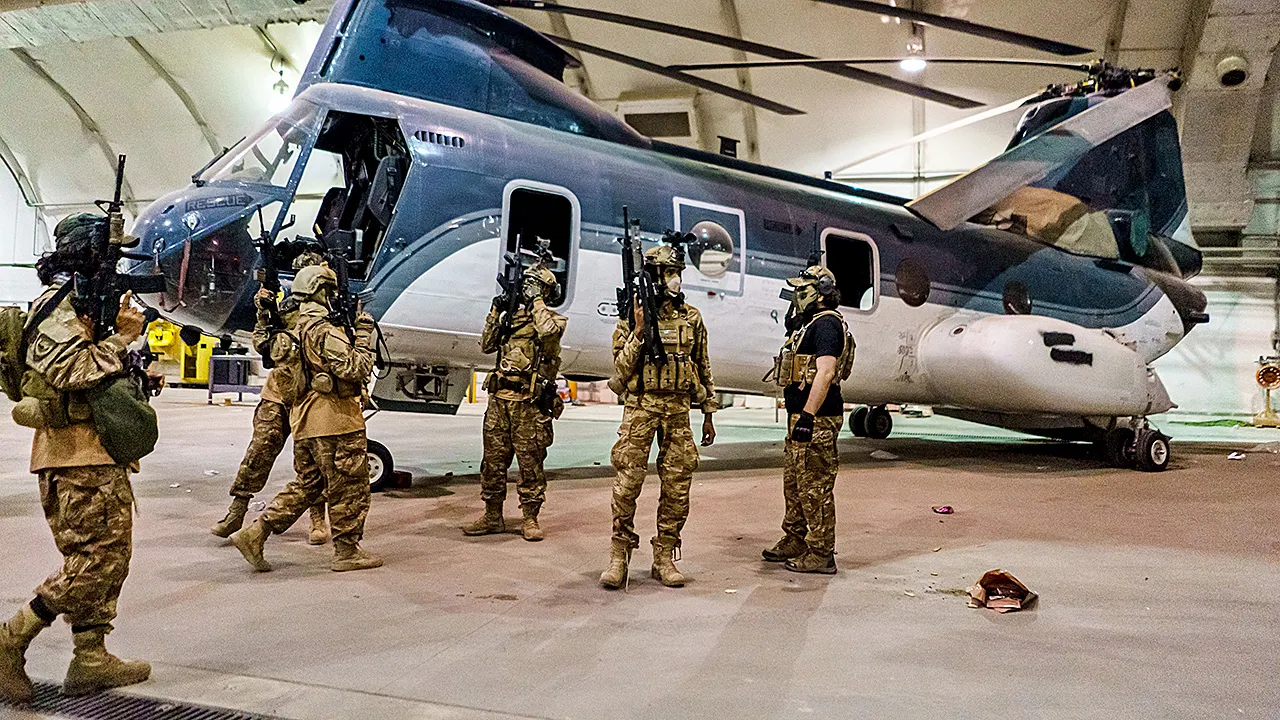
The rapid collapse of Afghan forces in 2021 allowed Taliban fighters to quickly secure American-supplied weapons, equipment and facilities, including at Kabul’s Hamid Karzai International Airport. Images from that period show Taliban fighters wielding American weapons and using U.S. military vehicles, providing visual evidence of the equipment transfer described in the SIGAR report.
Despite the Taliban takeover, the United States has continued to be Afghanistan’s largest international donor. The report reveals that America has disbursed more than $3.83 billion in humanitarian and development assistance to Afghanistan since the fall of Kabul. In the March 2025 quarter alone, these disbursements totaled $120 million.
The SIGAR report represents the final assessment from the government watchdog tasked with overseeing the massive U.S. investment in Afghanistan’s reconstruction. Its findings raise significant questions about the long-term impact of U.S. military withdrawals and the fate of American-supplied equipment in conflict zones.
The Taliban, now equipped with billions in U.S. military assets, continues to consolidate power across Afghanistan. Recent images show newly recruited Taliban cadets training with military vehicles and weapons systems that were part of America’s security assistance package to the former Afghan government.
The situation underscores the unintended consequences of America’s longest war and the challenges inherent in nation-building efforts in complex conflict environments.
Fact Checker
Verify the accuracy of this article using The Disinformation Commission analysis and real-time sources.

16 Comments
This is a disappointing outcome after two decades and $144.7 billion spent on Afghanistan’s reconstruction. It’s frustrating to see US-supplied weapons and facilities now forming the core of the Taliban’s security apparatus. Clearly, more oversight and accountability is needed in future interventions.
You make a good point. This serves as a sobering lesson on the unintended consequences of military aid and the importance of long-term strategic planning when engaging in nation-building efforts.
It’s troubling to see that the Taliban is now in possession of billions of dollars worth of US military equipment. This raises serious questions about the withdrawal strategy and the accountability of these assets. Taxpayer-funded resources should not be falling into the hands of authoritarian regimes.
I agree. This report highlights the need for more robust safeguards and oversight mechanisms when providing military aid to ensure that it doesn’t end up being used against US interests or enabling human rights abuses.
This is a sobering report on the aftermath of the US withdrawal from Afghanistan. It’s concerning to see the Taliban now wielding US-supplied weapons and equipment as the core of their security apparatus. This highlights the complexities and unintended consequences of foreign interventions.
You’re right, this underscores the challenges of rebuilding nations and the need for careful planning and oversight of military aid. It’s a troubling legacy of the Afghanistan war.
The findings of this report are deeply concerning. It’s alarming to see that the Taliban has been able to acquire and utilize US-supplied weapons and equipment as the core of their security apparatus. This underscores the importance of careful planning and execution when it comes to military interventions and foreign aid.
Absolutely. This serves as a cautionary tale about the unintended consequences of military aid and the need for greater accountability and oversight in future foreign policy decisions.
The findings in this report are deeply concerning. It’s troubling to see that the Taliban is now in possession of billions of dollars’ worth of US military equipment and resources, which are now forming the core of their security apparatus. This highlights the need for more robust safeguards and accountability measures when providing foreign aid and military assistance.
Absolutely. This serves as a cautionary tale about the unintended consequences of military interventions and the importance of carefully considering the long-term implications of such actions. Greater oversight and strategic planning are clearly needed to prevent similar outcomes in the future.
It’s alarming to learn that billions in US military equipment ended up in Taliban hands. This raises serious questions about the planning and execution of the withdrawal. Taxpayer-funded resources should not be enabling authoritarian regimes.
Absolutely. The report highlights major failures in the reconstruction efforts and the need for stricter controls over military aid and equipment, especially in volatile regions.
This report paints a troubling picture of the aftermath of the US withdrawal from Afghanistan. It’s deeply concerning to learn that billions in US-funded military equipment and resources are now being used by the Taliban to bolster their security forces. This raises serious questions about the planning and execution of the withdrawal process.
You’re right, this is a stark reminder of the complexities and challenges involved in foreign interventions. It underscores the need for more rigorous oversight and strategic planning to ensure that military aid and resources are not co-opted by adversarial forces.
The report paints a grim picture of the aftermath of the US withdrawal from Afghanistan. It’s deeply concerning to learn that the Taliban is now using American-supplied weapons and equipment as the basis for their security forces. This underscores the need for more rigorous oversight and planning in future military interventions.
Absolutely. This is a stark reminder of the complexities involved in foreign interventions and the importance of ensuring that military aid and resources are not co-opted by adversarial forces.