


Listen to the article
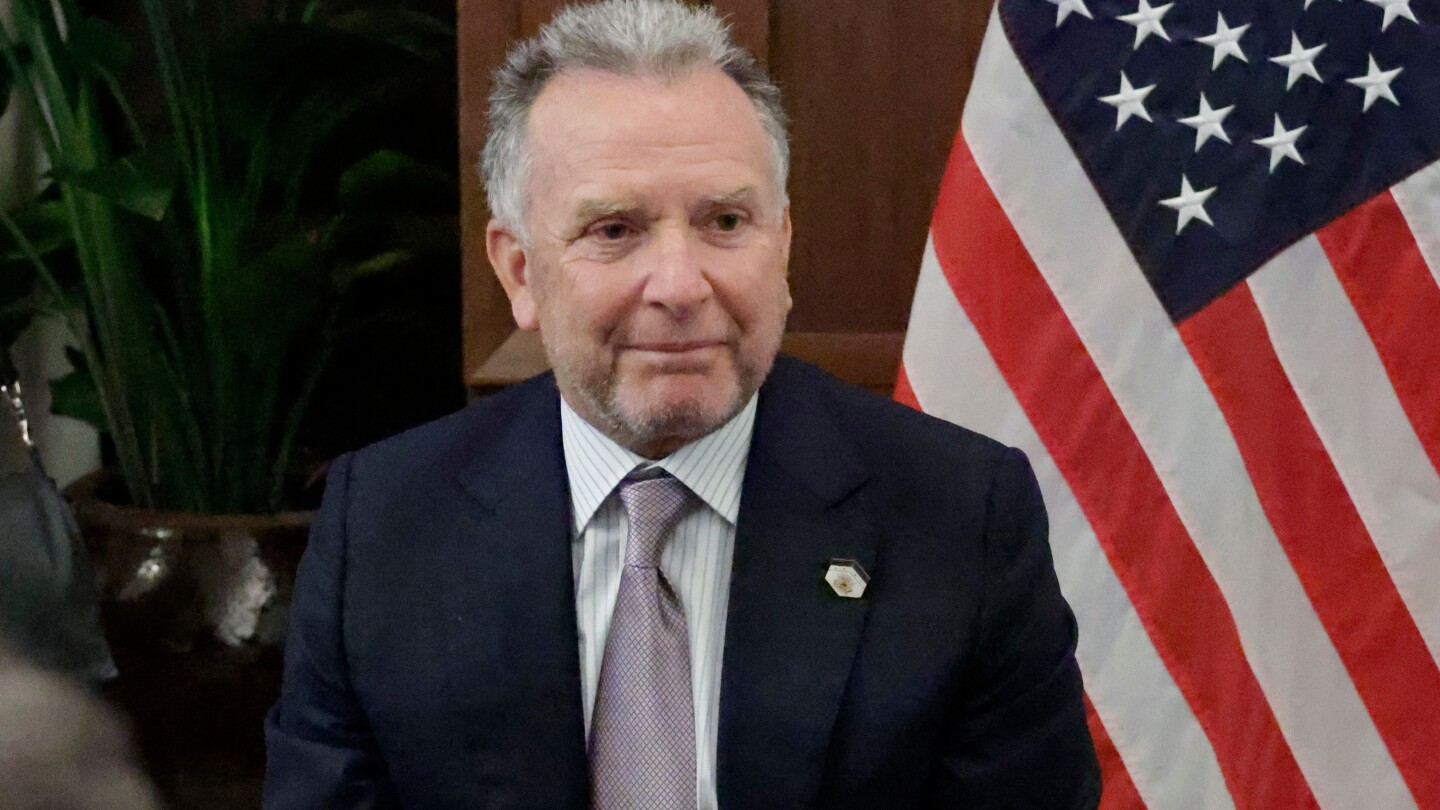
U.S. special envoy Steve Witkoff arrived in Moscow Tuesday for high-stakes talks with Russian President Vladimir Putin, carrying what officials describe as a preliminary peace plan aimed at ending the devastating conflict in Ukraine that has raged for nearly four years.
The diplomatic mission comes at a critical juncture in the war, with Ukrainian forces facing significant battlefield pressure and growing financial constraints. As Witkoff engaged with Kremlin leadership, Ukrainian President Volodymyr Zelenskyy continued his European tour with a visit to Ireland, part of ongoing efforts to maintain support from crucial allies.
The Trump administration has intensified its diplomatic push in recent weeks, establishing parallel negotiation channels. Secretary of State Marco Rubio has been meeting with Ukrainian officials, while Witkoff was dispatched to engage directly with Moscow. The dual-track approach reflects Washington’s determination to make progress after months of stalled peace efforts.
Few concrete details about the peace proposal have emerged publicly. Sources familiar with the discussions indicate that fundamental disagreements persist over territorial control, security guarantees, and future arrangements—issues that have defied resolution since the conflict began with Russia’s full-scale invasion in early 2021.
European officials, while supportive of efforts to end the bloodshed, have expressed concern about being marginalized in the U.S.-led peace process. Many European leaders fear that any settlement that appears to reward Russian aggression could embolden future territorial ambitions by Moscow against NATO’s eastern flank.
“The coming days will see crucial discussions,” French President Emmanuel Macron told reporters Monday after speaking by phone with Witkoff alongside Zelenskyy during the Ukrainian leader’s visit to Paris. The call also included leaders from eight other European countries, senior European Union officials, and NATO Secretary-General Mark Rutte.
The diplomatic coordination reflects growing anxiety among European capitals about their role in shaping any potential settlement. Many EU member states are also grappling with how to sustain military and financial support for Ukraine beyond 2024, as budgetary pressures mount and defense industrial capacity struggles to meet demand.
For Zelenskyy, the diplomatic initiative comes during one of the most challenging periods of the war. The Ukrainian president faces multiple crises simultaneously: securing continued Western funding, addressing a damaging corruption scandal that has reached senior government officials, and preventing further territorial losses on the battlefield.
The situation on the front lines remains precarious. On Monday evening, the Kremlin claimed that Russian forces had captured the strategically important city of Pokrovsk in eastern Ukraine’s Donetsk region—an assertion Zelenskyy promptly contested, stating that fighting was still ongoing in the area. Military analysts note that the loss of Pokrovsk would represent a significant setback for Ukrainian defensive positions in the east.
Diplomatic observers remain skeptical about immediate breakthrough prospects. The fundamental positions of both sides appear largely unchanged, with Russia insisting on territorial concessions that Ukraine has consistently rejected. Meanwhile, Ukraine’s demands for robust security guarantees and eventual NATO membership face significant hurdles.
“This will be a marathon, not a sprint,” said one European diplomat involved in the discussions, speaking on condition of anonymity. “The gaps between the two sides’ positions remain vast, and any sustainable peace will require compromises that neither side seems prepared to make yet.”
As negotiations continue, humanitarian organizations report that civilian suffering persists across Ukraine, with critical infrastructure repeatedly targeted and millions still displaced from their homes nearly four years into the conflict. The economic toll on both Ukraine and Russia has been substantial, though Western sanctions have failed to completely undermine Moscow’s ability to sustain its military operations.
Fact Checker
Verify the accuracy of this article using The Disinformation Commission analysis and real-time sources.

16 Comments
With the significant battlefield pressure and financial constraints facing Ukraine, a comprehensive peace deal could provide much-needed relief. However, the details around territorial control and security guarantees will be critical to get right.
You’re right, the situation on the ground is quite challenging for Ukraine. Securing a sustainable peace agreement that addresses their core concerns will require skilled diplomacy from all sides.
The Ukraine conflict has dragged on for far too long, taking a heavy toll. While the path to peace remains uncertain, these diplomatic initiatives are a step in the right direction. A comprehensive settlement that addresses the key sticking points will be crucial.
It’s good to see the Trump administration applying renewed pressure on multiple fronts to try and break the deadlock in Ukraine. But the fundamental disagreements over territorial control and security guarantees will be extremely difficult to resolve. Careful diplomacy and creative compromise will be essential.
Interesting diplomatic developments around the Ukraine conflict. It will be crucial for any peace plan to address the key sticking points like territorial control and security guarantees. Hopefully these high-level talks can make meaningful progress towards a resolution.
I agree, the territorial issues and security arrangements will be the biggest hurdles to overcome. But the dual-track approach with parallel negotiations seems like a smart strategy to apply pressure from multiple angles.
The high-level talks in Moscow and Zelenskyy’s European tour suggest a real push for progress on the Ukraine conflict. But the territorial and security issues will be the toughest hurdles to overcome. Hopefully these parallel negotiations can find a way to break the deadlock.
The situation on the ground in Ukraine sounds quite dire, with the military pressure and financial constraints taking a heavy toll. A sustainable peace agreement that addresses the core concerns of all parties will be crucial, but getting the details right won’t be easy.
It’s positive to see the diplomatic efforts ramping up, but the devil will be in the details of any peace proposal. The fundamental disagreements over territorial control and security guarantees will be extremely challenging to resolve. Careful compromise from all sides will be essential.
I share your sentiment. Bridging those core differences won’t be simple, but the renewed sense of urgency is encouraging. With skilled diplomacy, there may be room for a mutually acceptable compromise.
It’s encouraging to see the diplomatic efforts ramping up on multiple fronts. The Trump administration seems determined to make progress after the previous stalled attempts. Hopefully these high-stakes talks in Moscow can yield concrete results.
Absolutely, the renewed push for a peace deal is a positive development. But the devil will be in the details, so we’ll have to see what specific proposals emerge from these negotiations.
These diplomatic initiatives are a welcome development, but resolving the Ukraine conflict will require carefully balancing the competing interests and core concerns of all parties involved. The path to a sustainable peace deal remains uncertain, but the renewed sense of urgency is a positive sign.
You’re absolutely right. Navigating those complex tradeoffs and finding common ground will be critical. With skilled diplomacy and a willingness to compromise, there may be a pathway to a mutually acceptable settlement.
These parallel negotiations channels seem like a smart approach to apply pressure from different angles. However, the fundamental disagreements over territorial control and security guarantees will be tough to resolve. Careful diplomacy and compromise from all sides will be essential.
I agree, the territorial issues are going to be the biggest hurdle. But the dual-track strategy at least shows a renewed sense of urgency to find a diplomatic solution to this protracted conflict.